Choosing a Freestanding Bathtub
A freestanding bathtub is the only fixture in a bathroom that is looked at from every side. It has no wall to hide against and no cabinetry to sit inside, so its silhouette carries the room. That is the appeal, and it is also why the decision is less about the tub than about the space you intend to put it in.
Three things settle it: how much room it genuinely needs, how deep you want to sit, and which finish belongs in the room you already have. Every tub below is designed and handmade in Italy.
Shop luxury bathtubs by finish
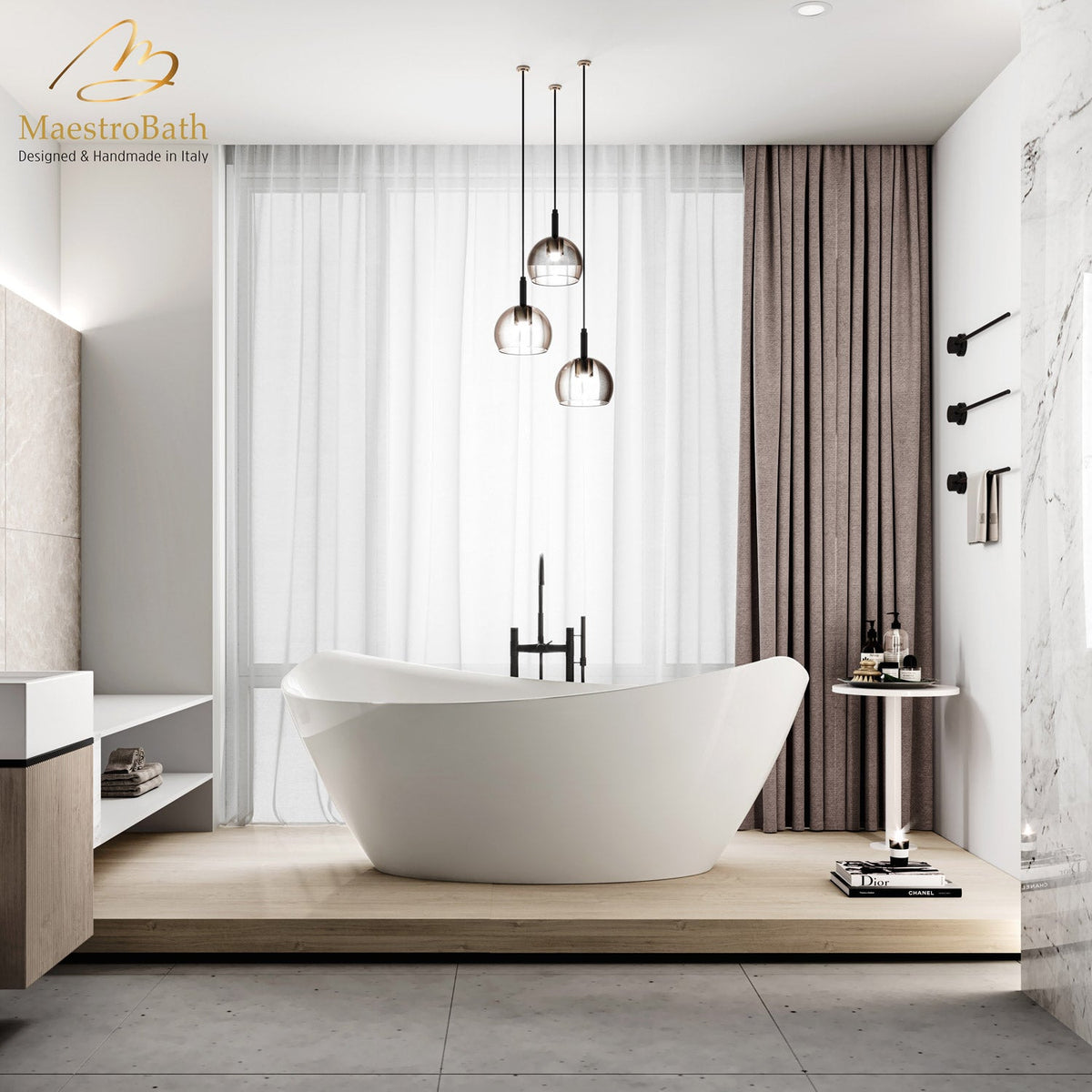
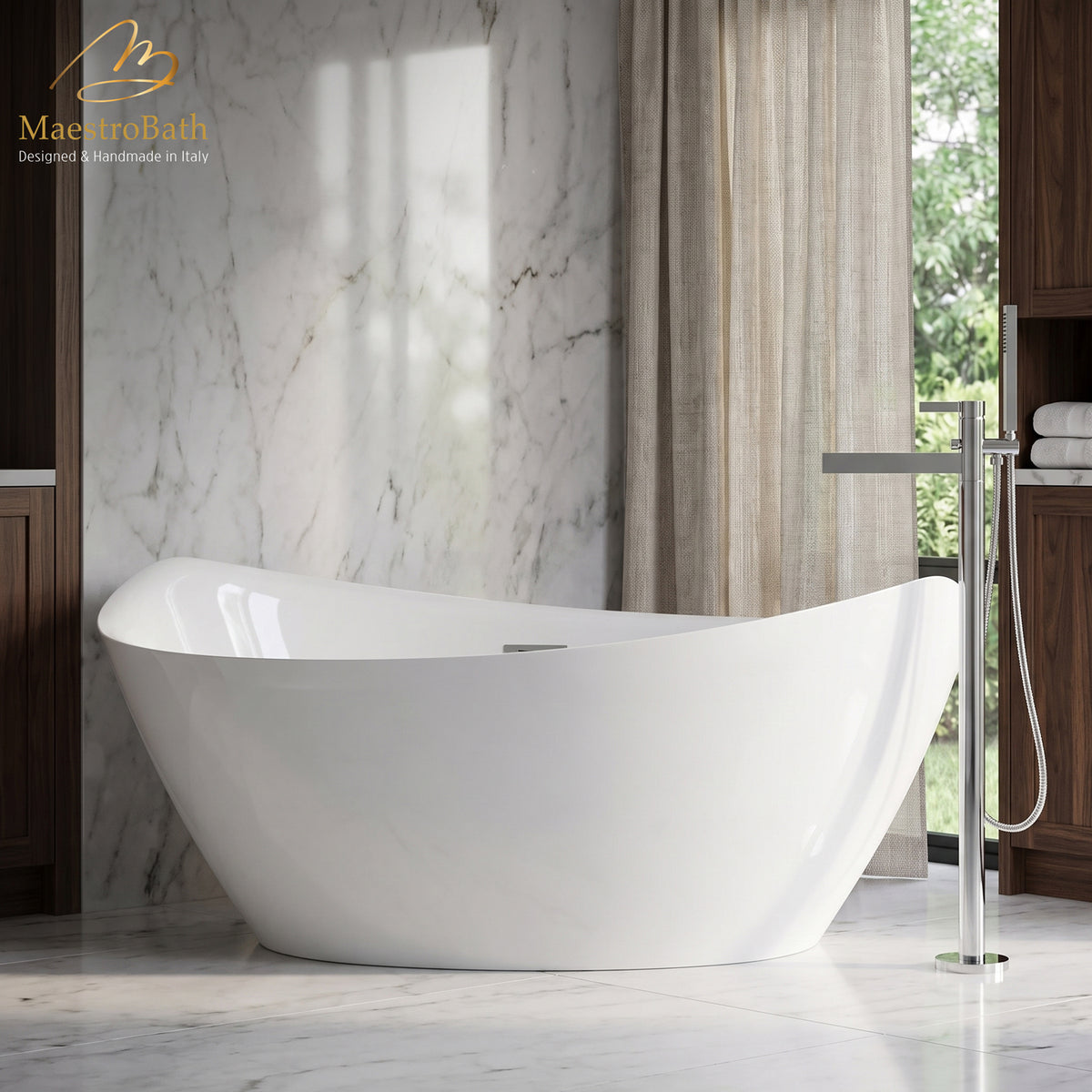
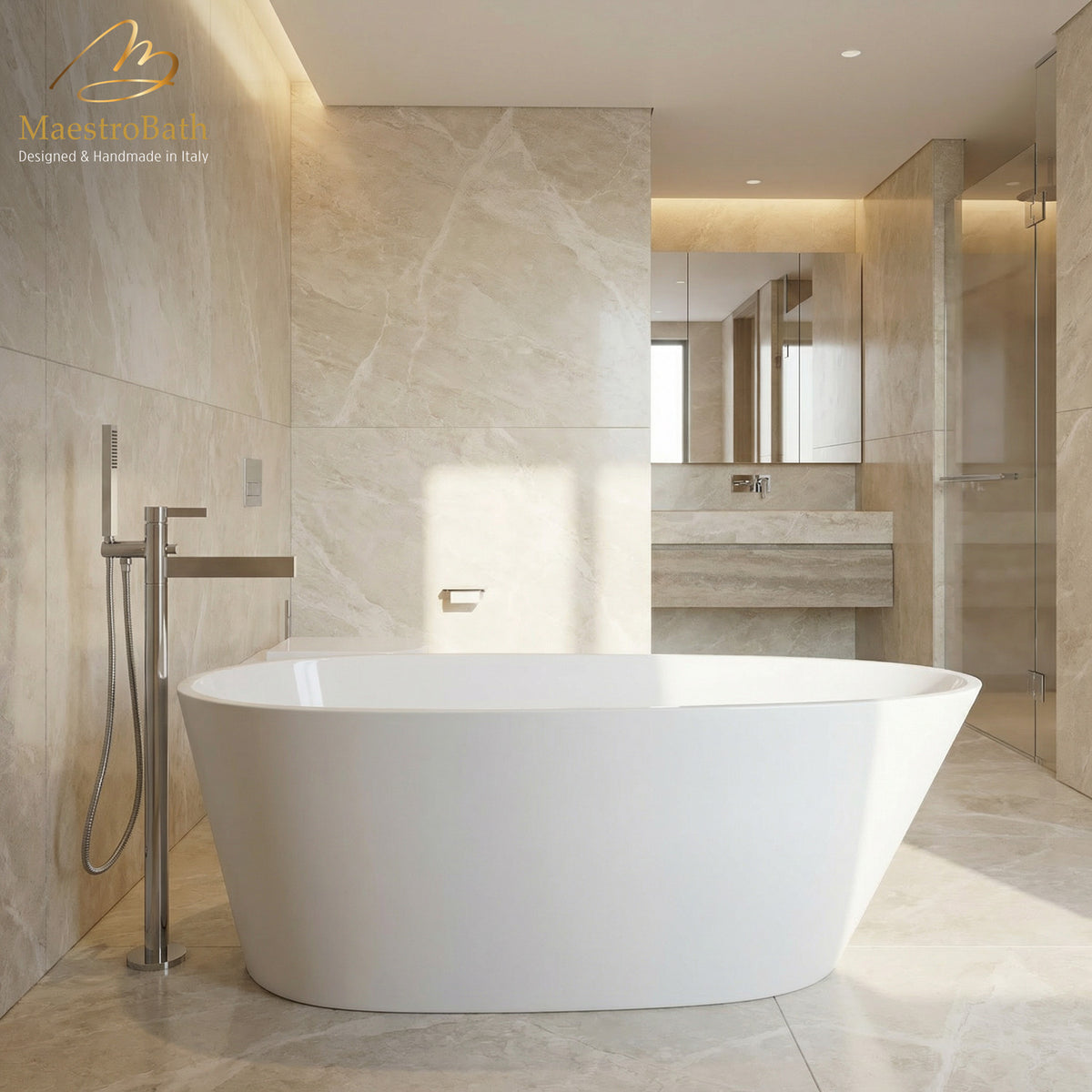
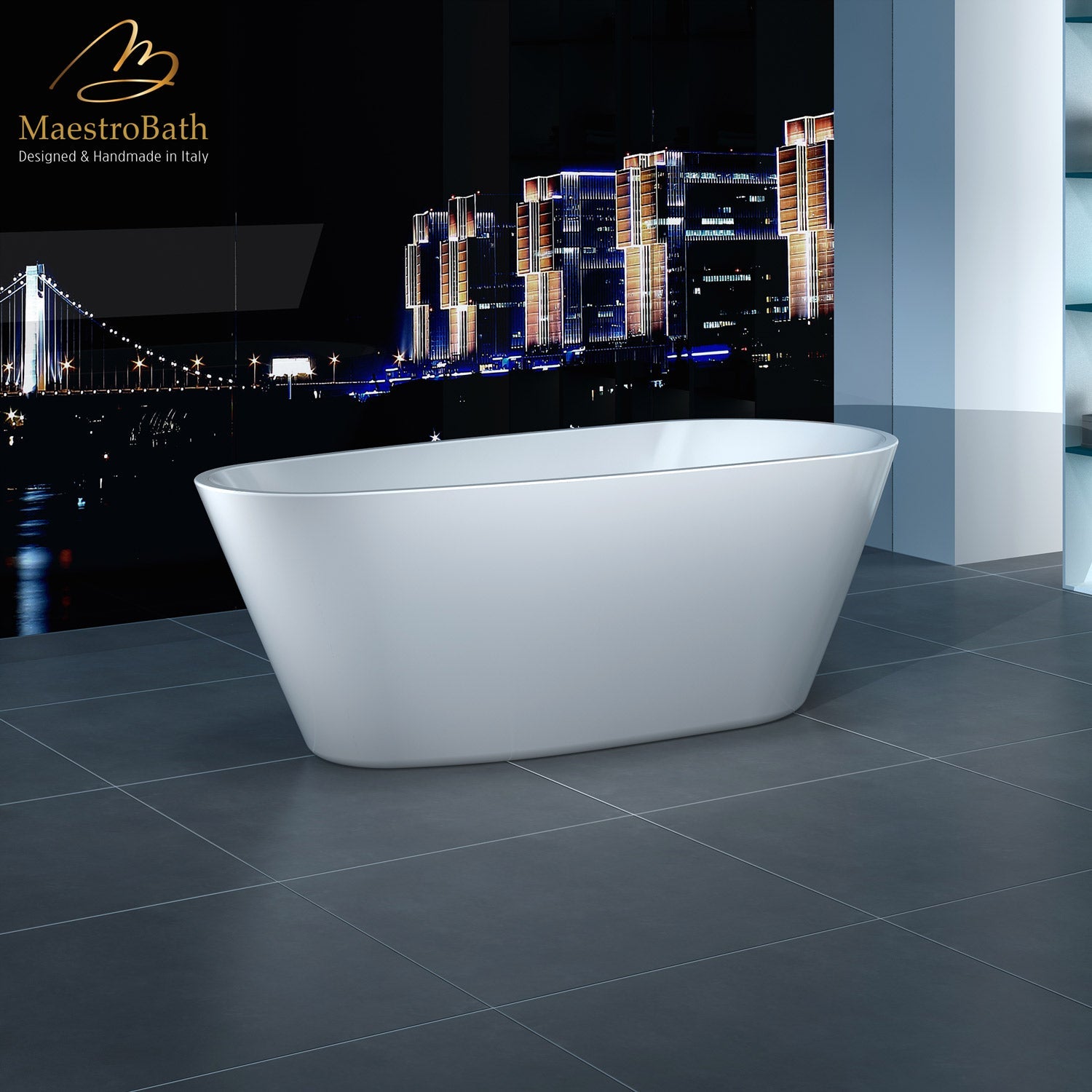
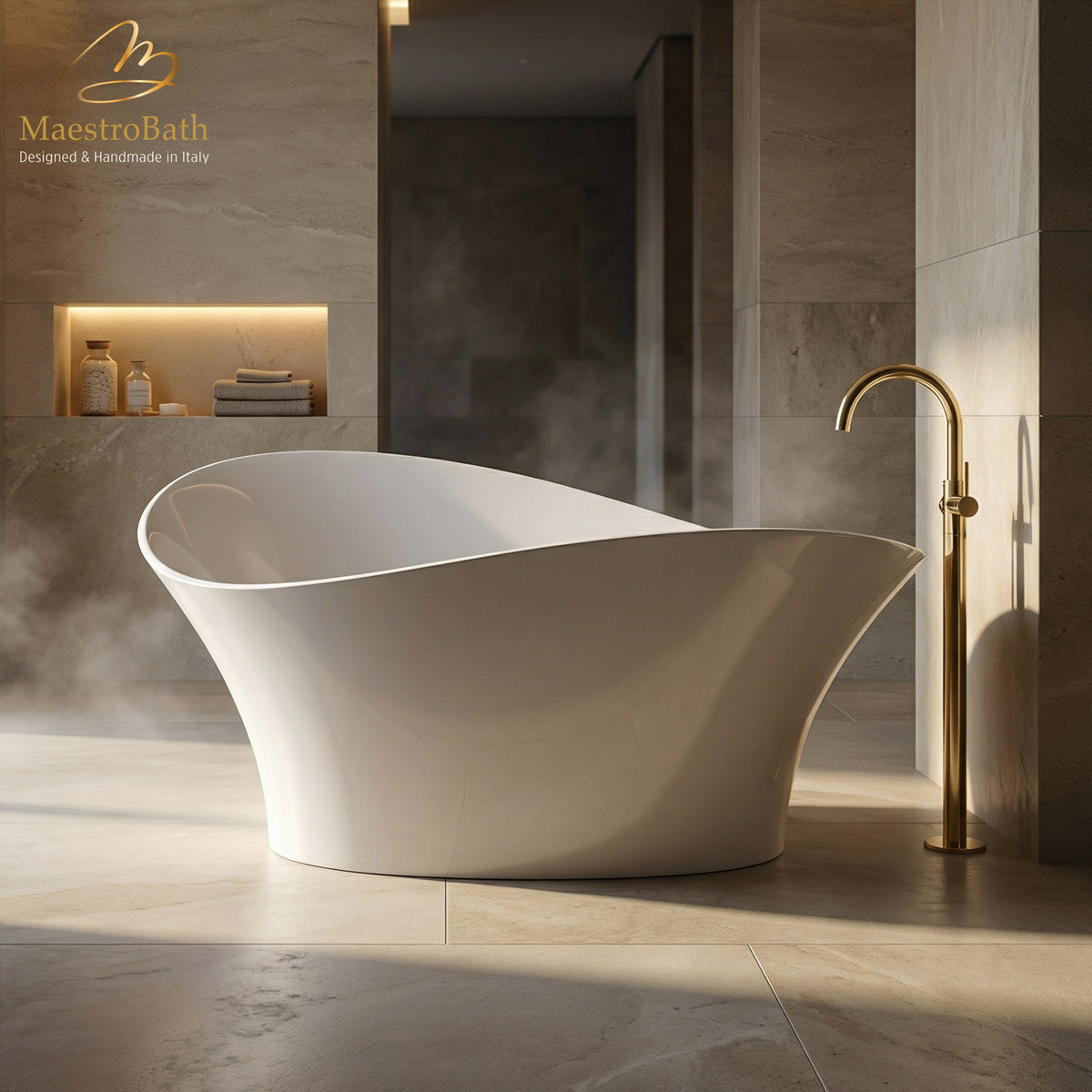
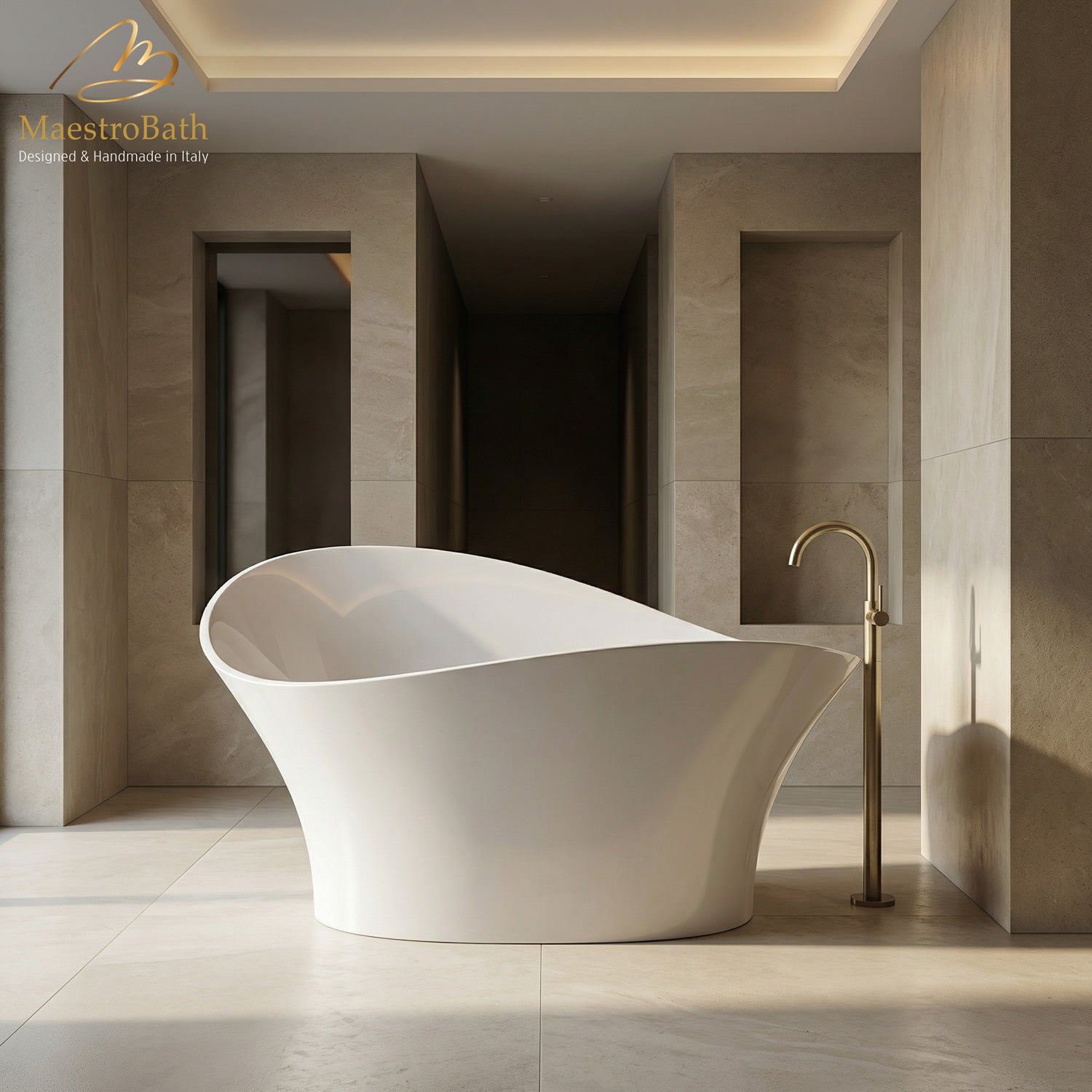
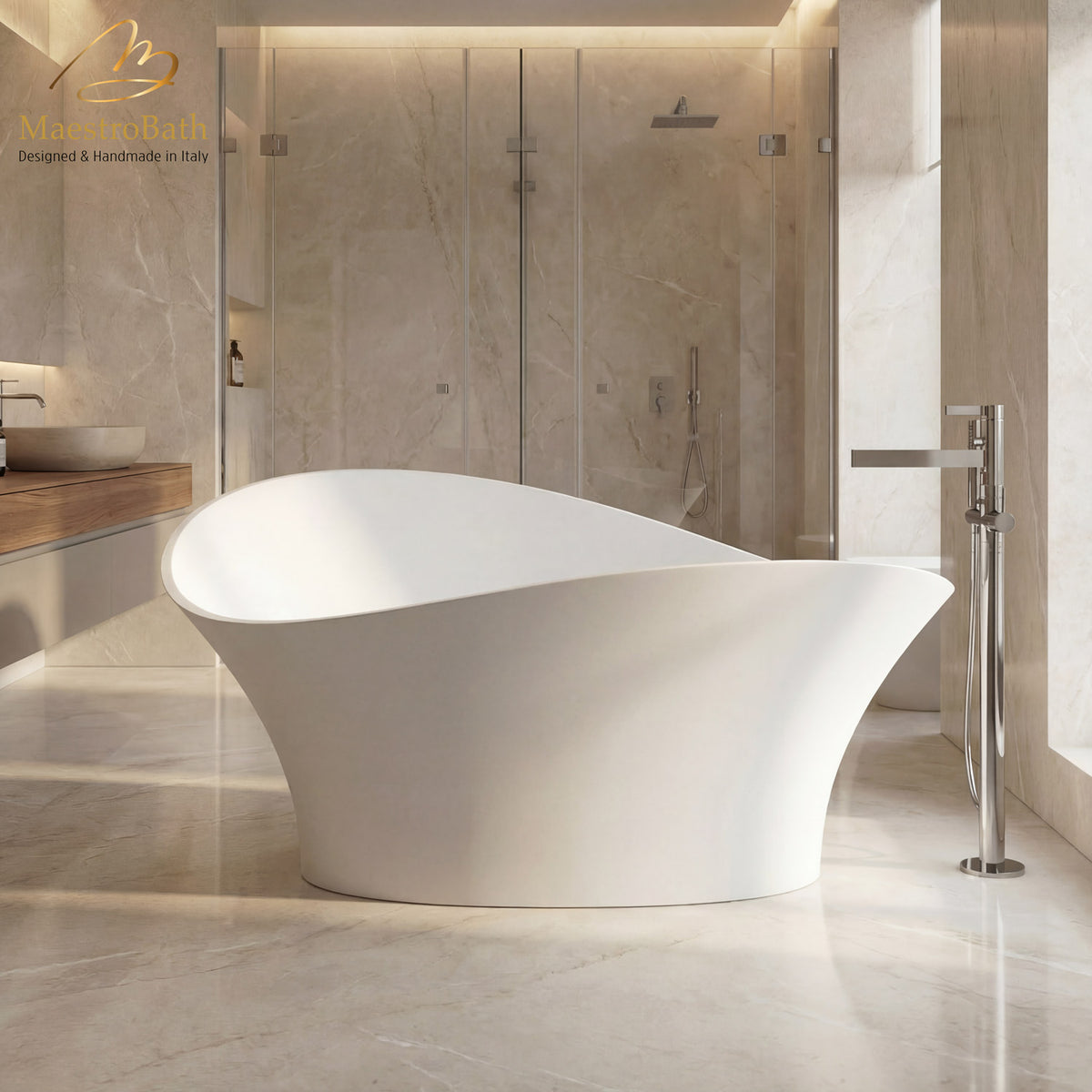
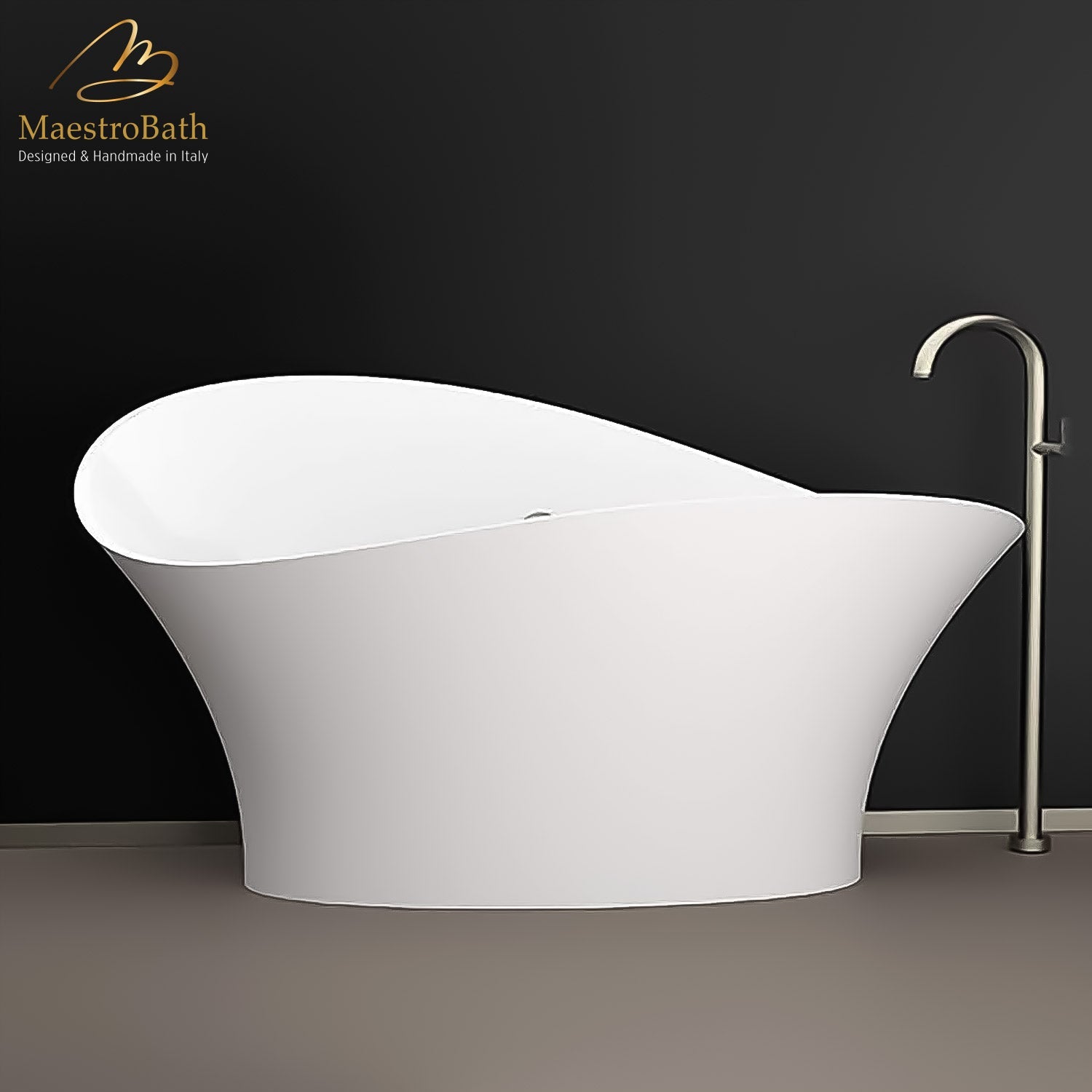
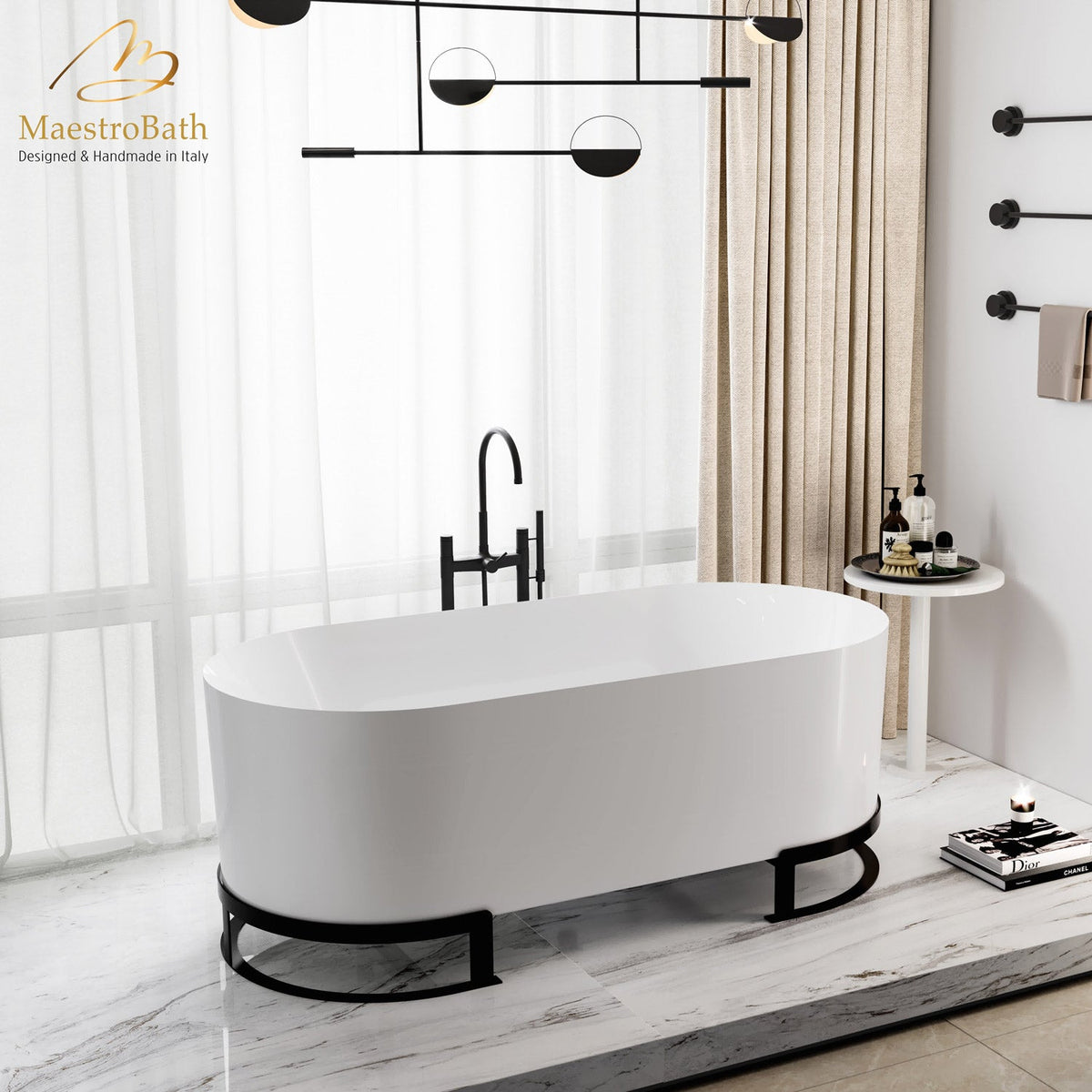
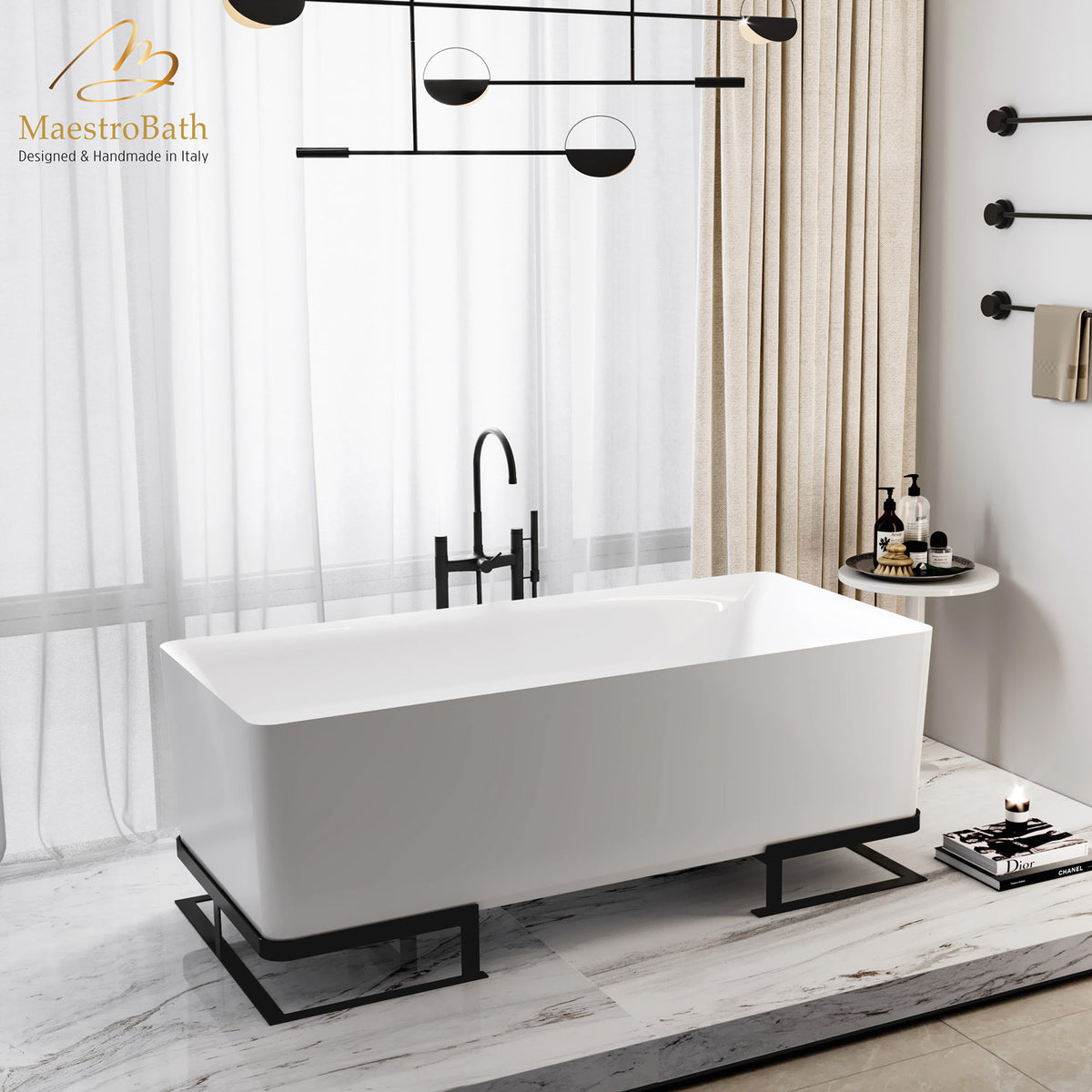
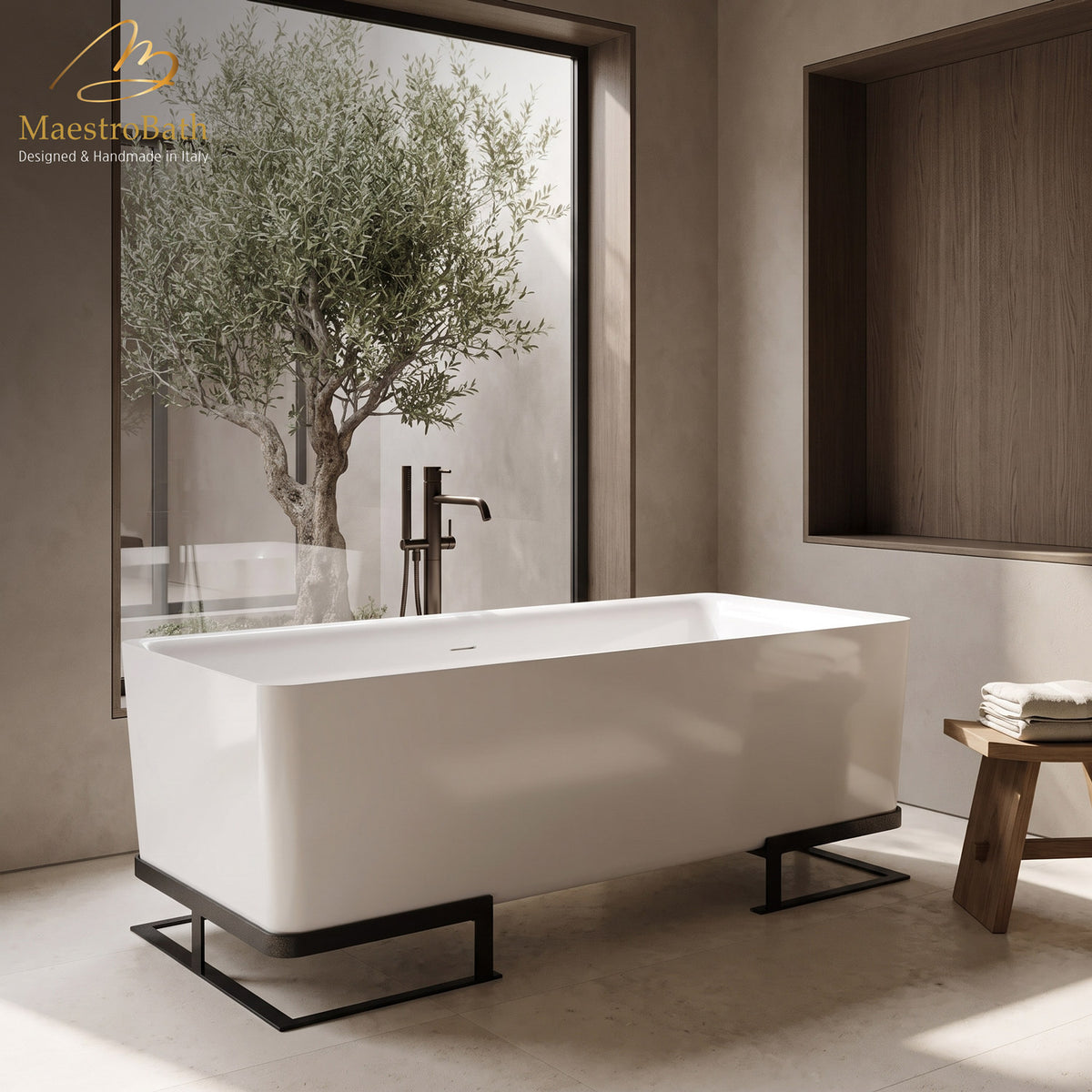
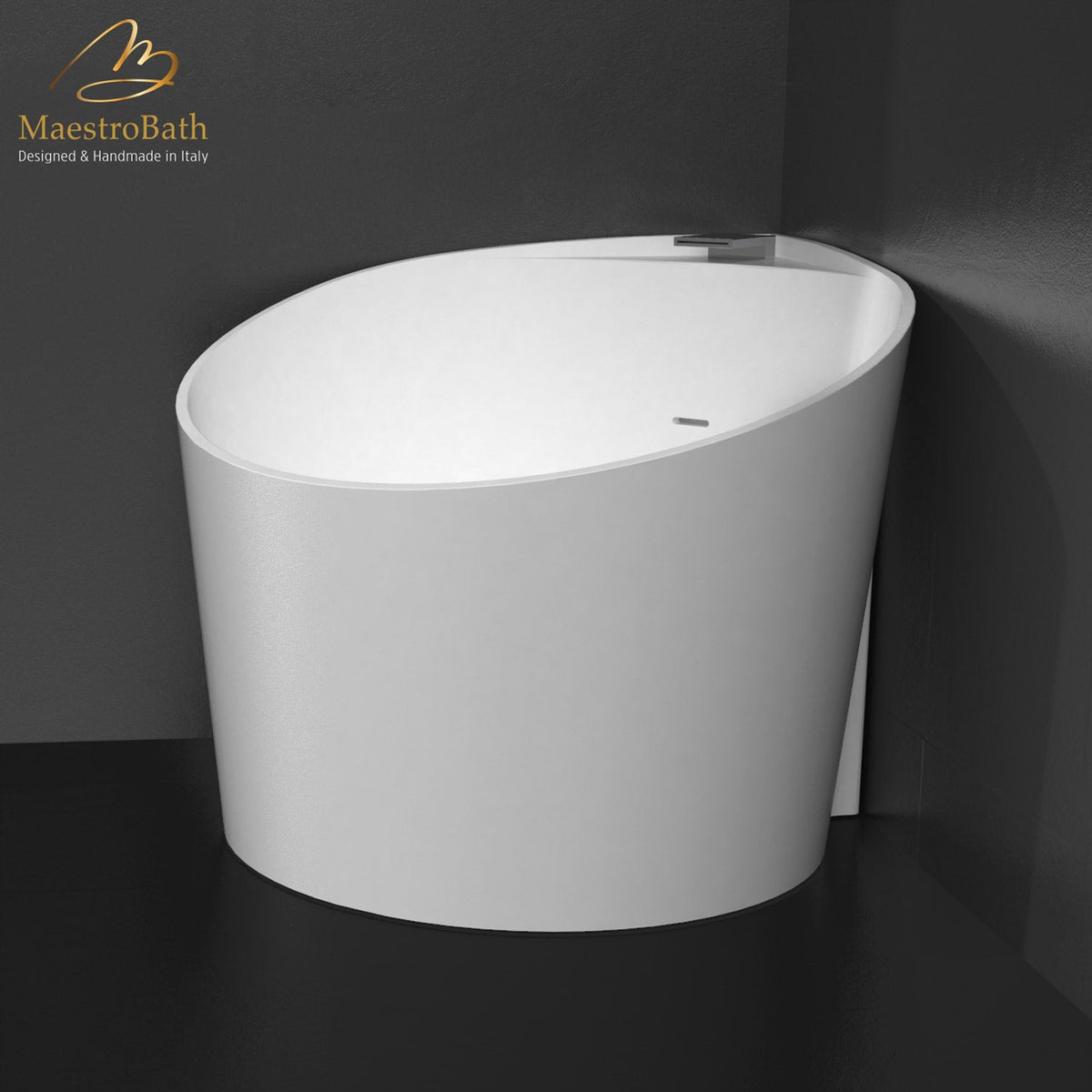
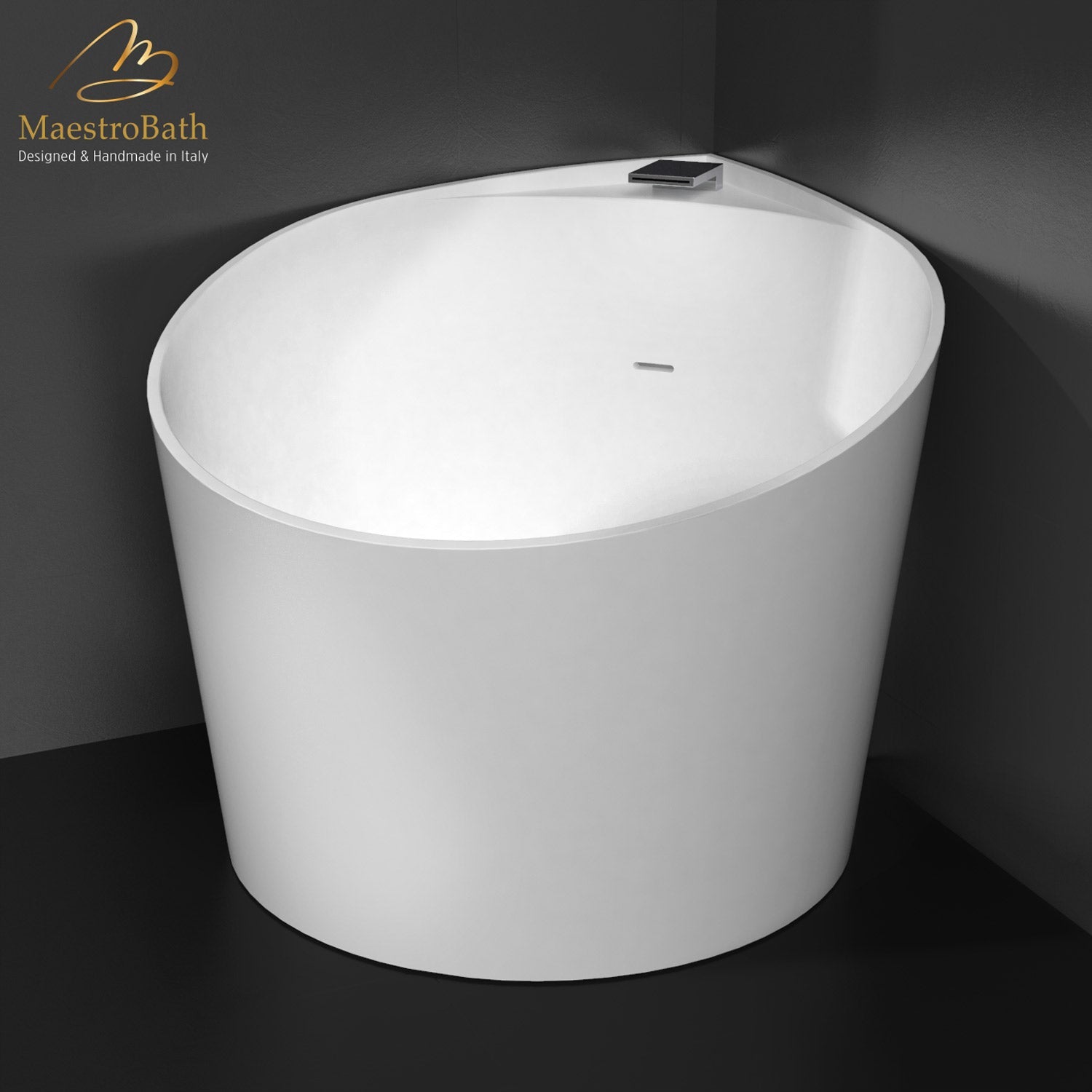
White bathtubs are the majority of what we sell, because white is the only finish that reads purely as shape. In a freestanding tub the silhouette is the entire argument, and white lets it speak without competition. It is also the finish you can redecorate around for twenty years without ever thinking about it again.
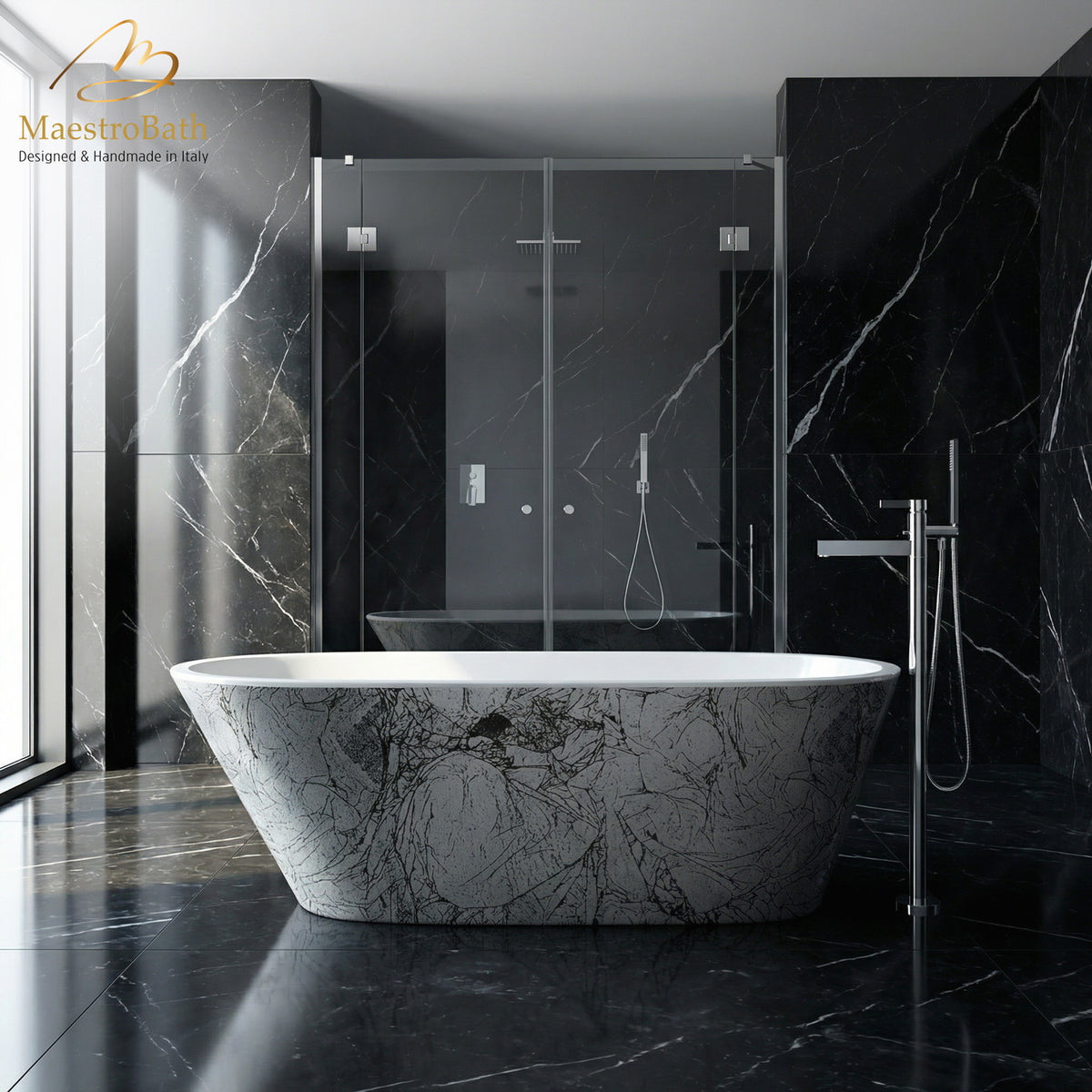
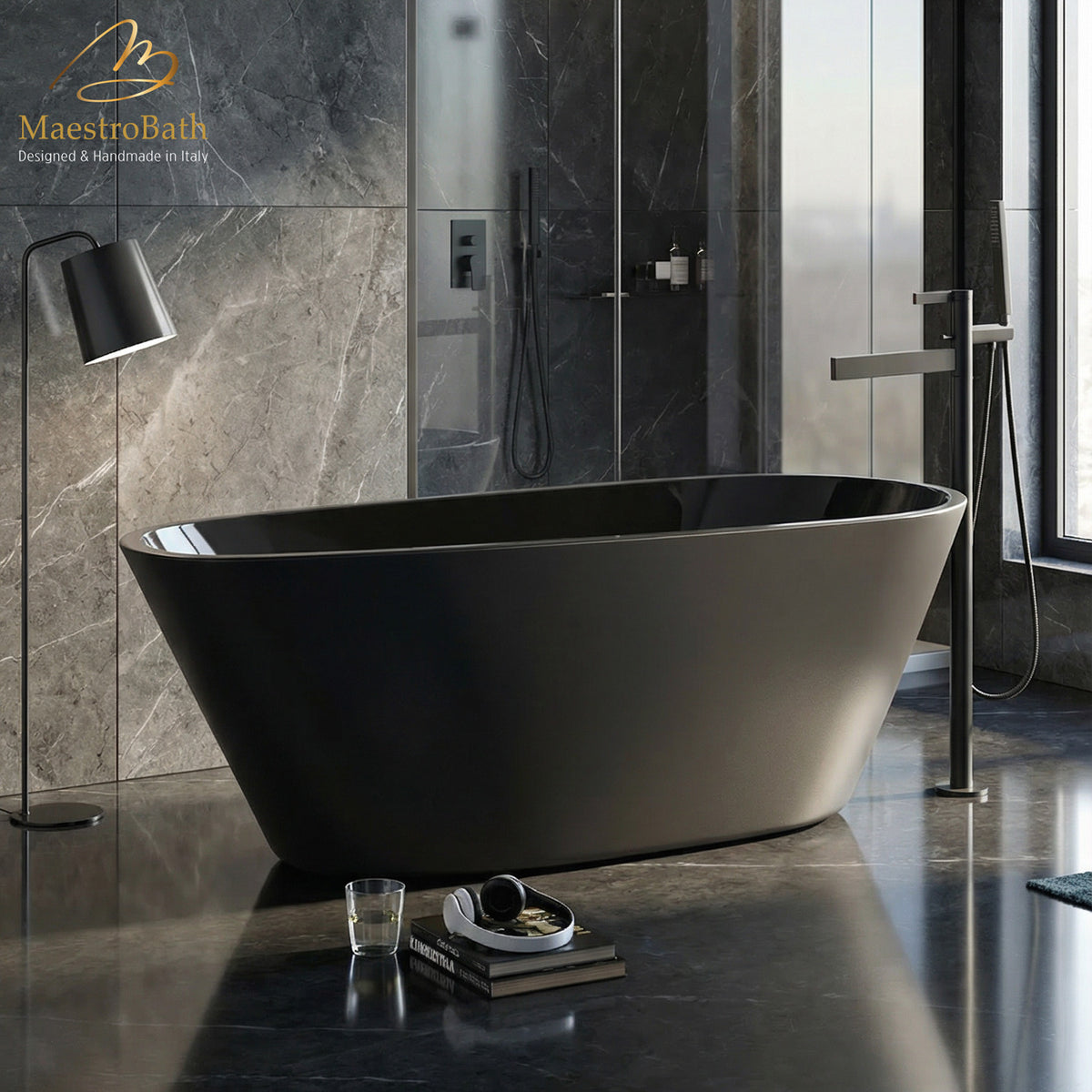
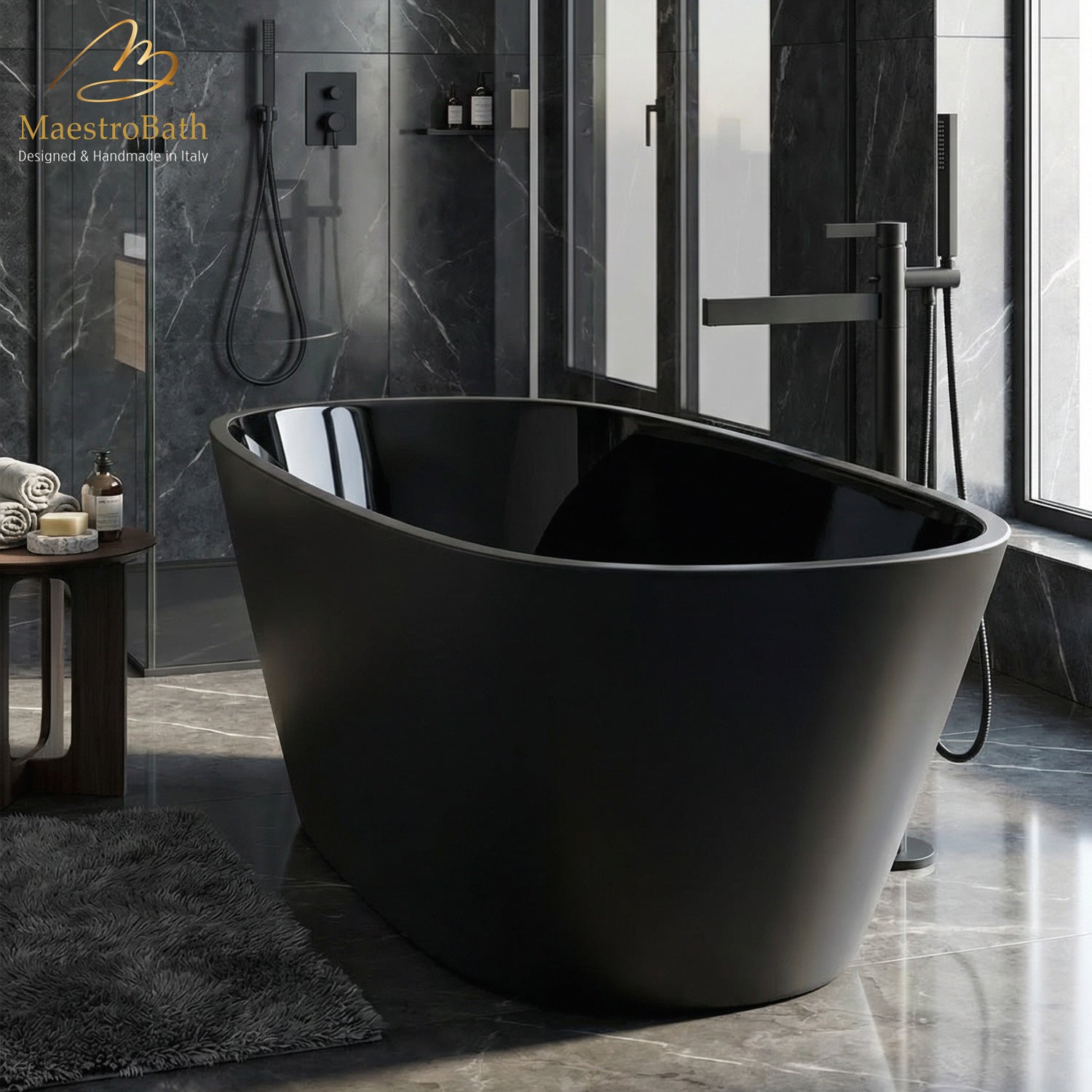
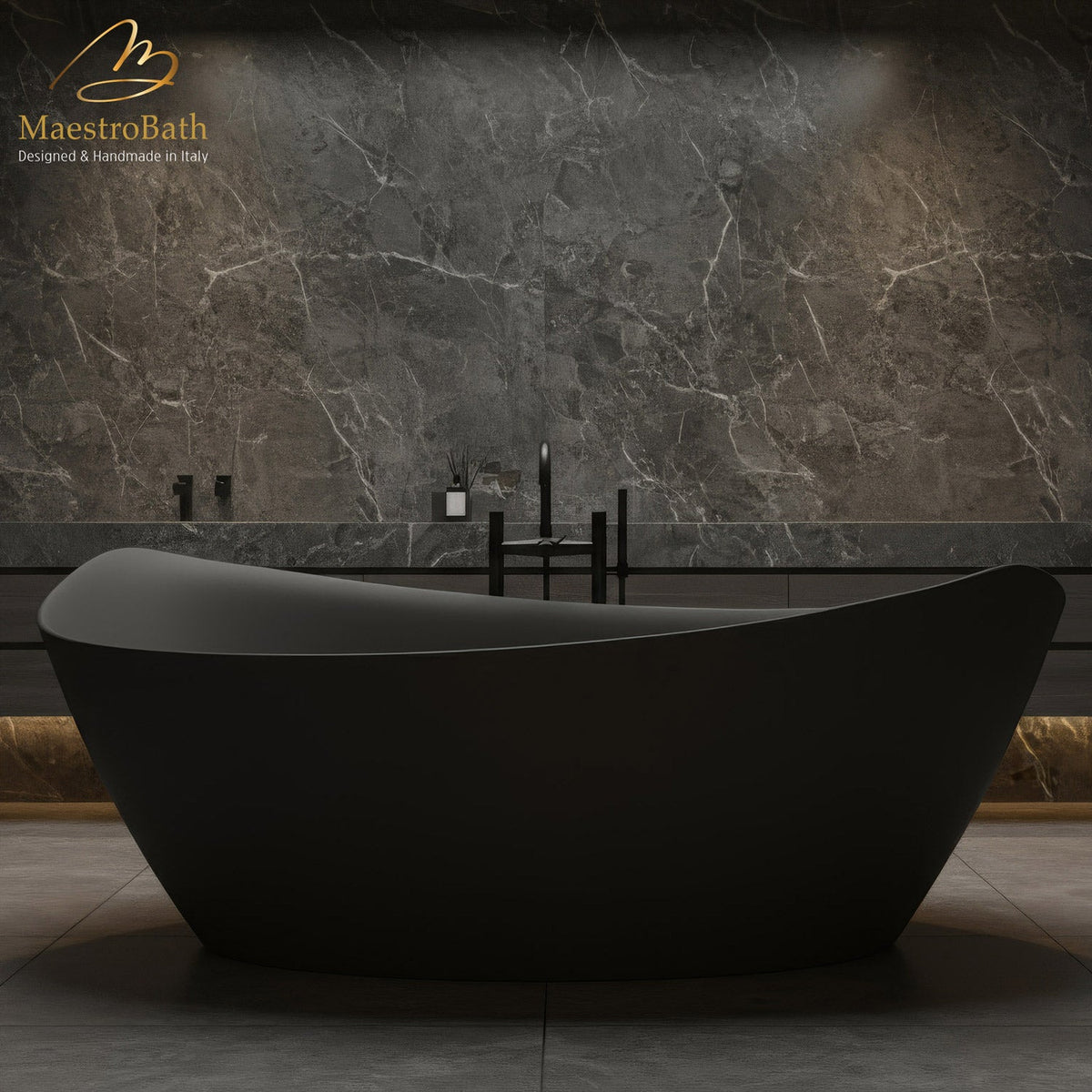
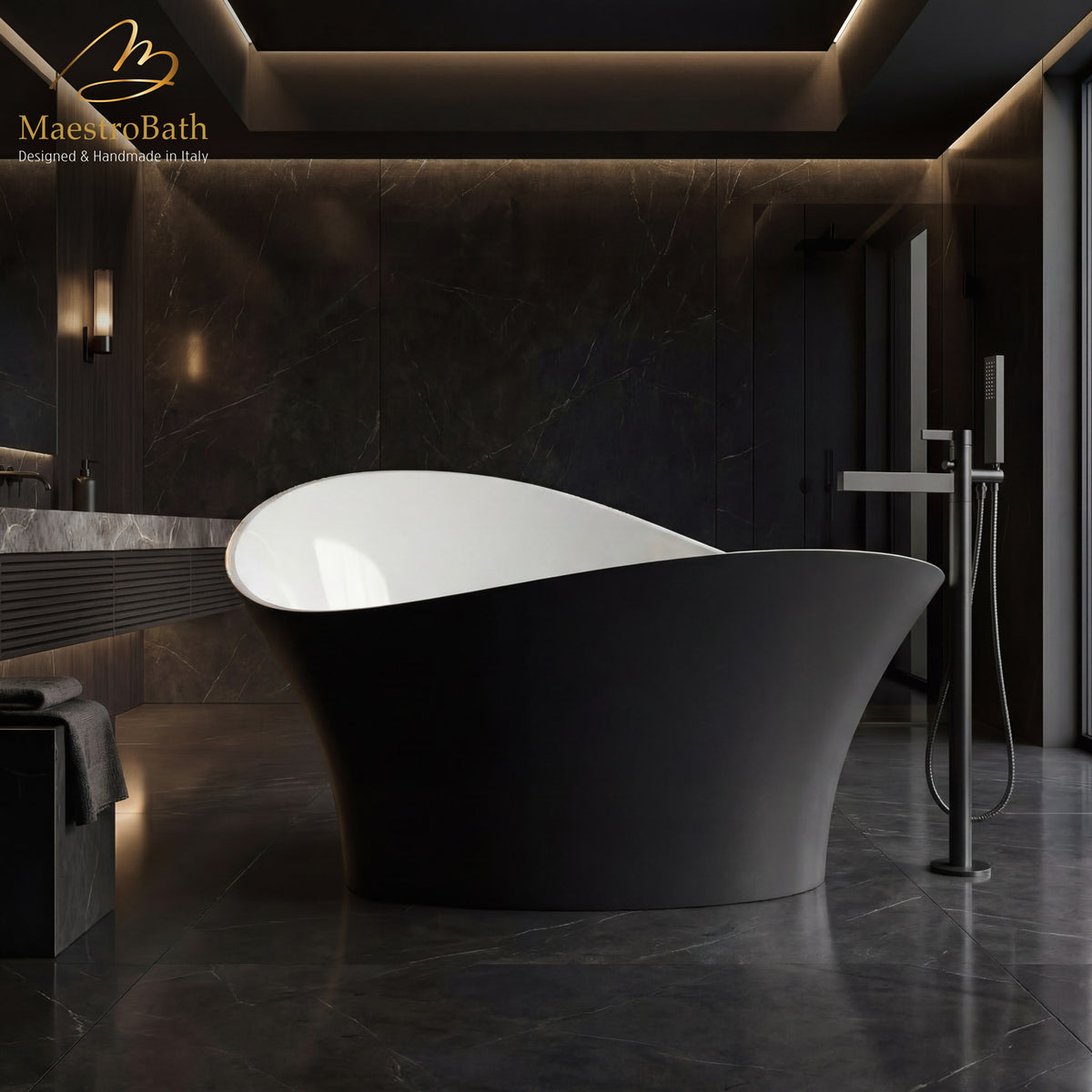
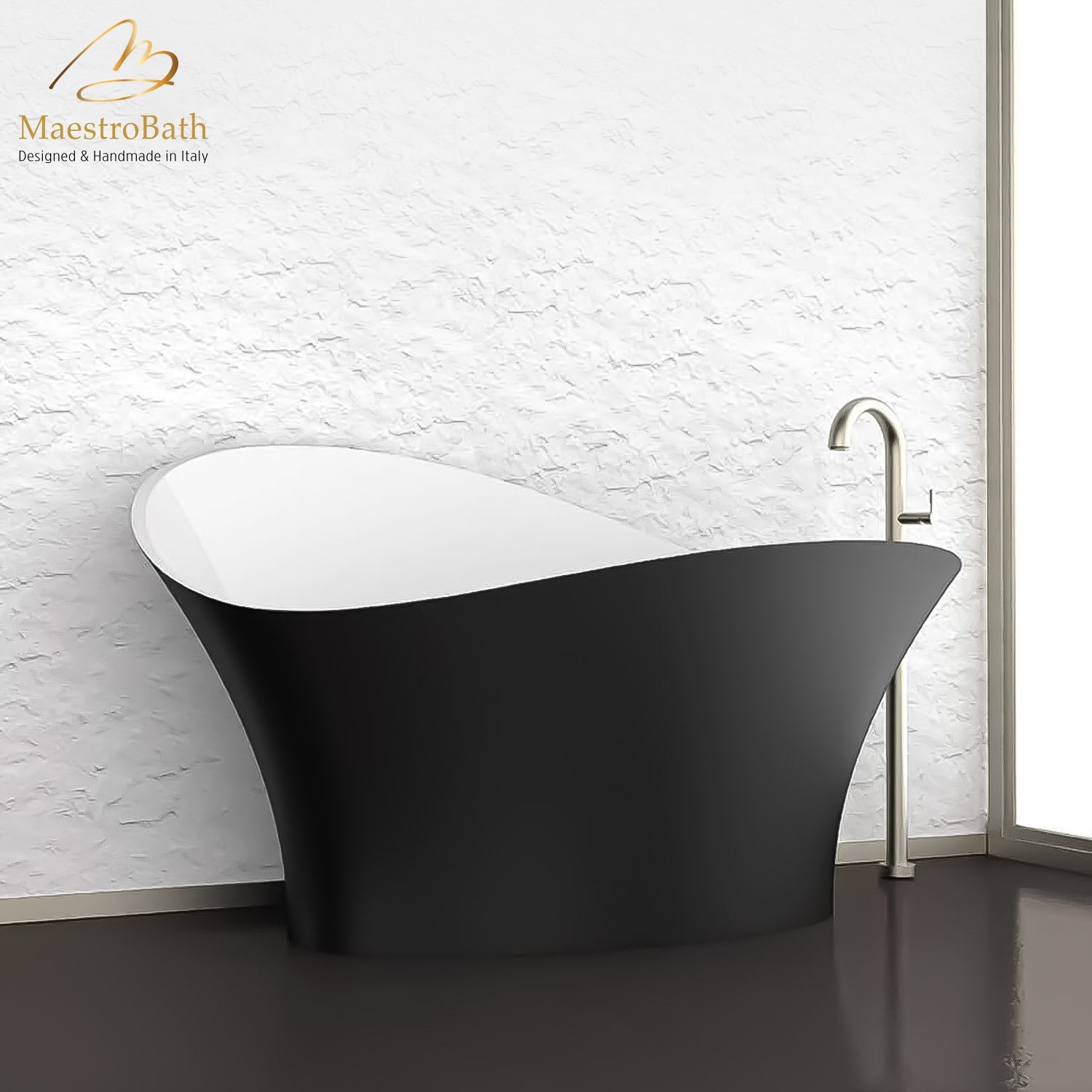
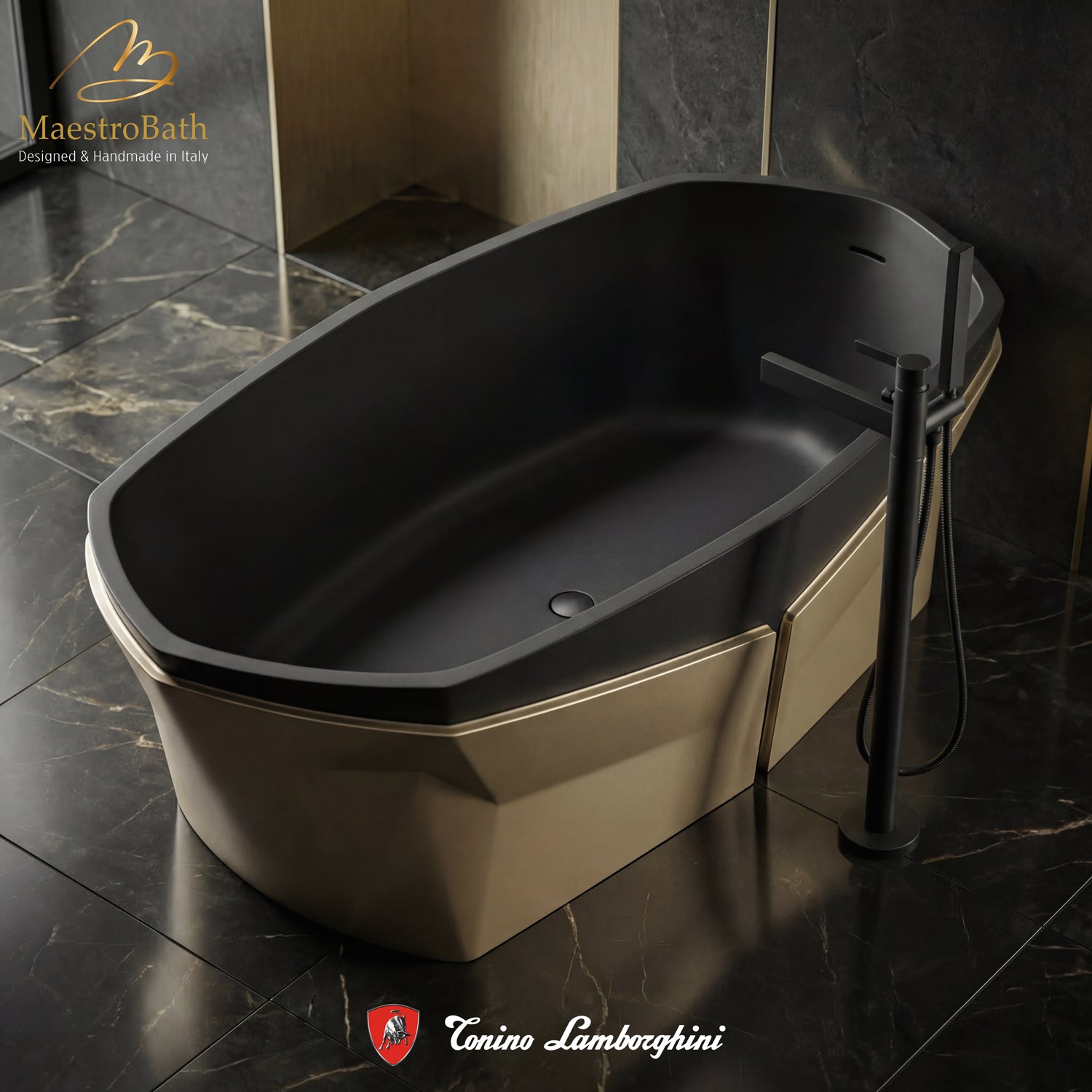
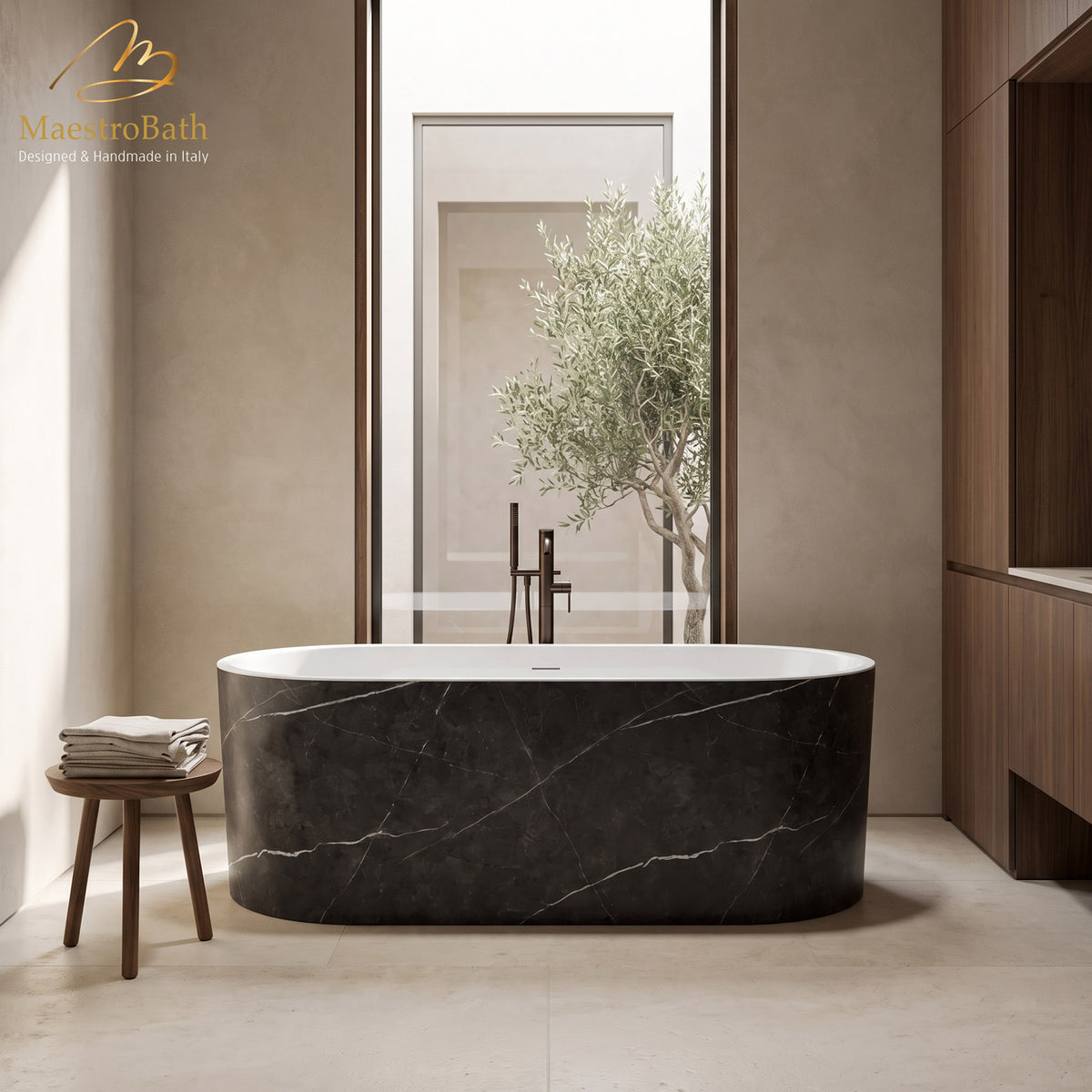
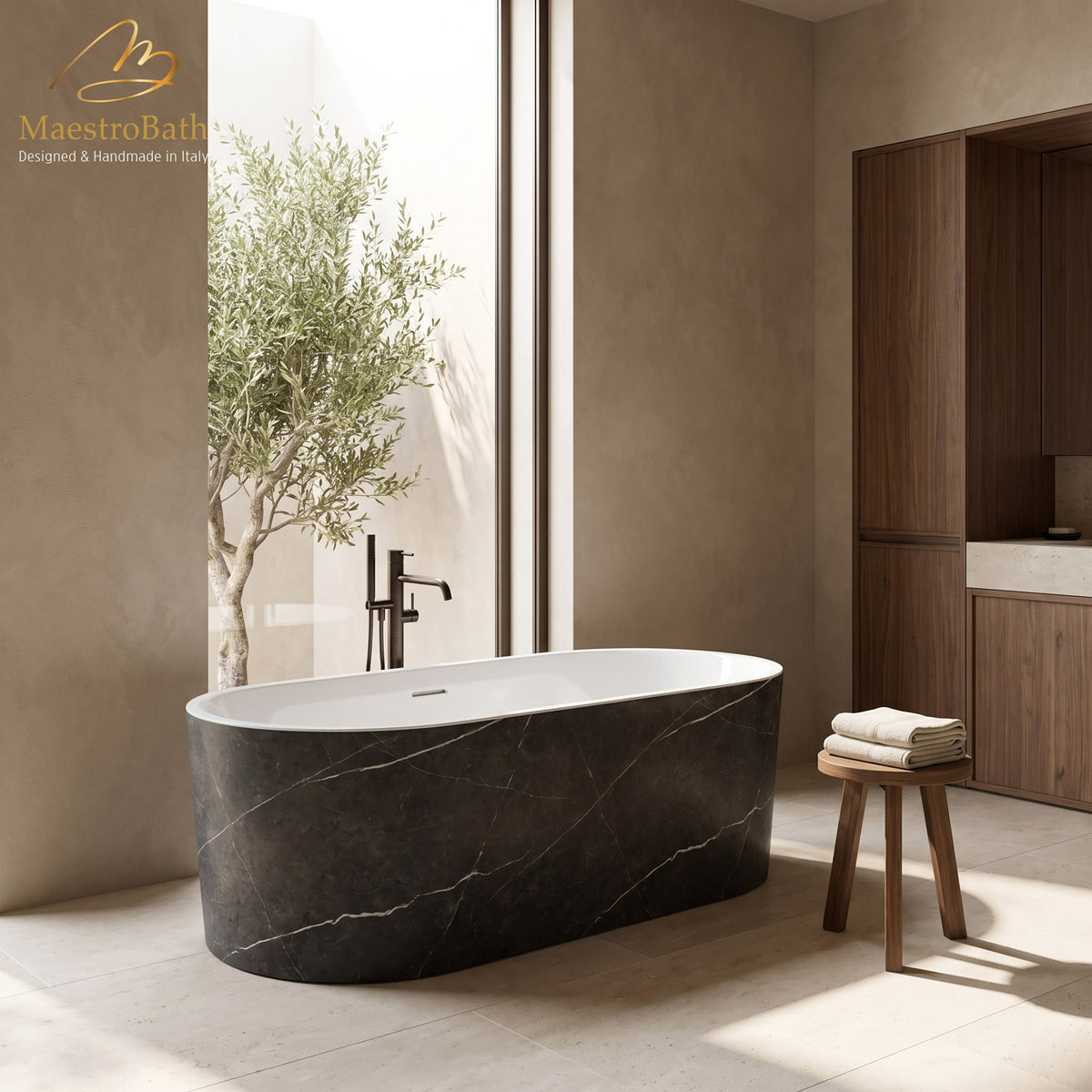
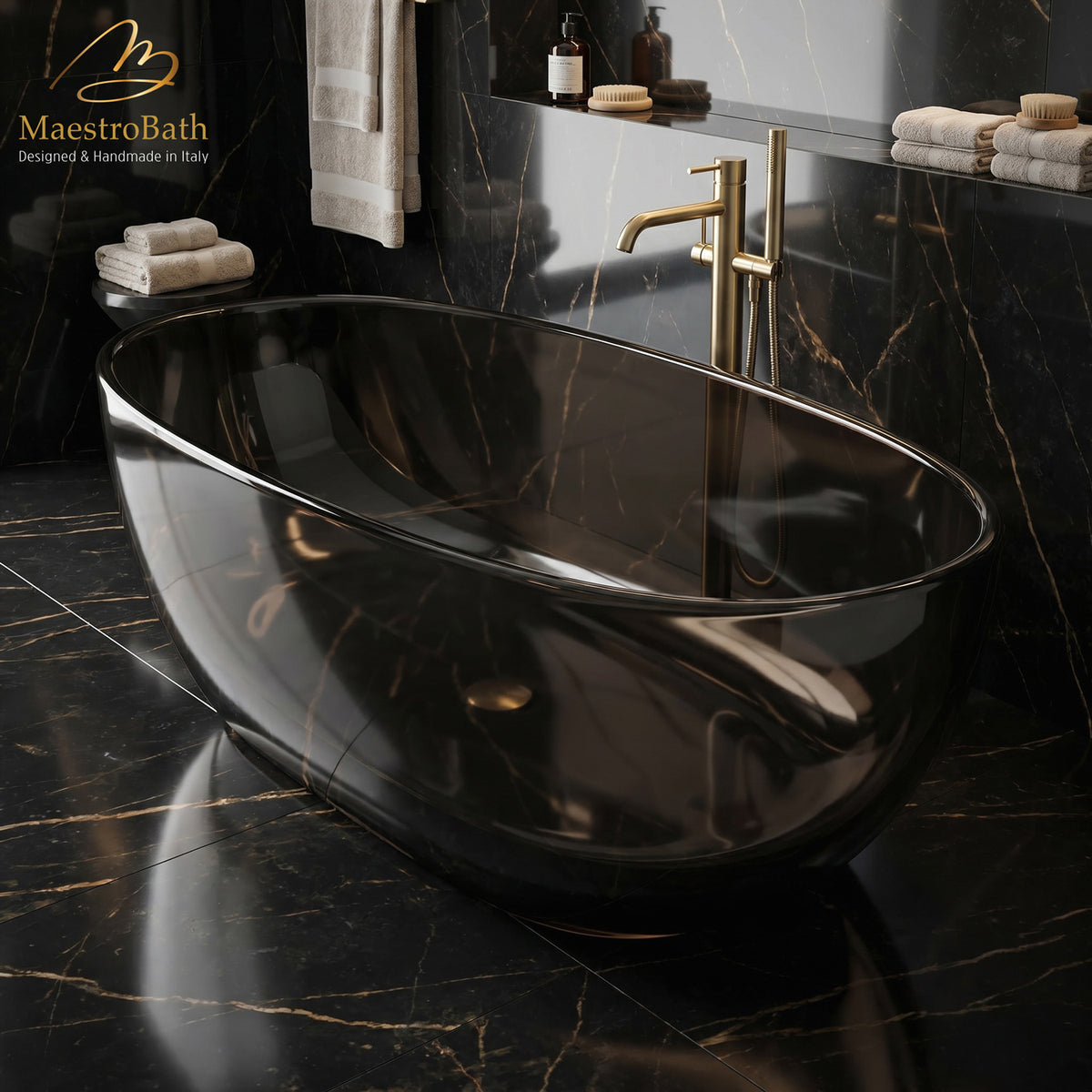
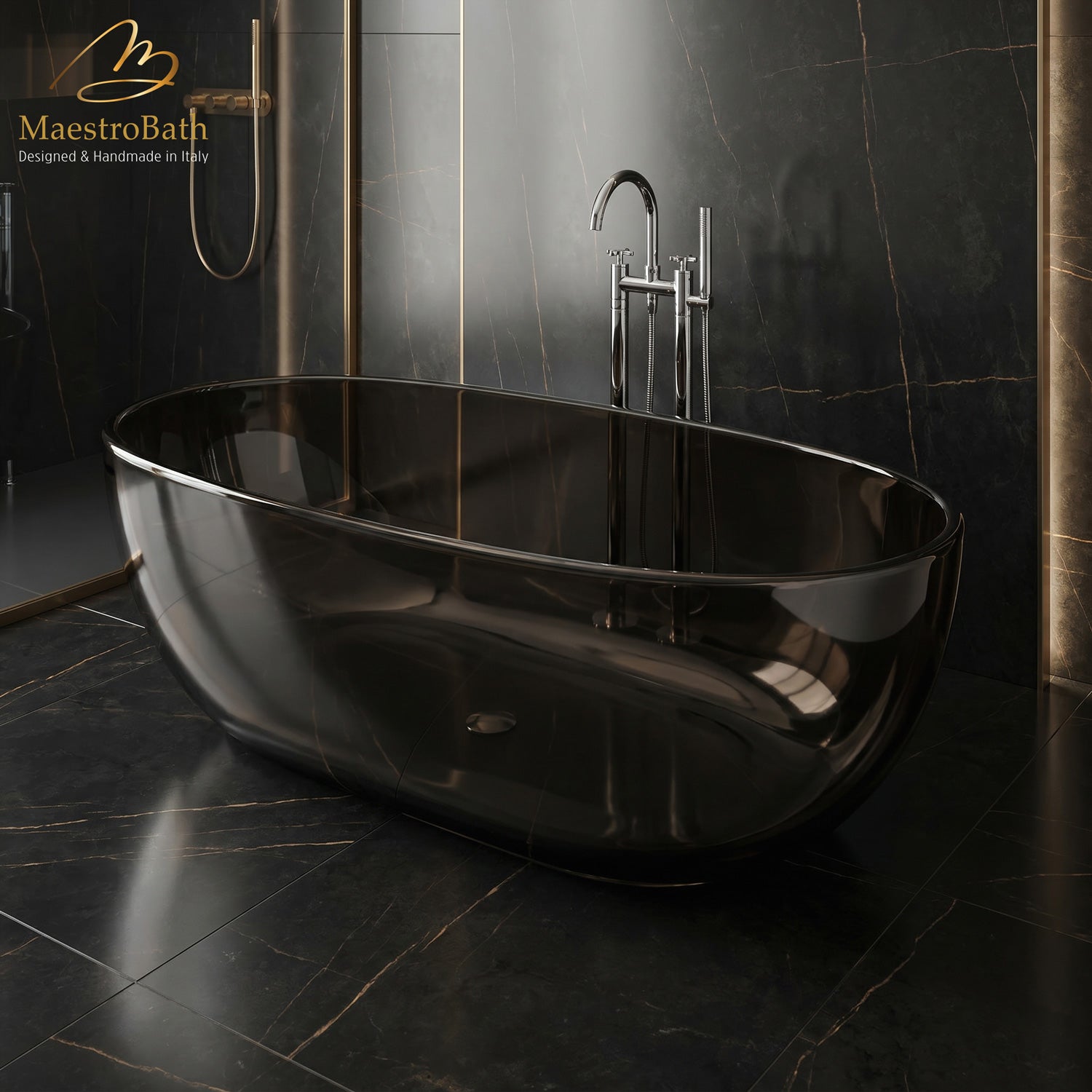
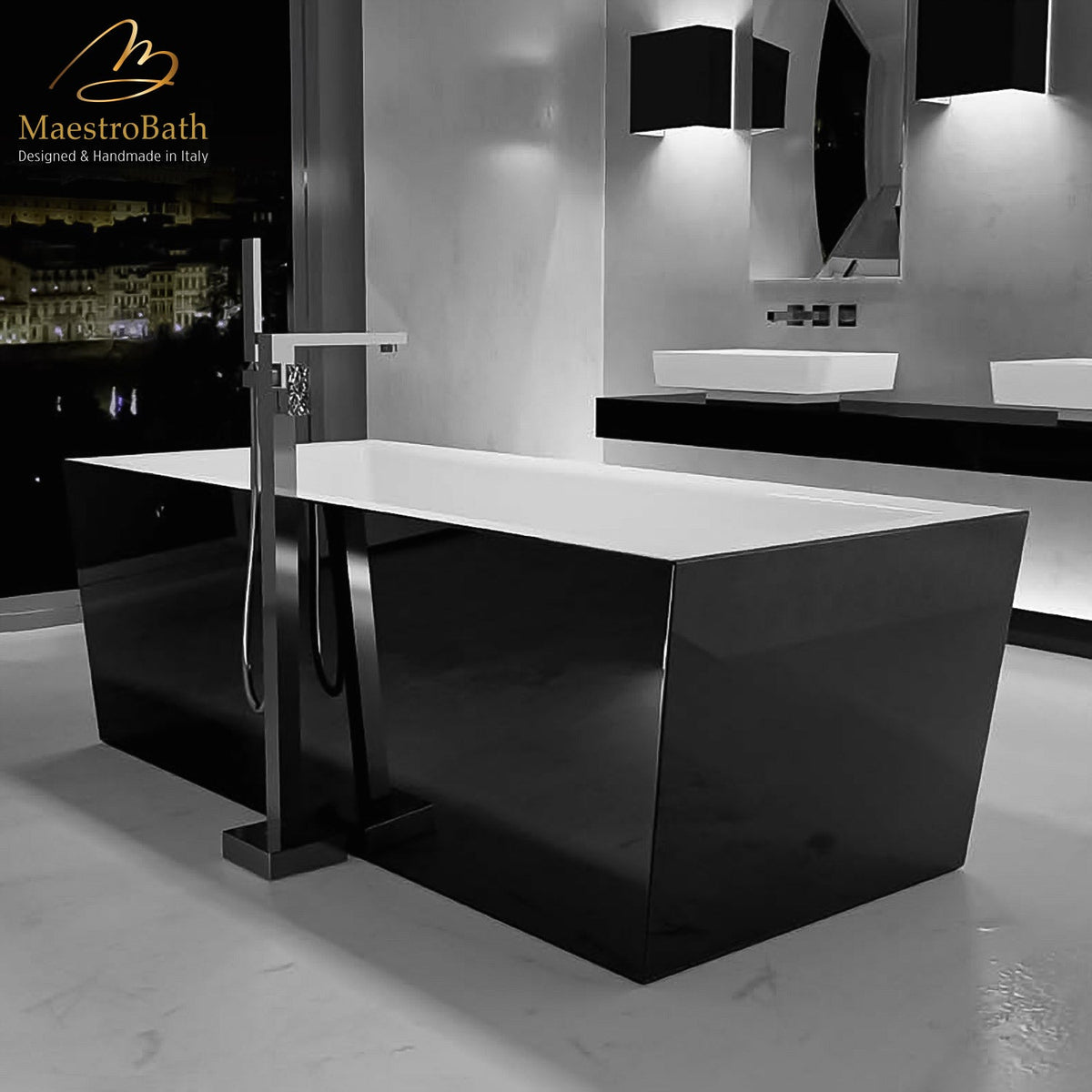
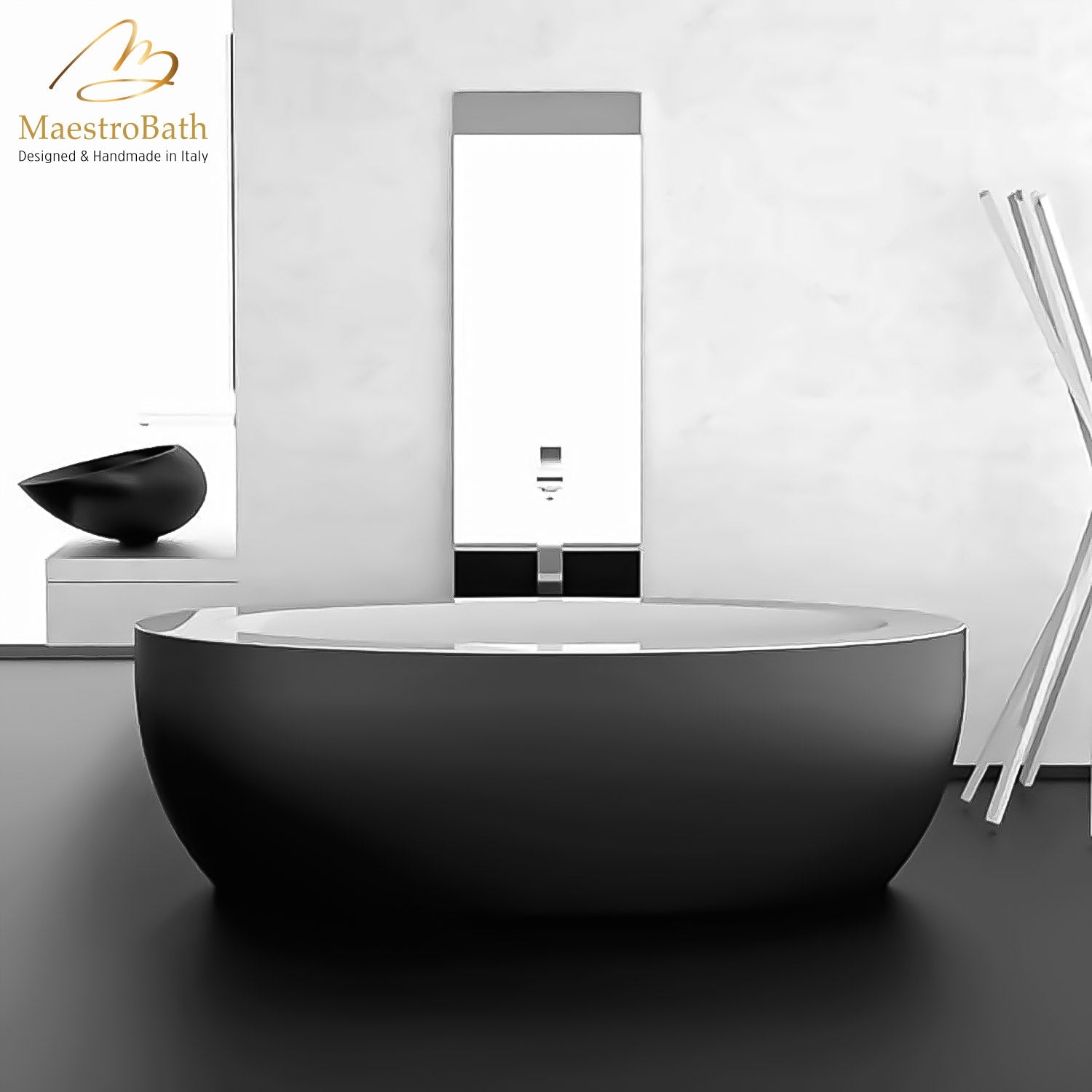
Black bathtubs are the opposite decision. A black tub does not recede, so it becomes the first thing anyone sees in the room. It rewards real daylight and a quiet floor, and it records hard water more clearly than any other finish, because mineral deposits dry pale against dark.
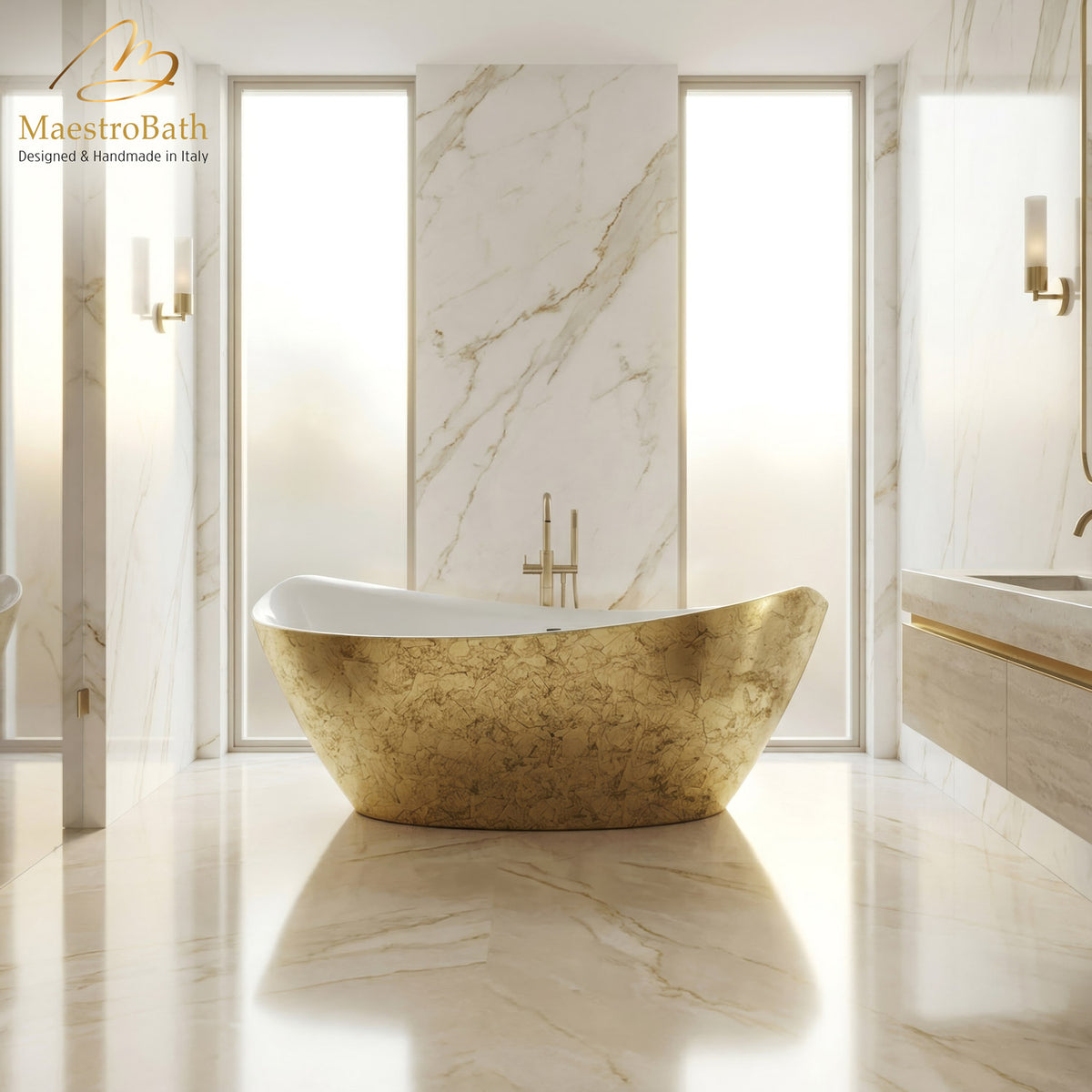
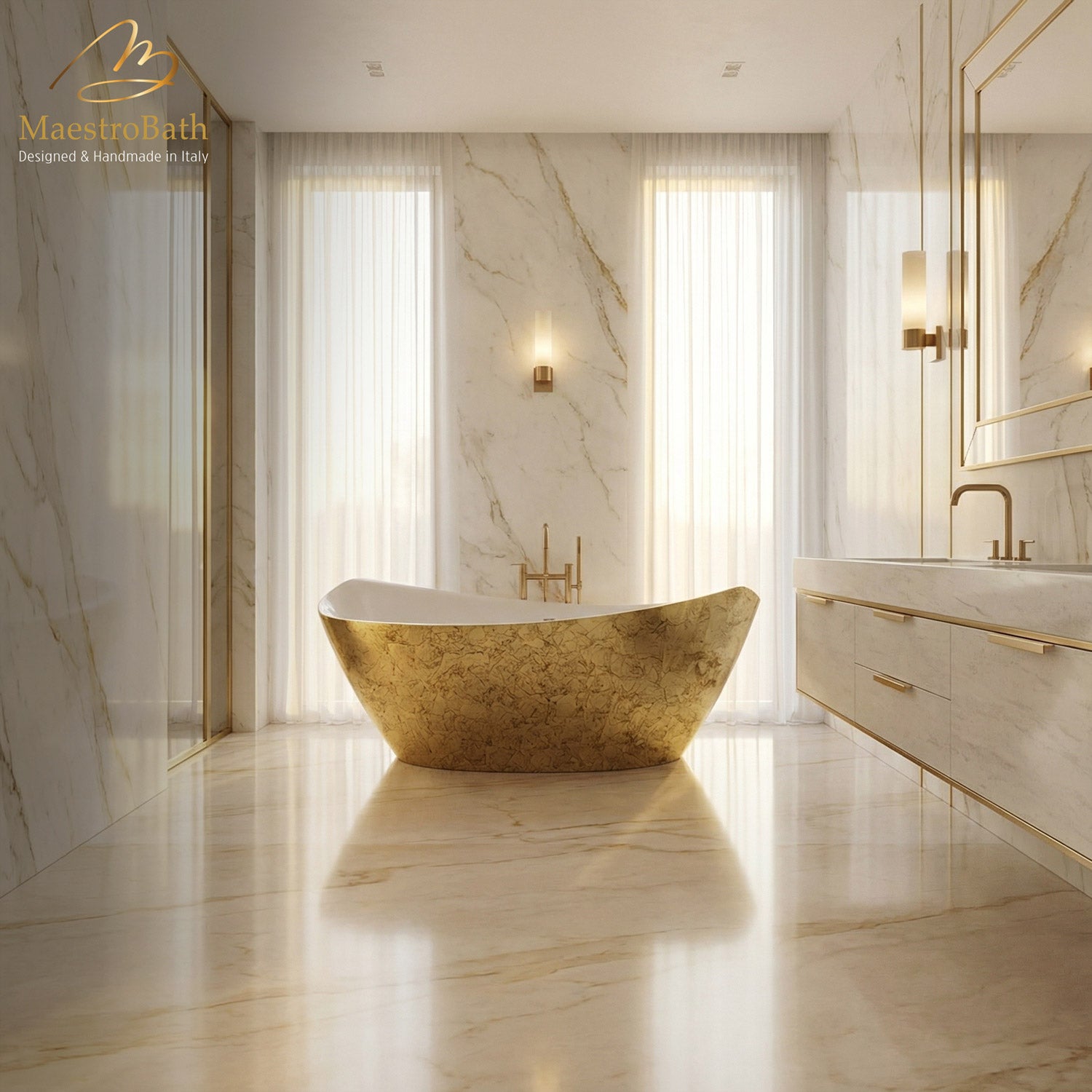
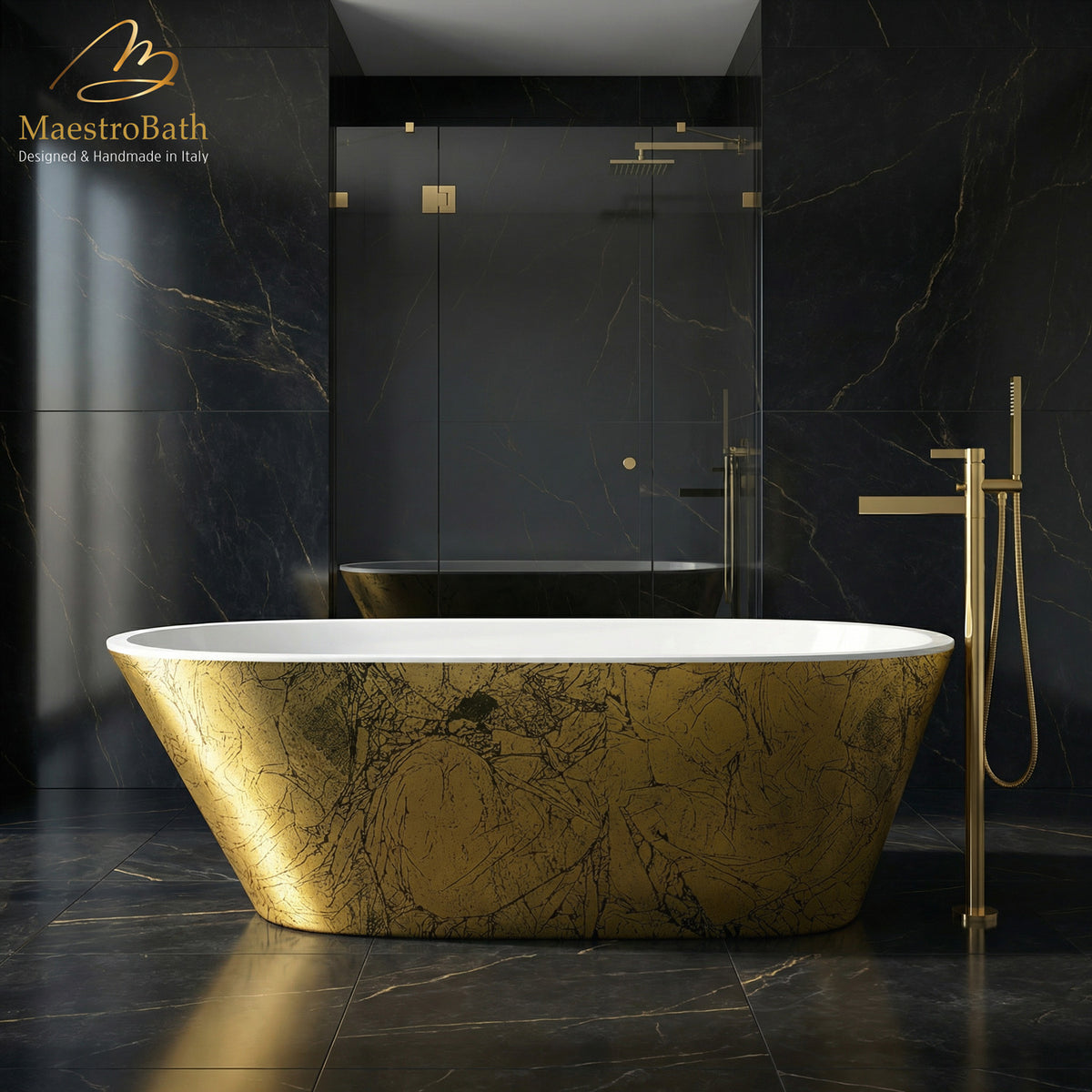
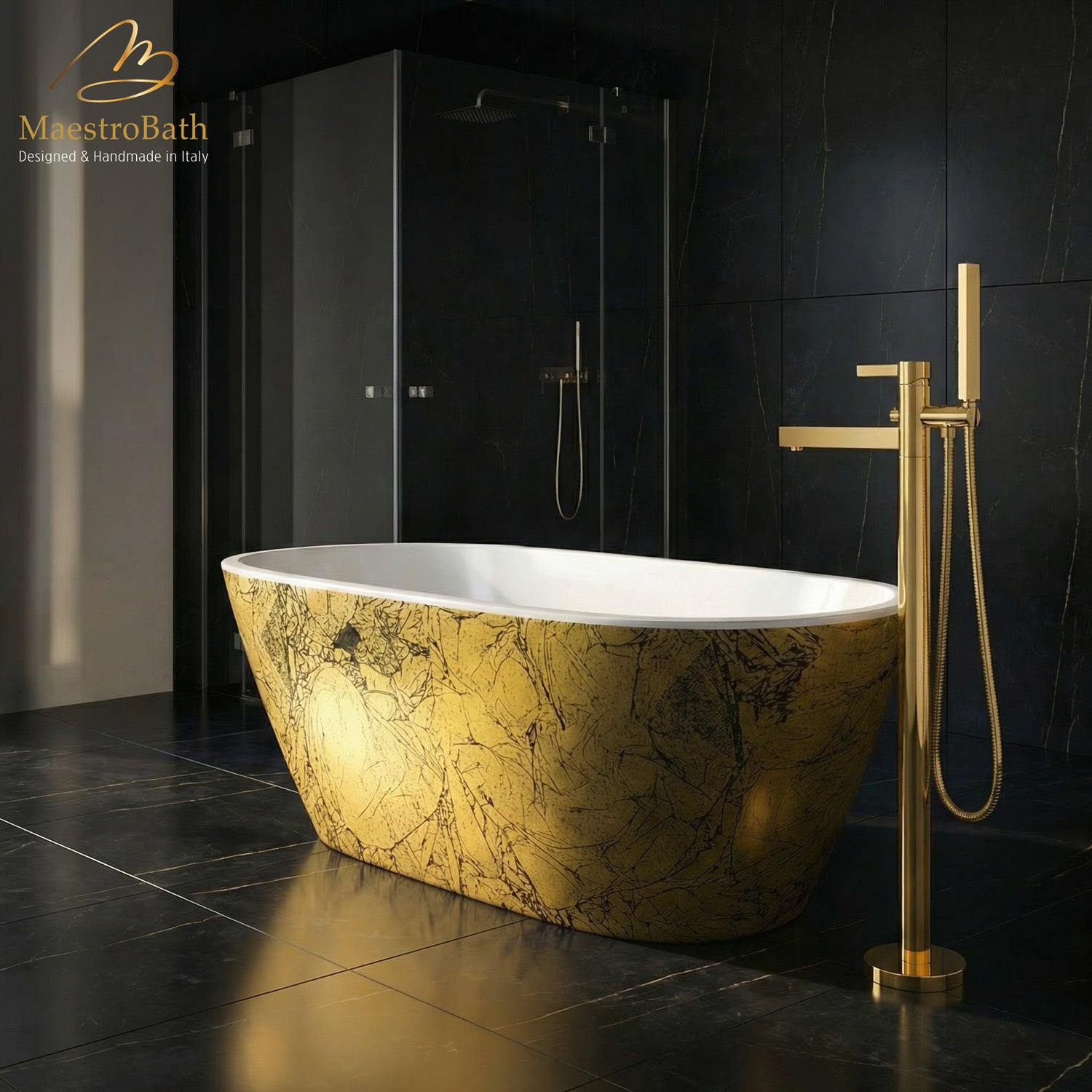
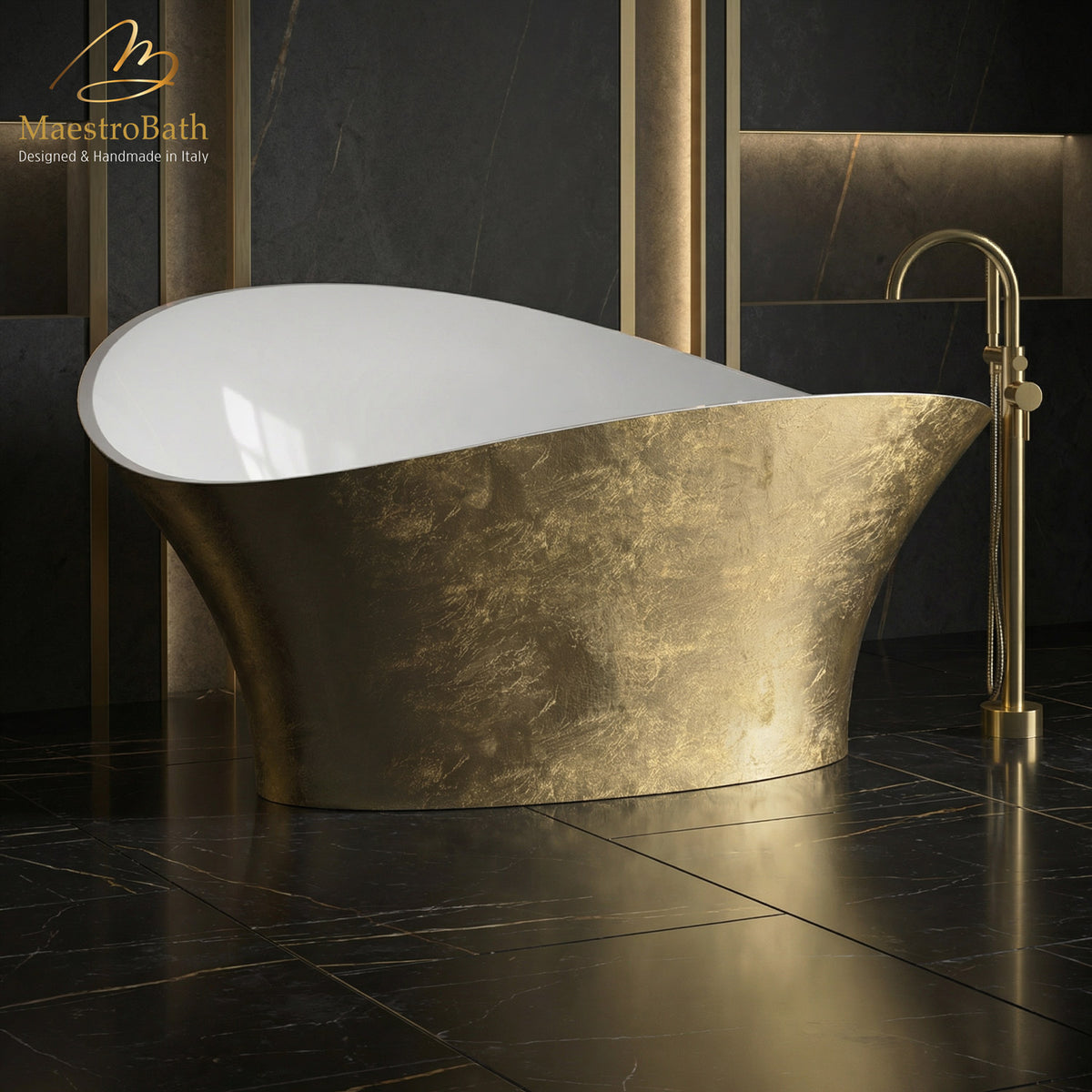
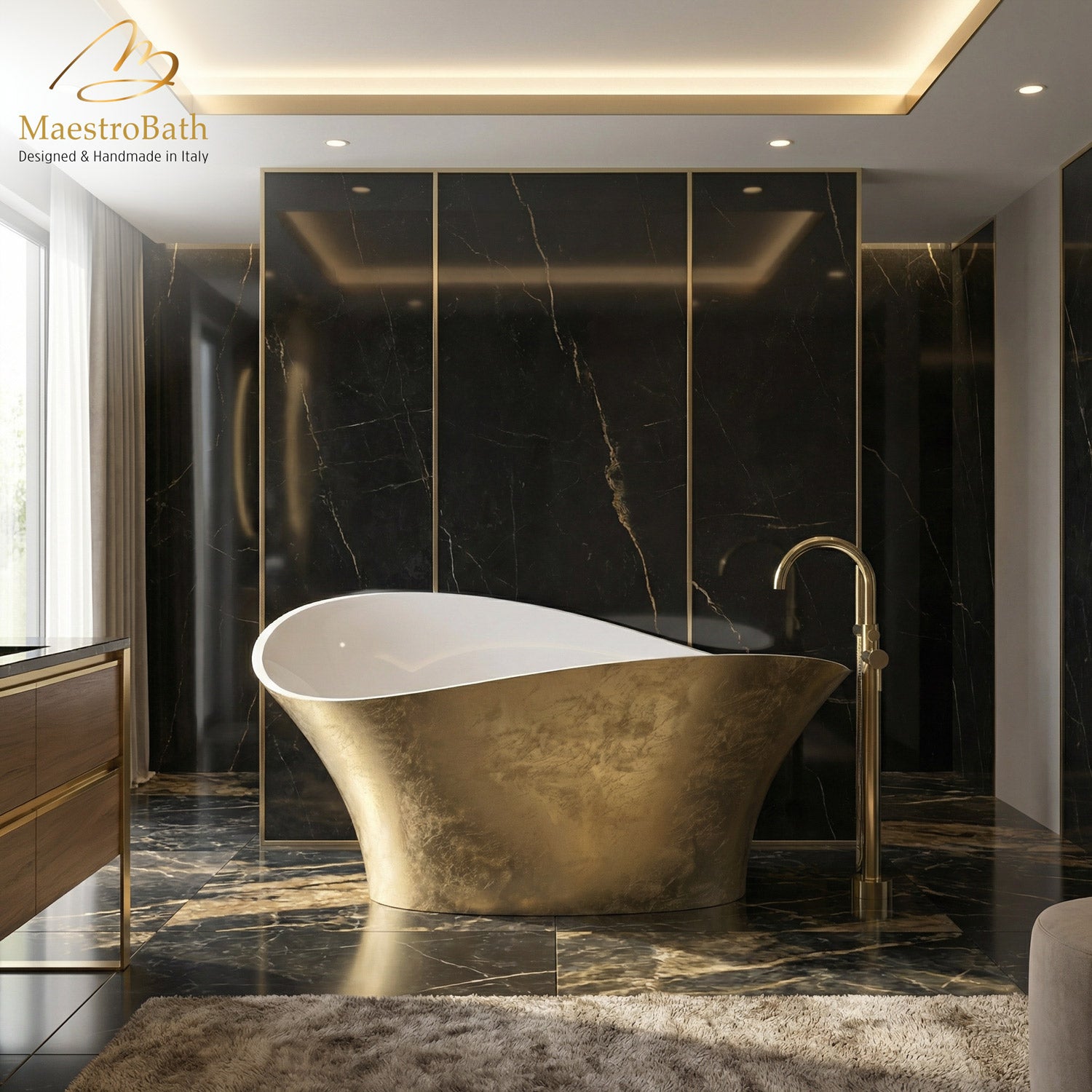
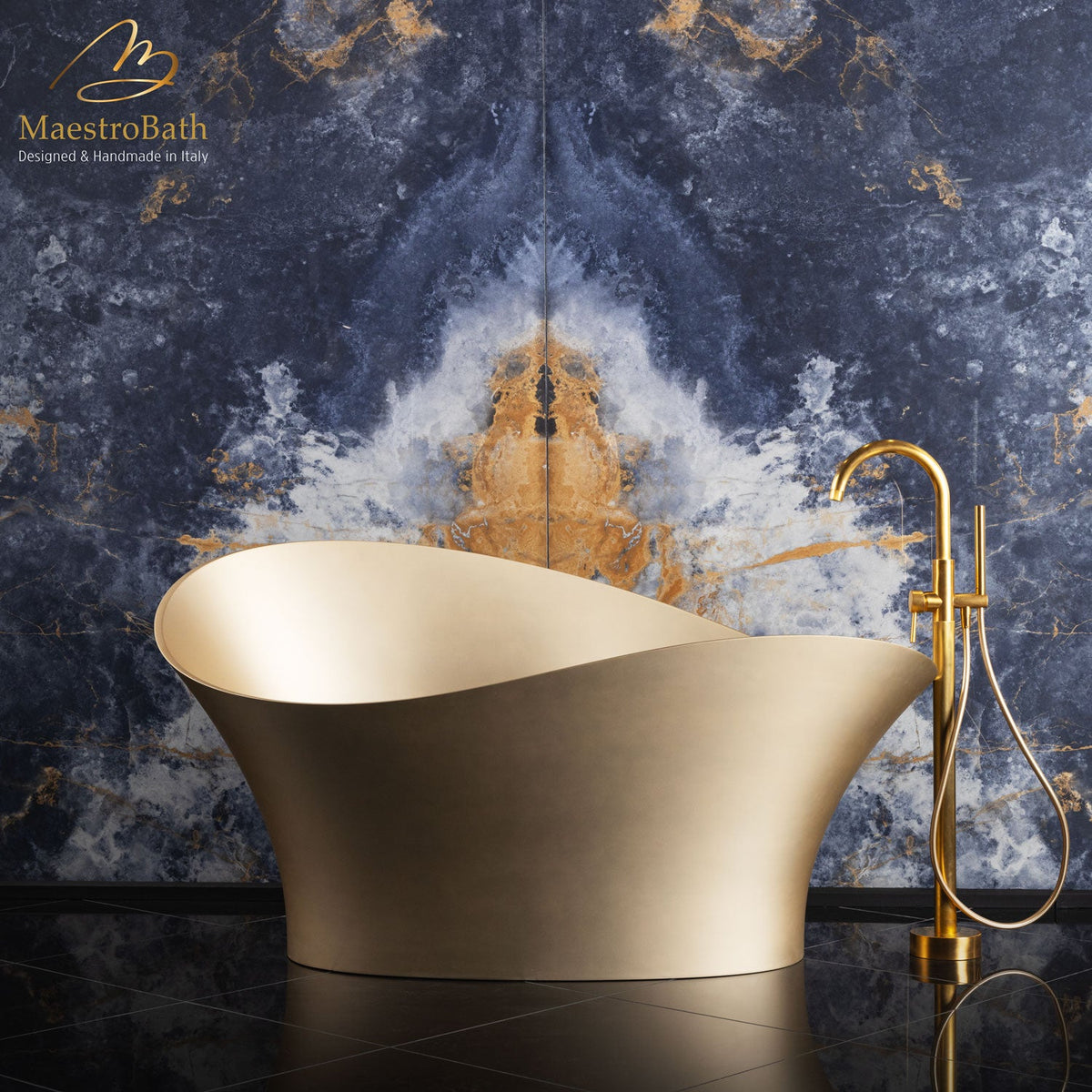
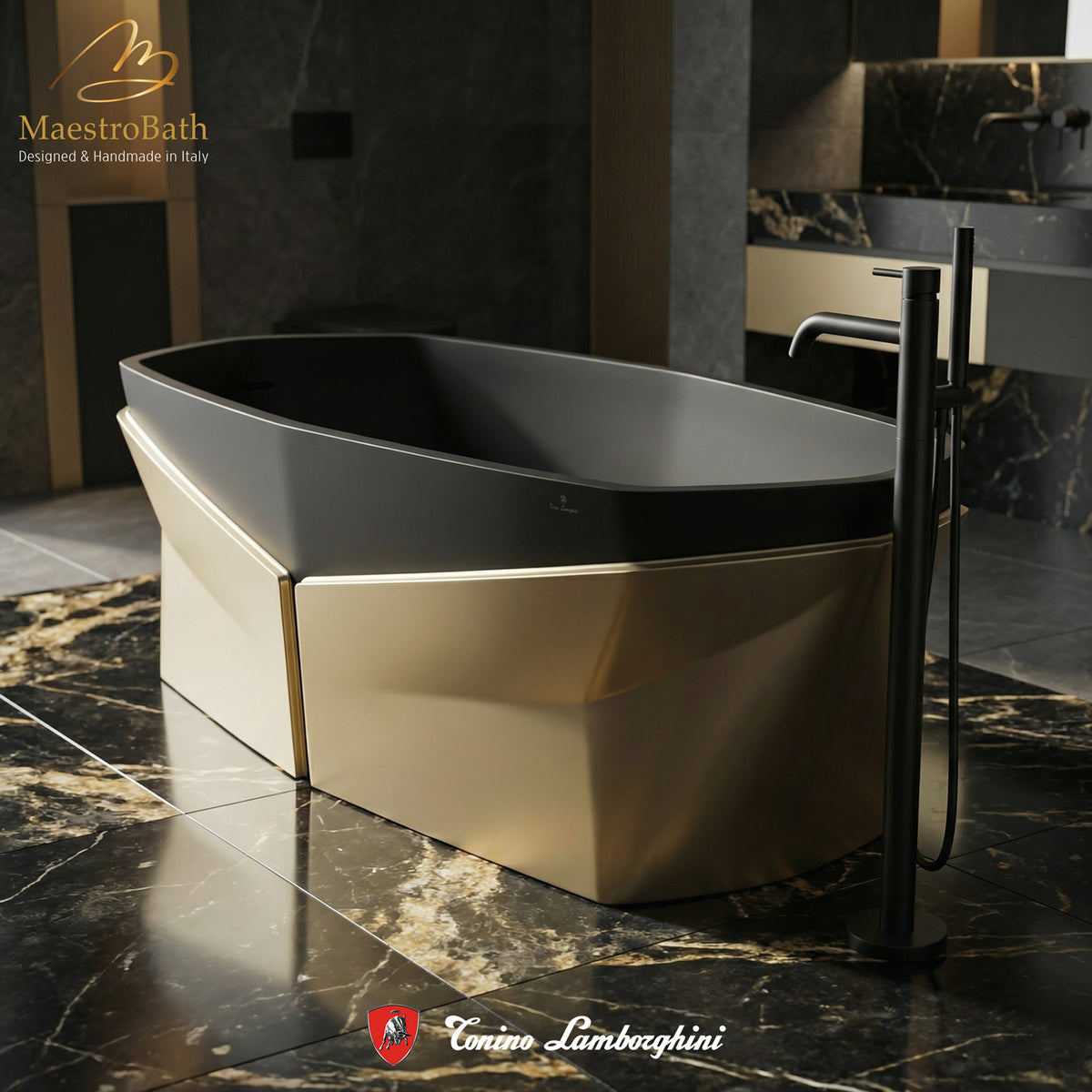
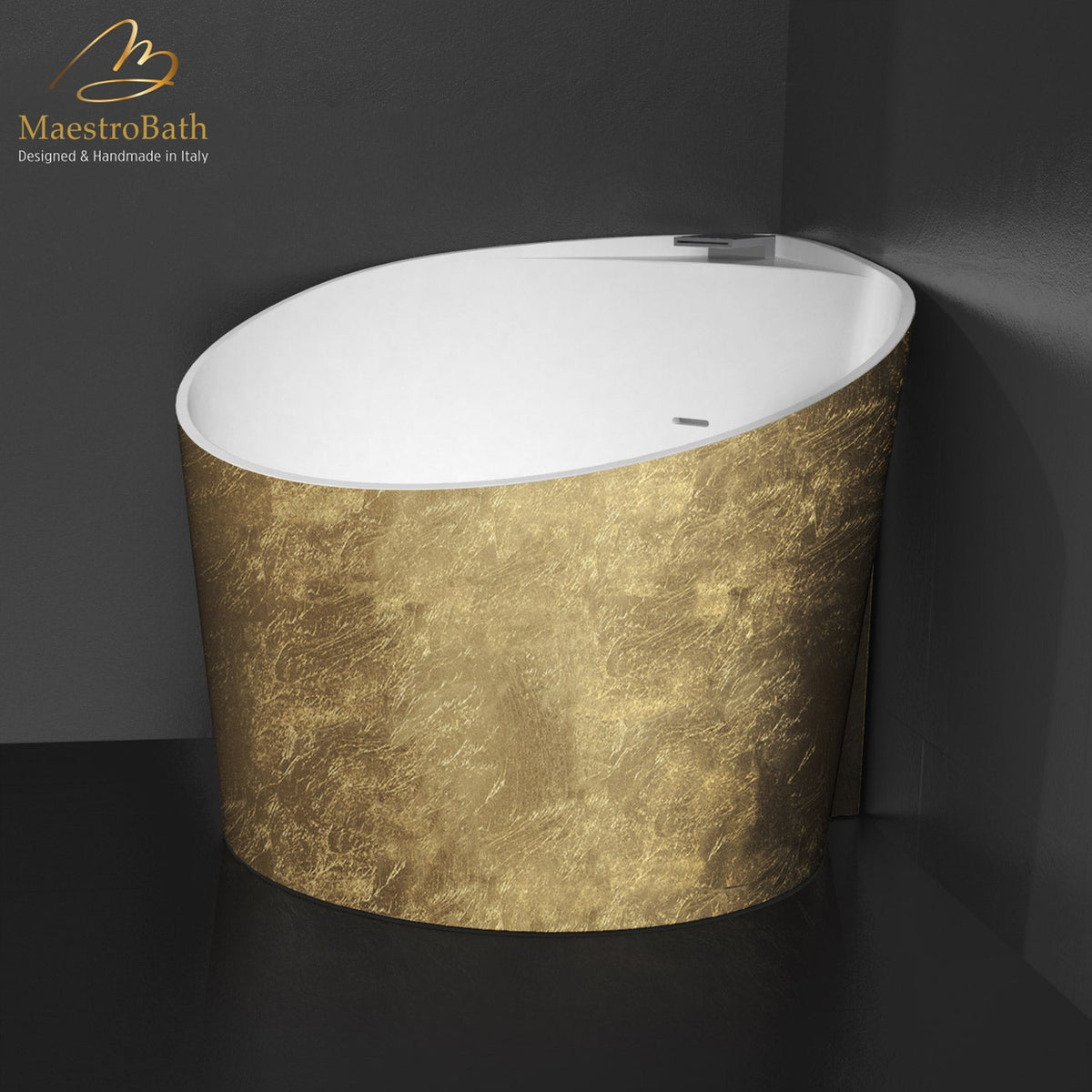
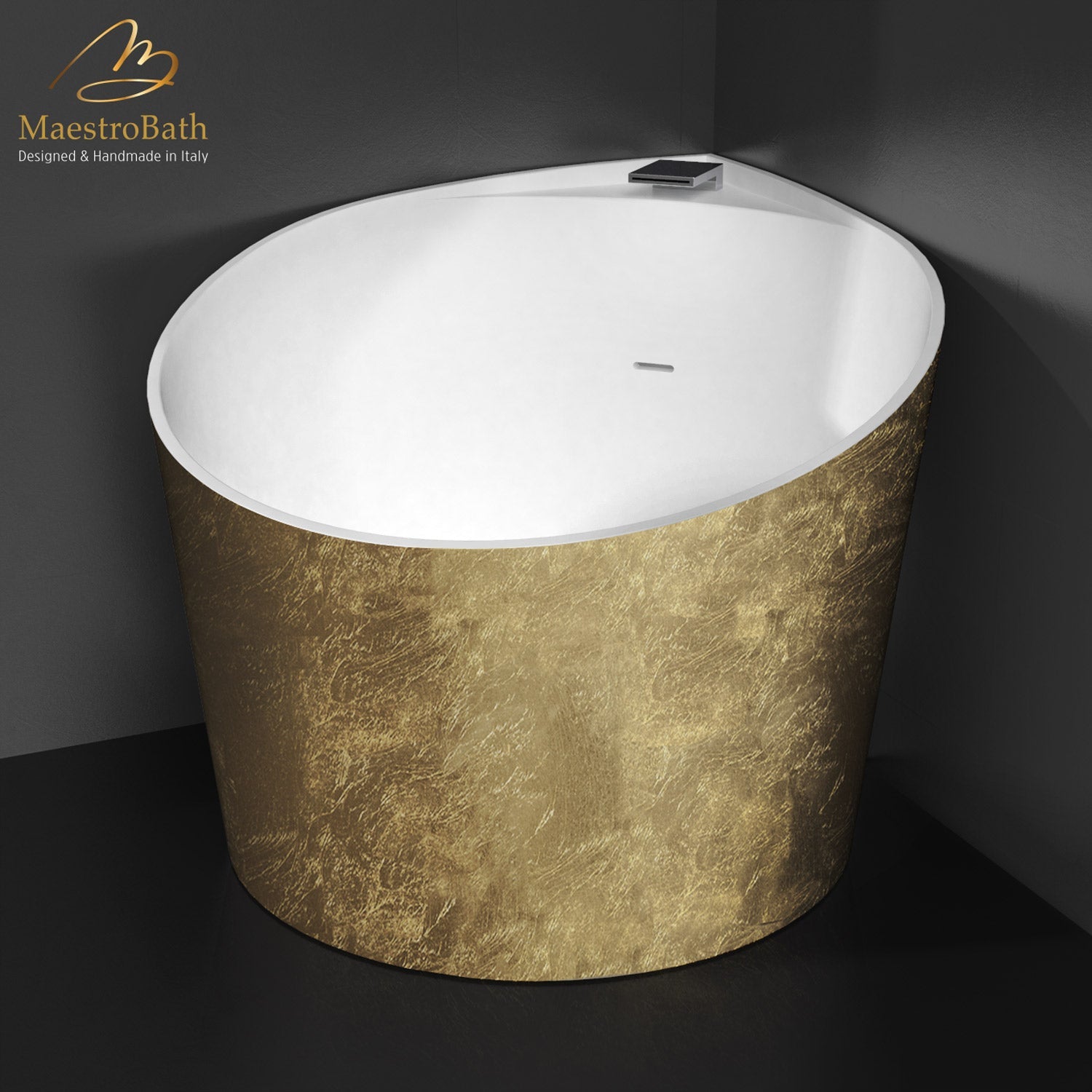
Gold bathtubs, in gold leaf and champagne gold, are the most theatrical thing we make. A leafed surface carries a depth that a sprayed metallic never reaches, and in return it asks for a restrained room around it. Plain plaster, a quiet floor, minimal hardware.
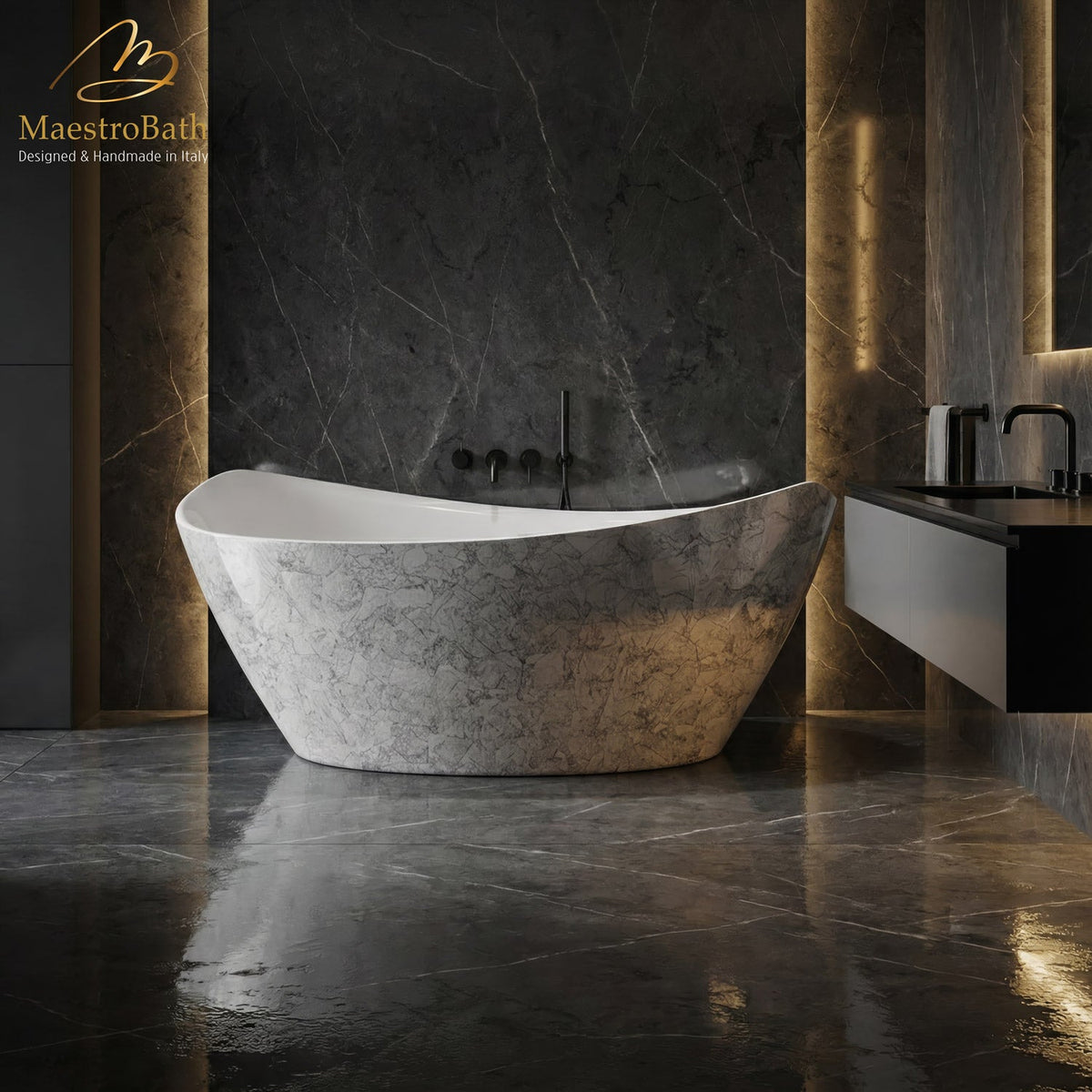
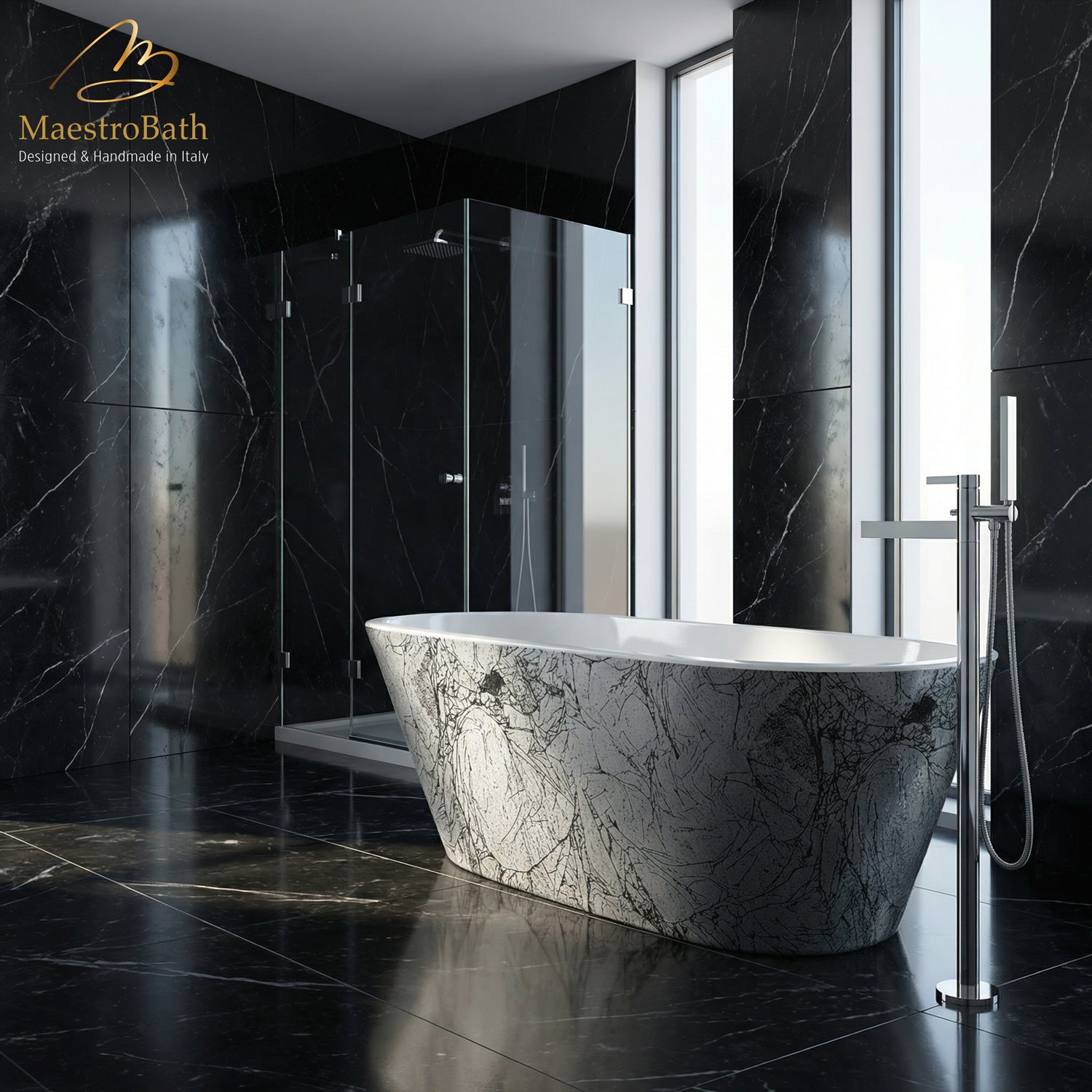
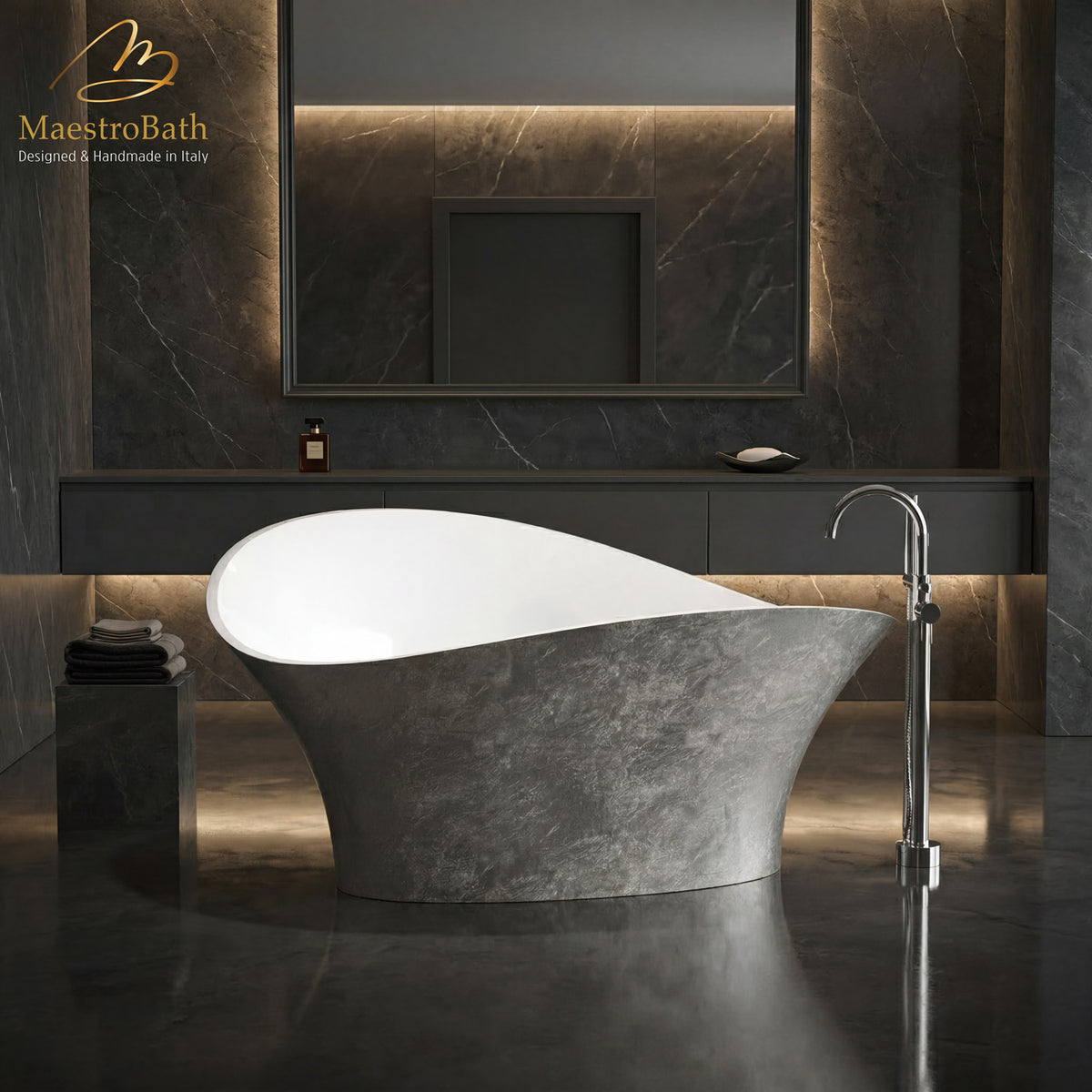
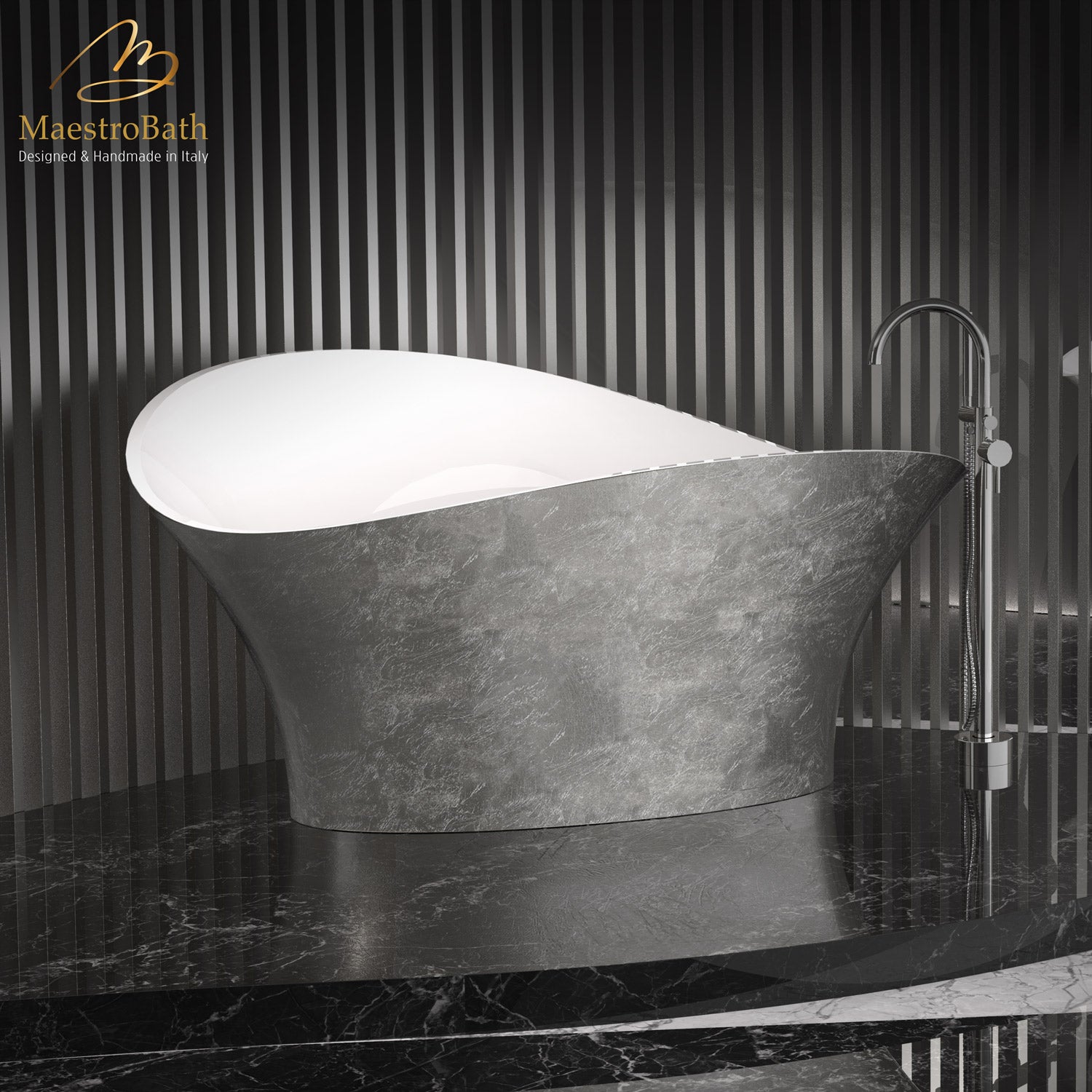
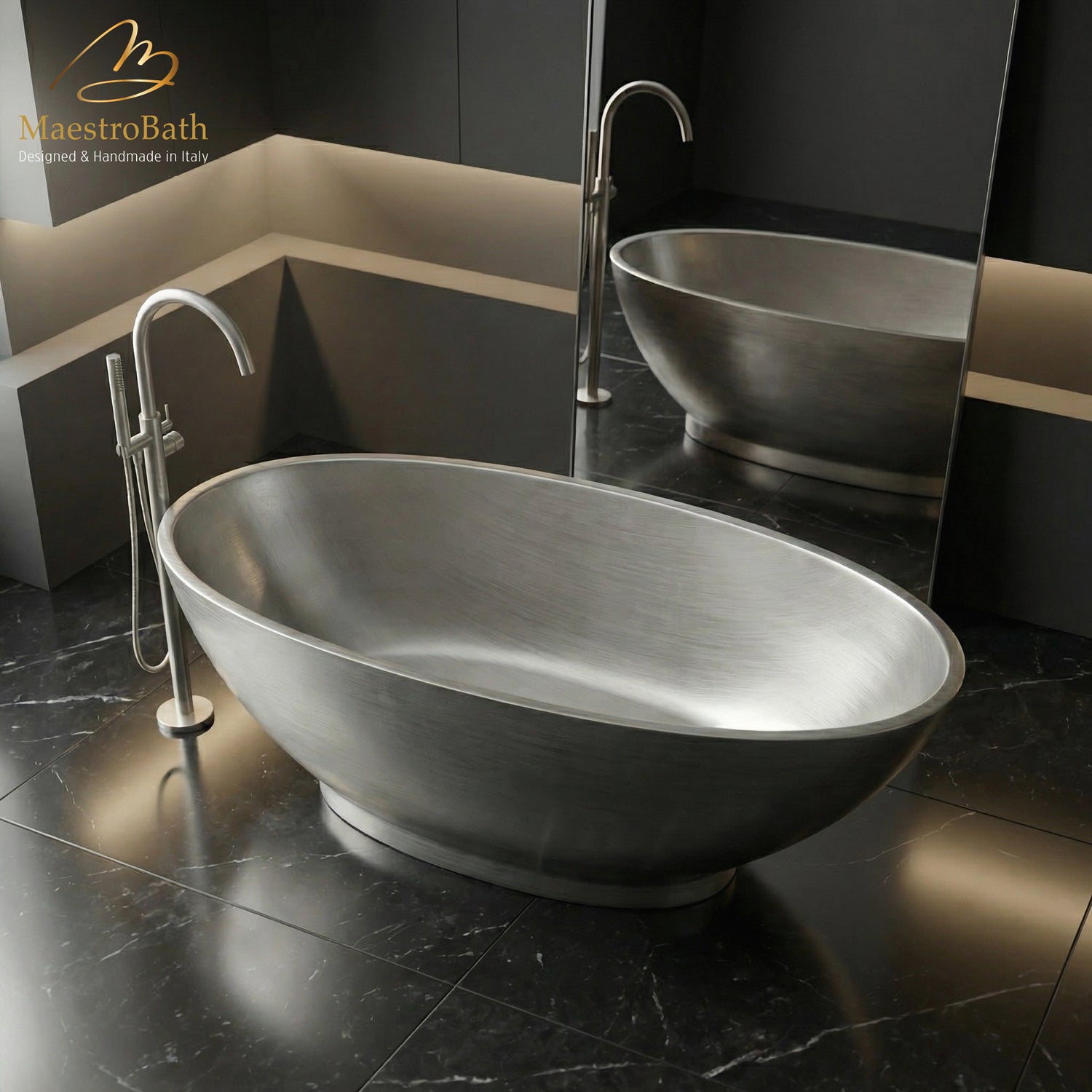
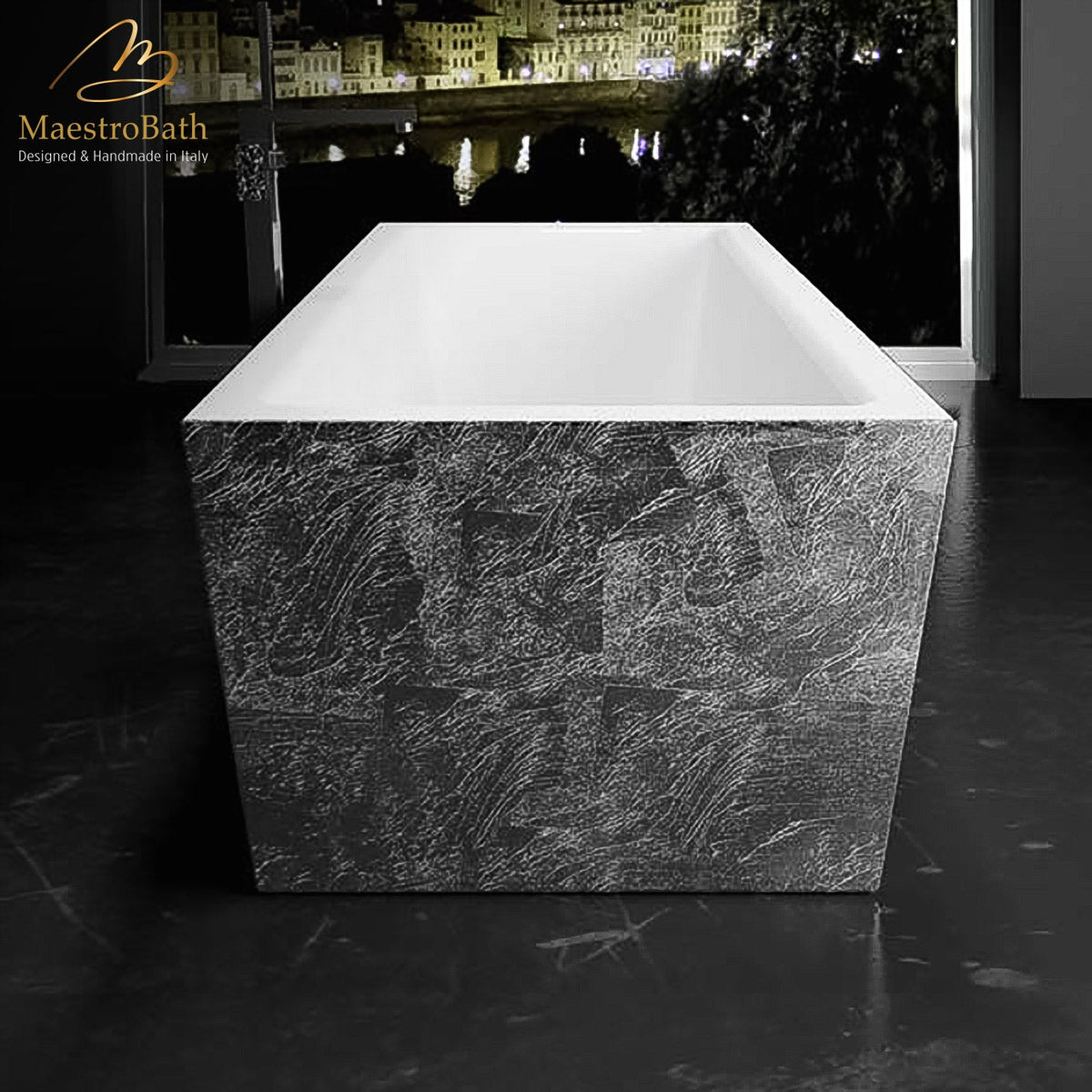
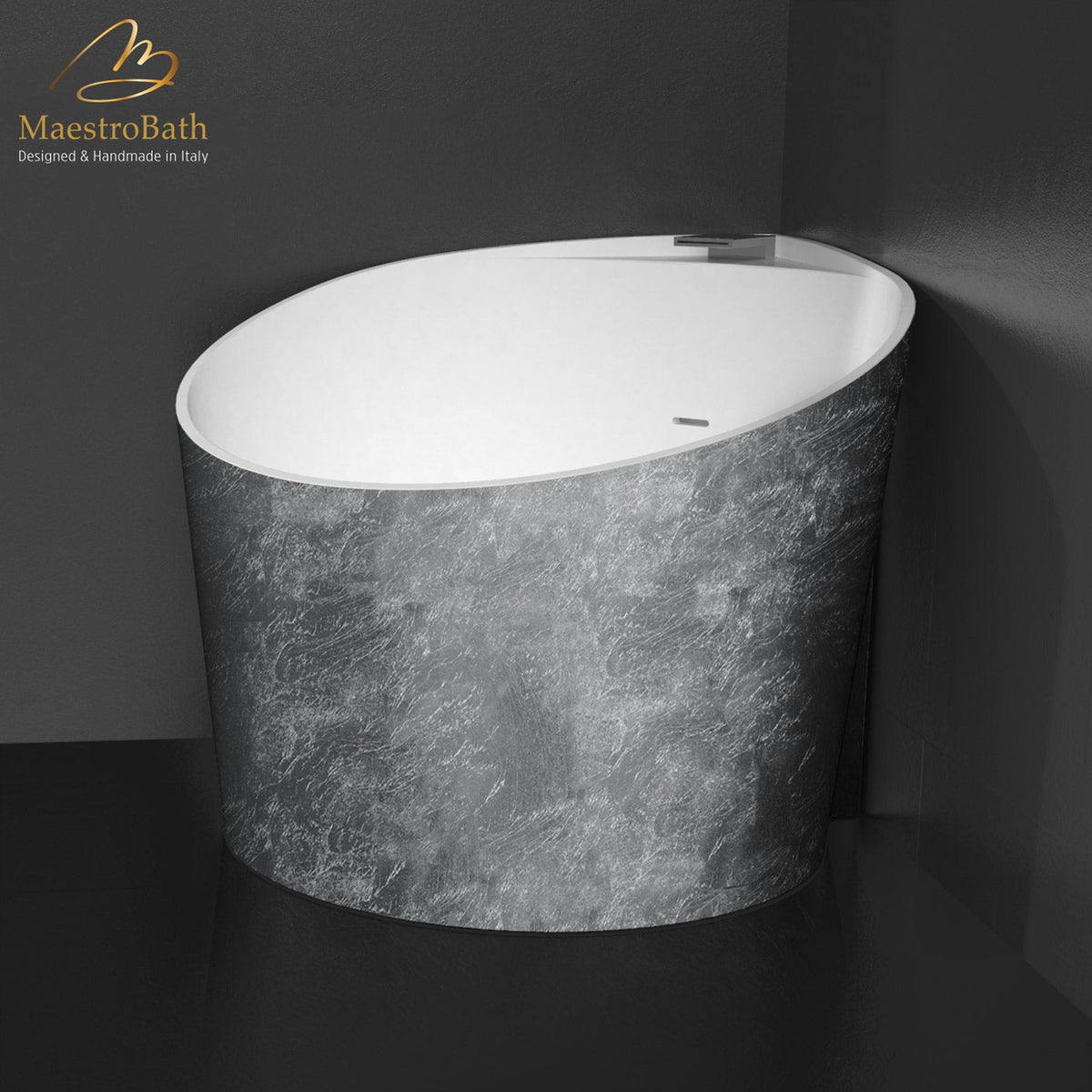
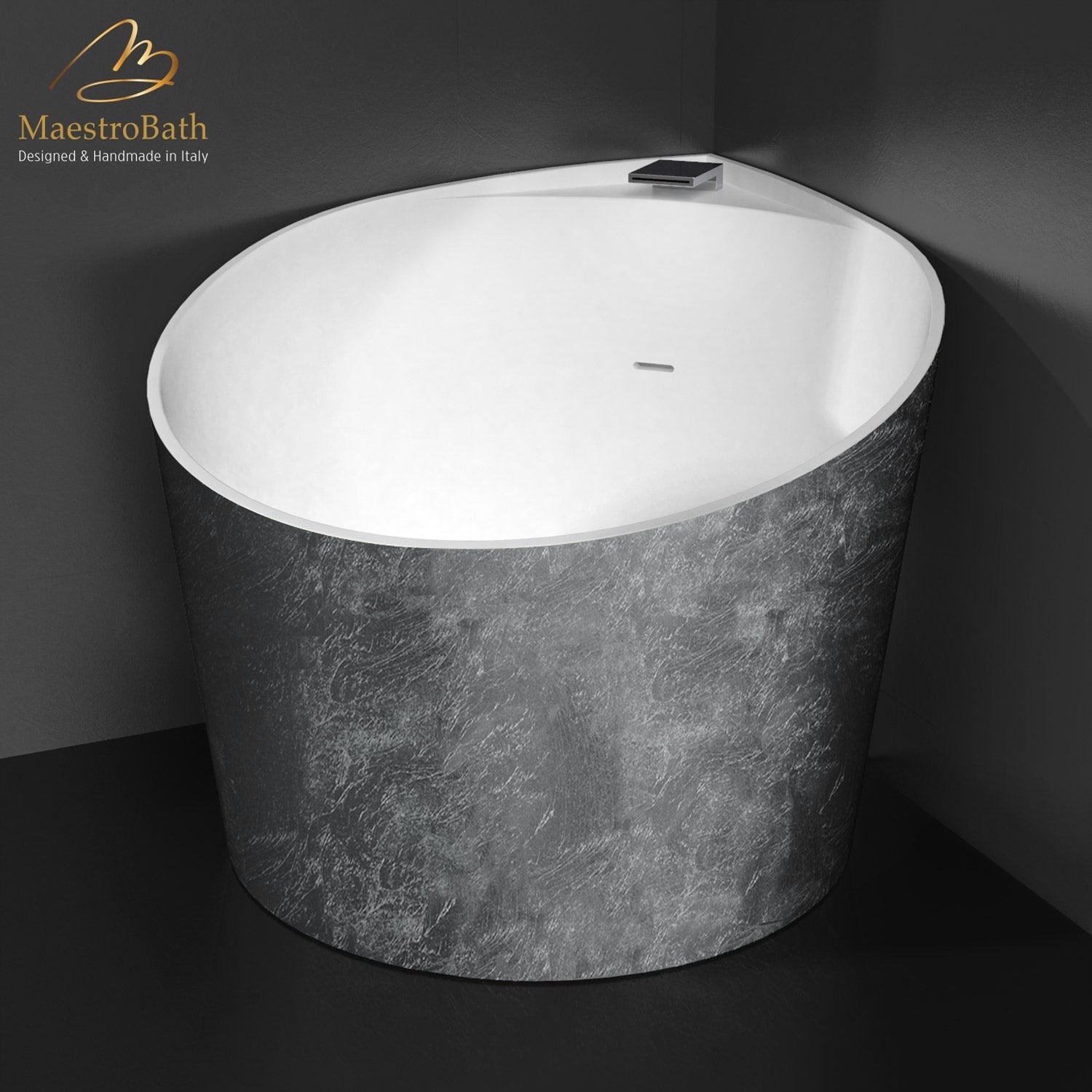
Silver bathtubs give the same leafed depth in a cooler key, which makes them considerably easier to place. Silver catches light and moves with it through the day, where a flat metallic finish simply sits there.
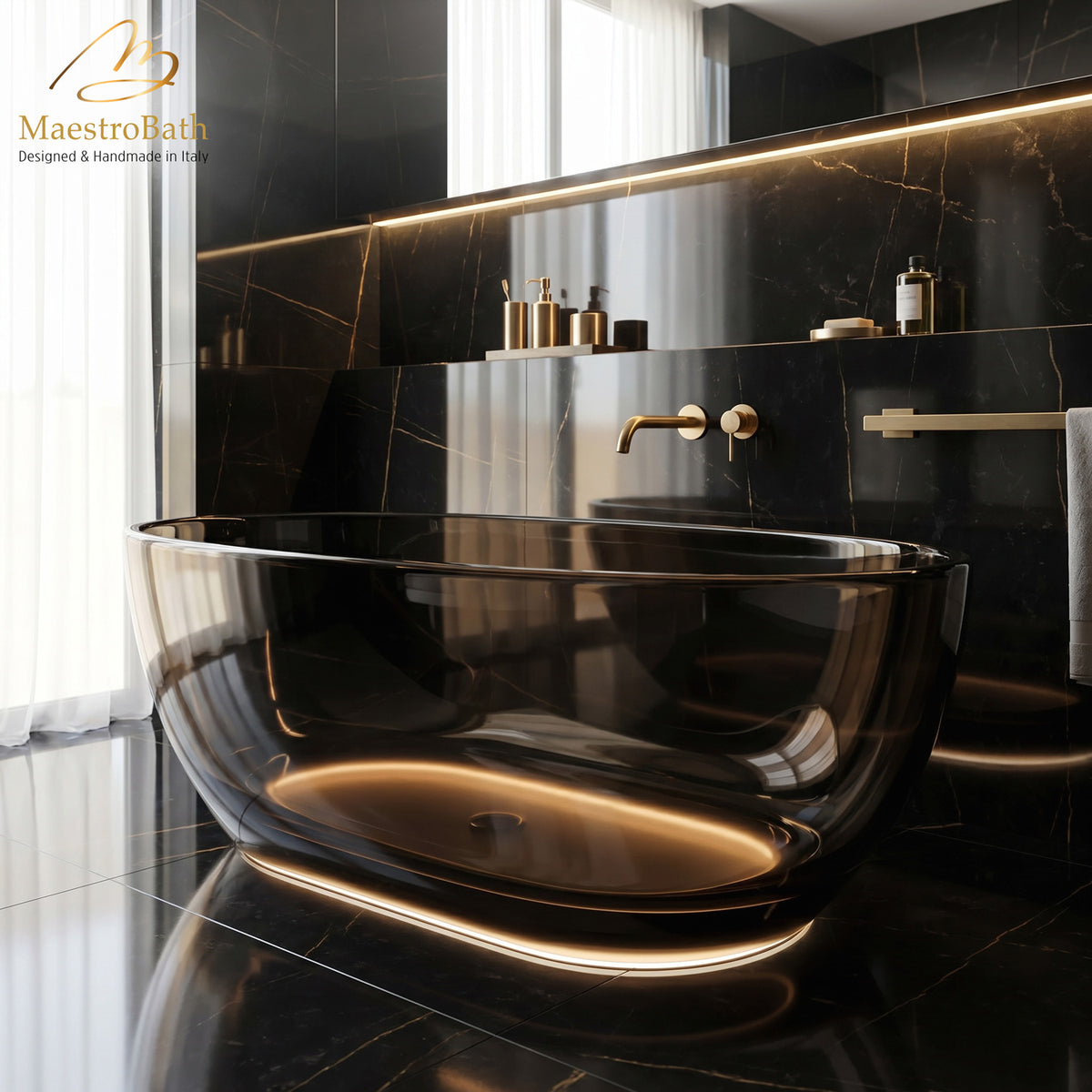
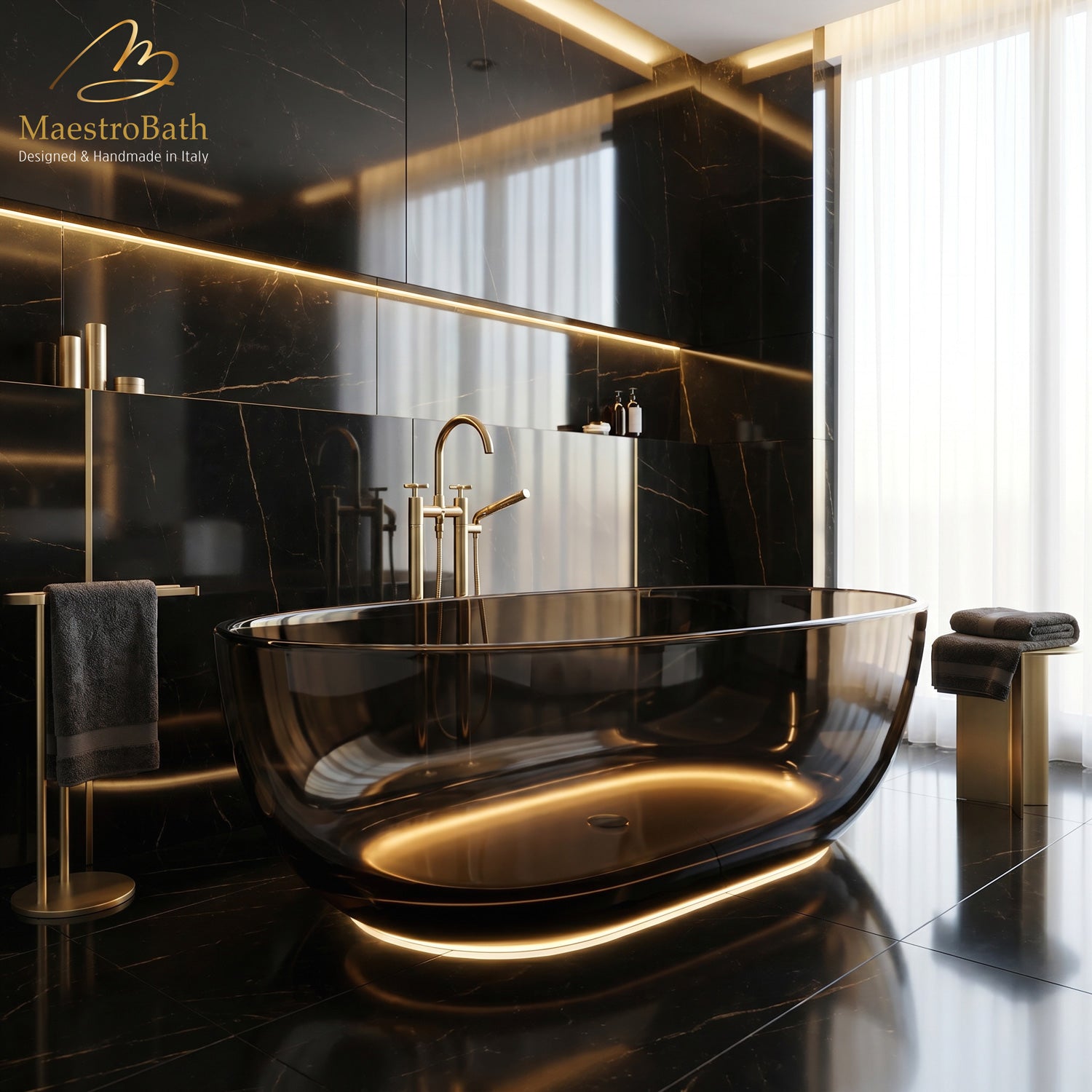
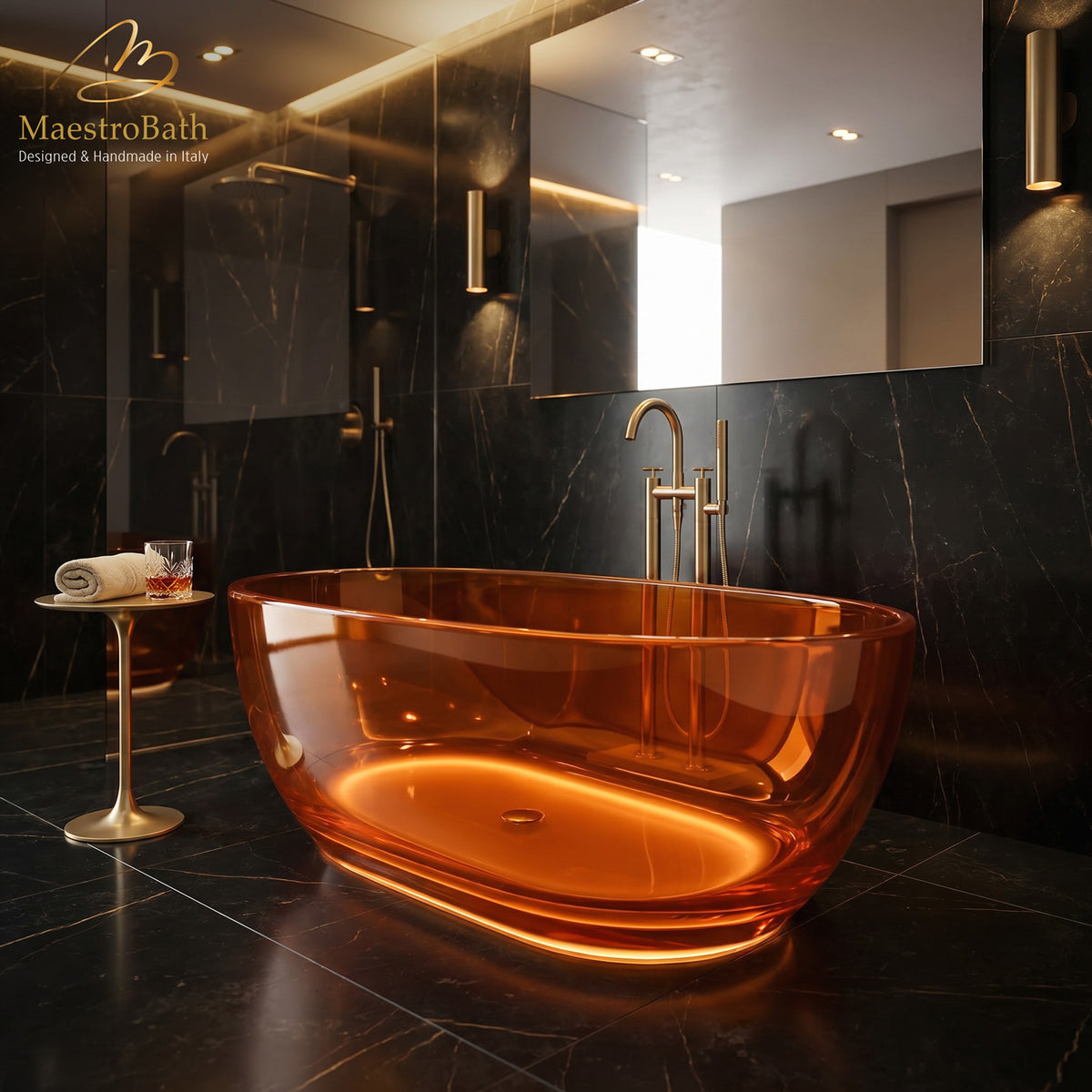
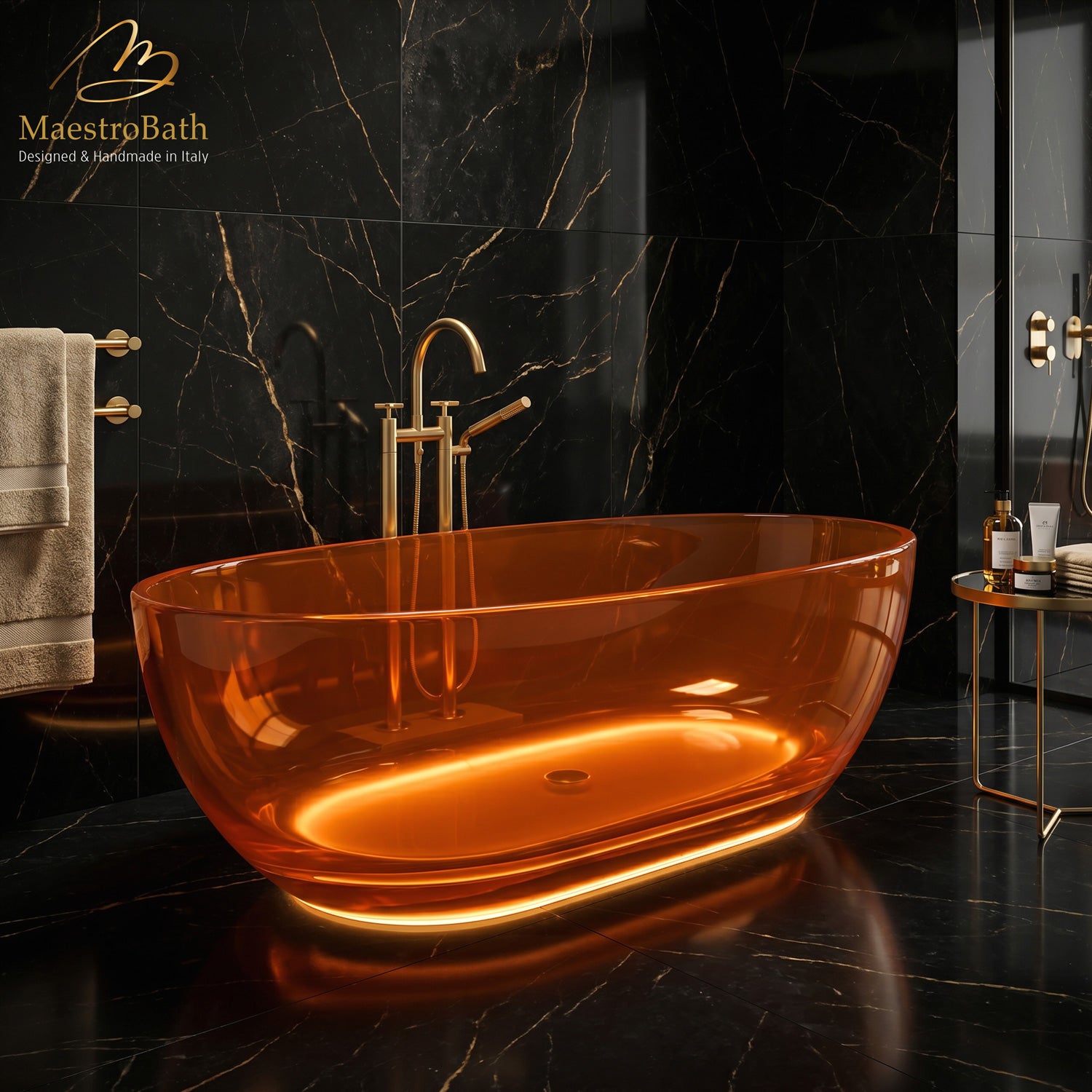
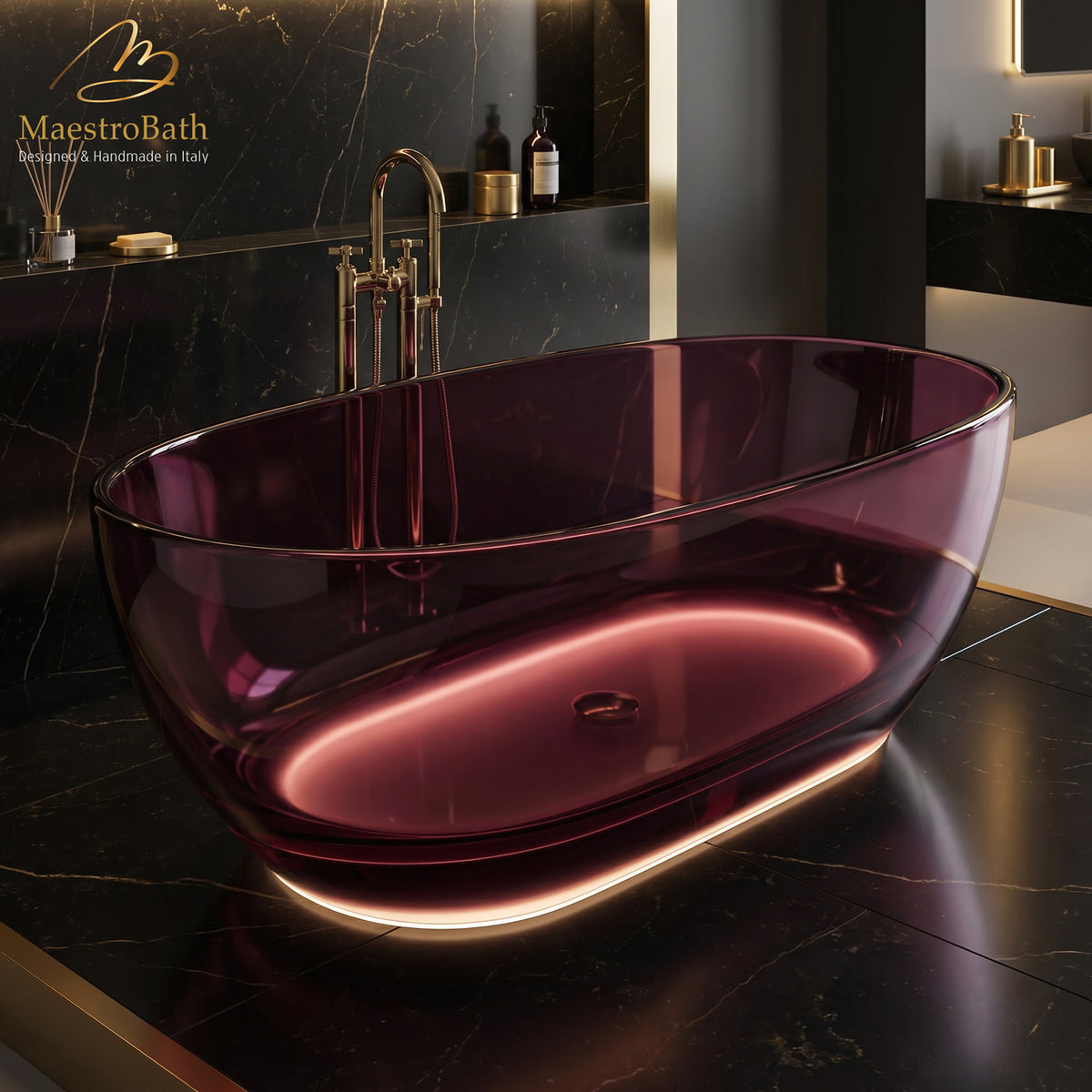
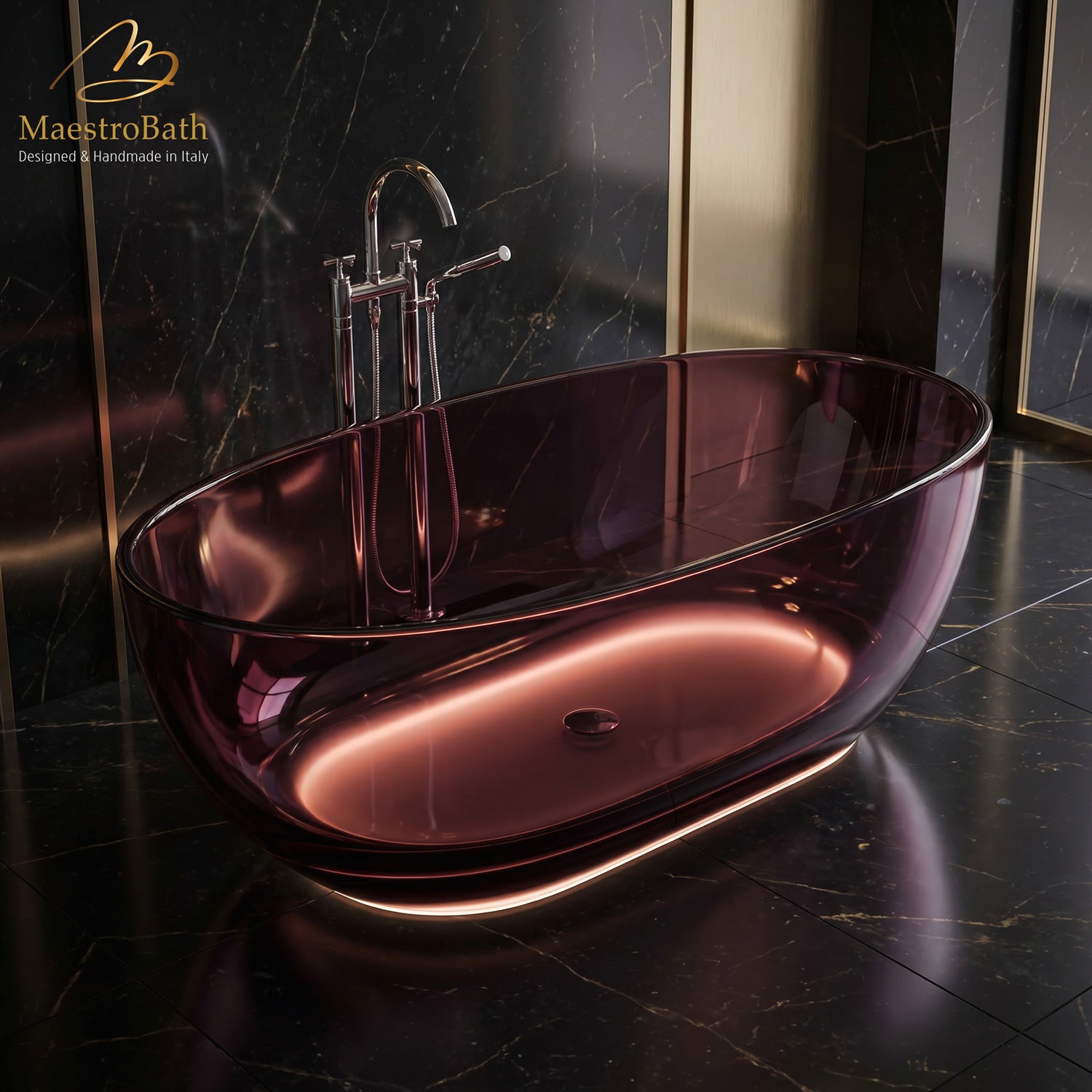
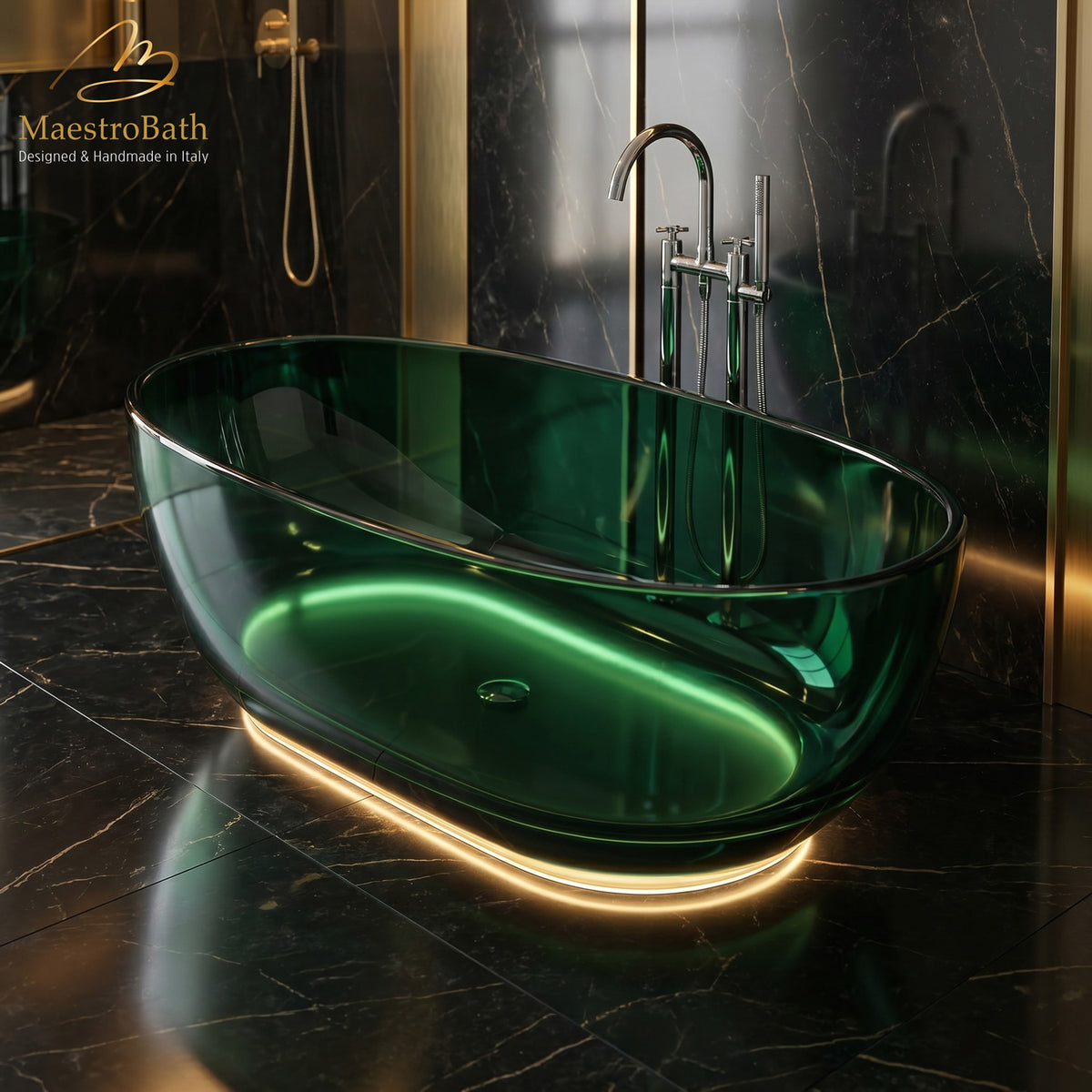
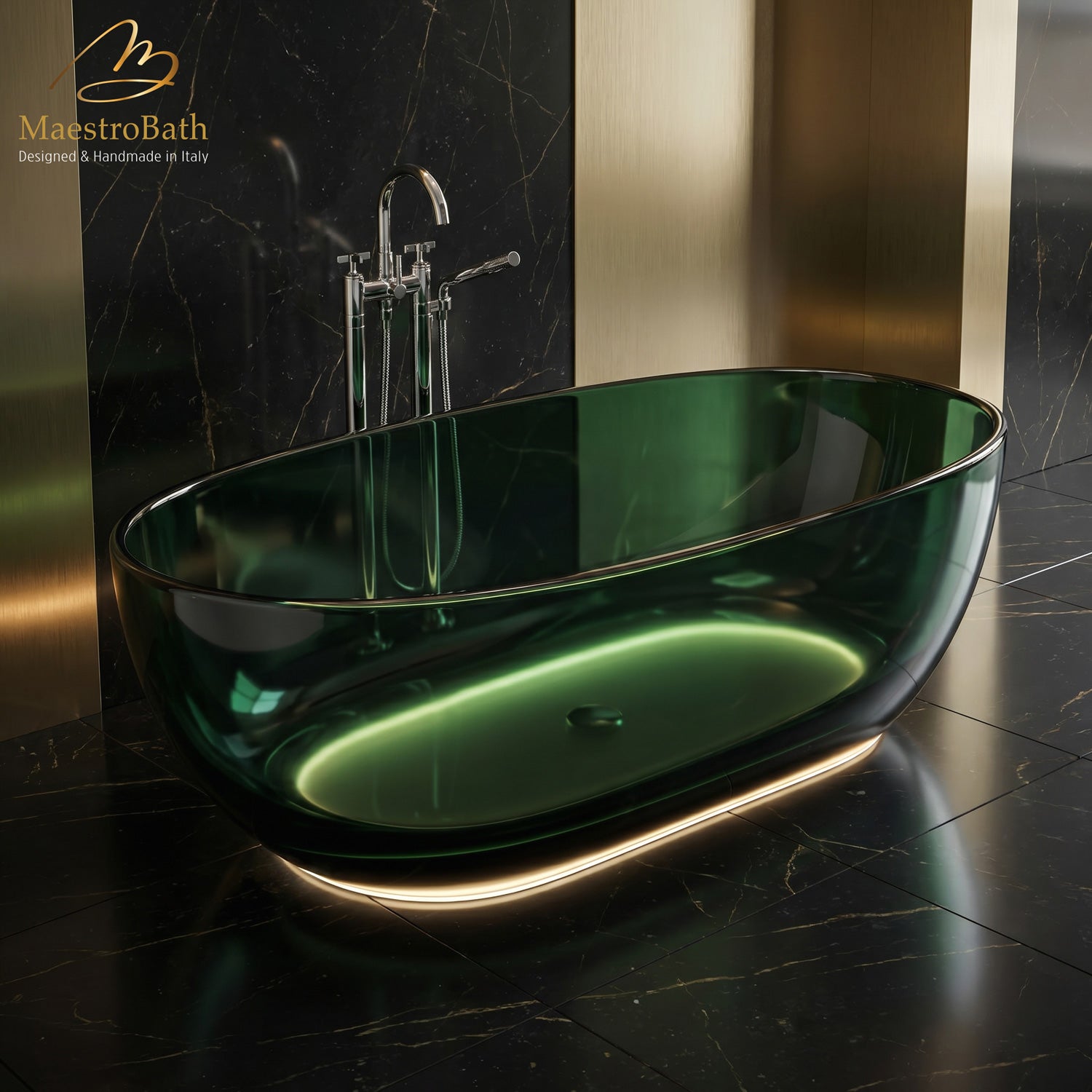
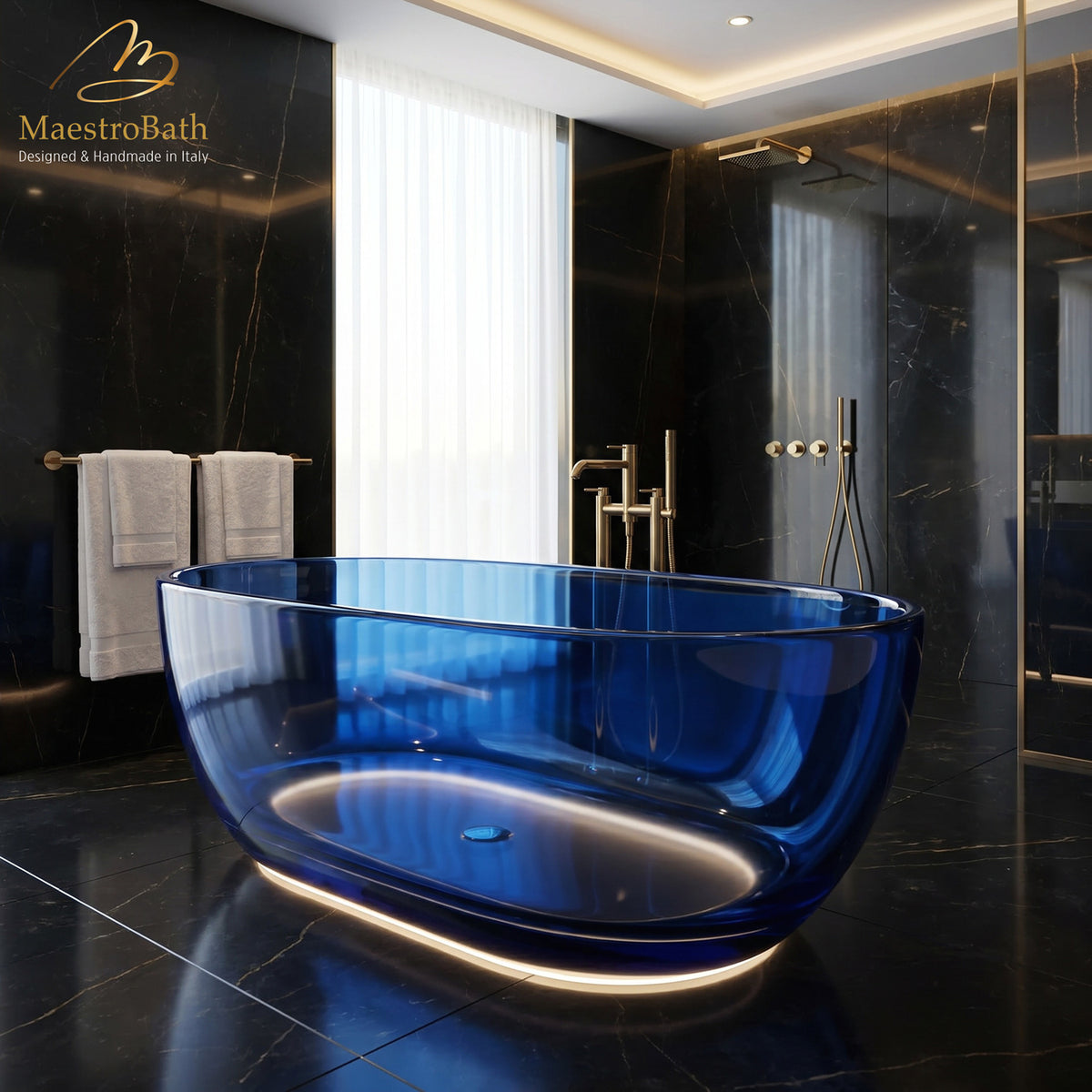
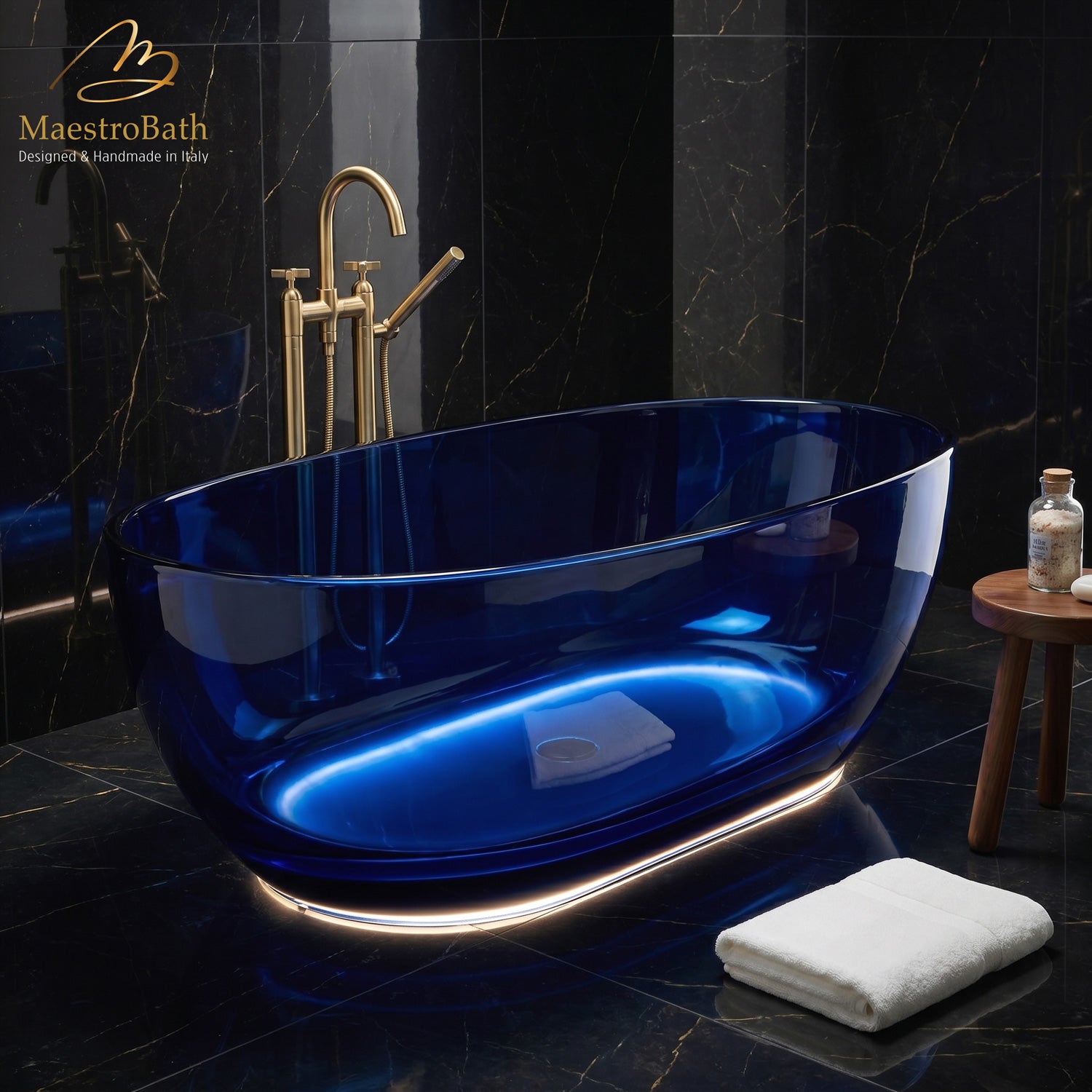
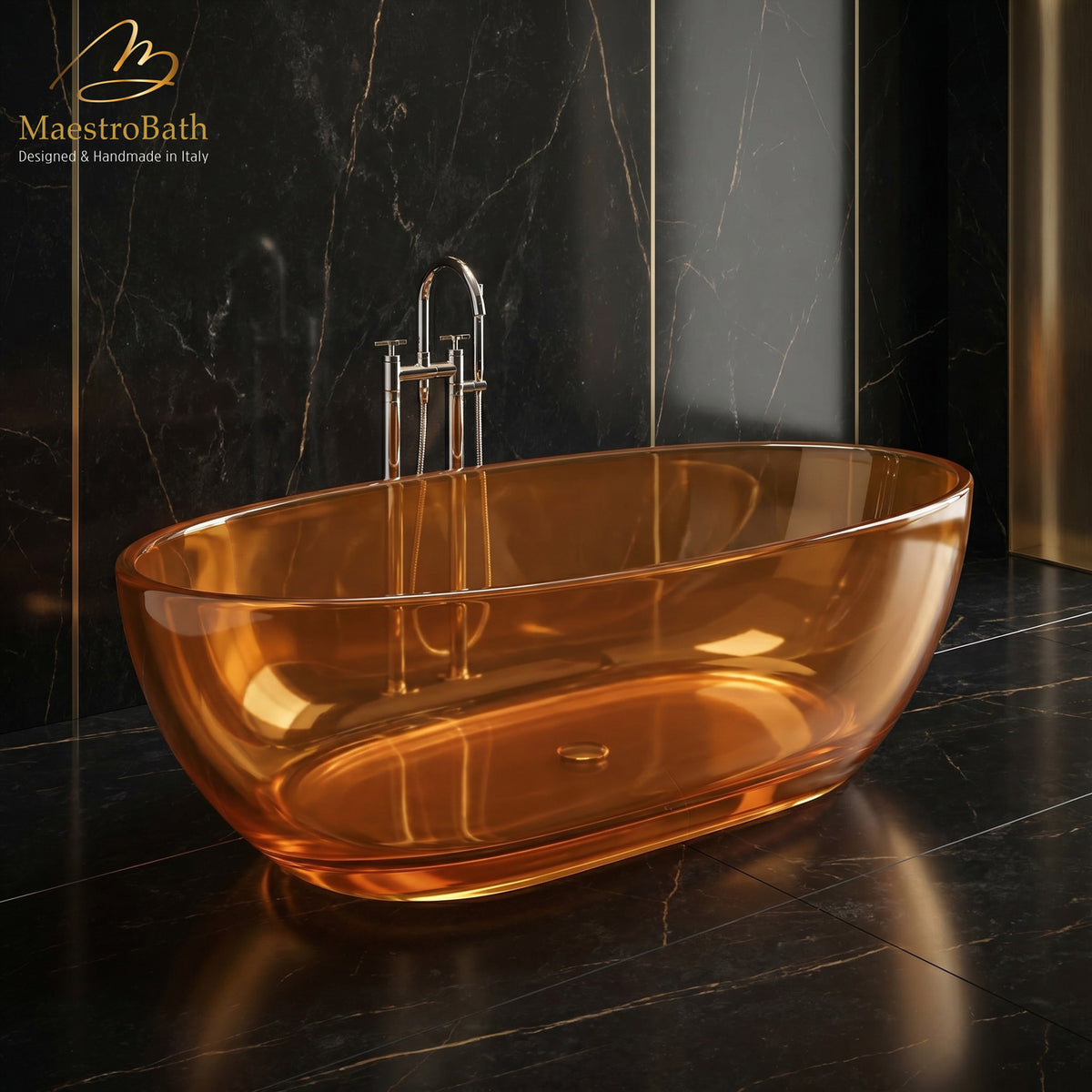
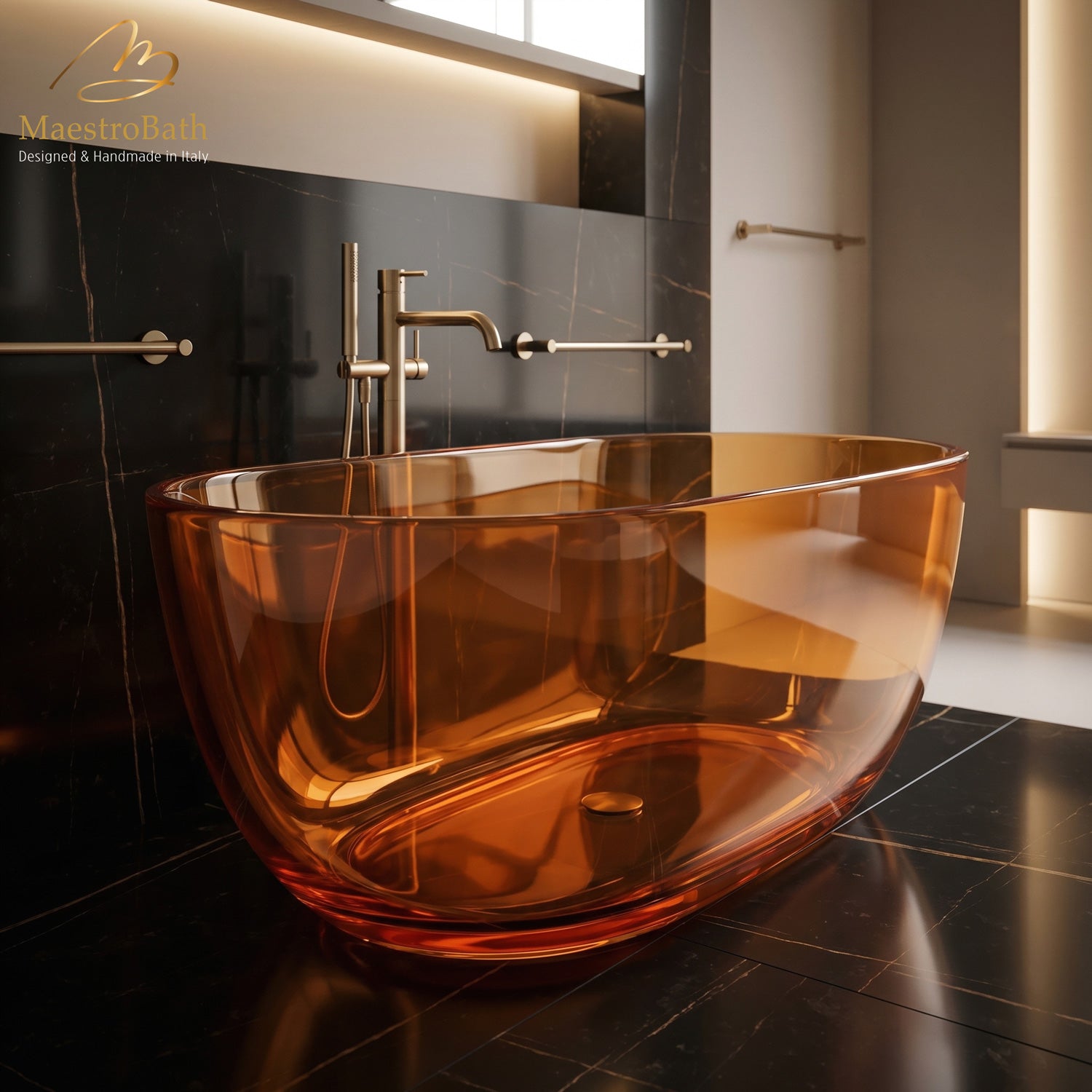
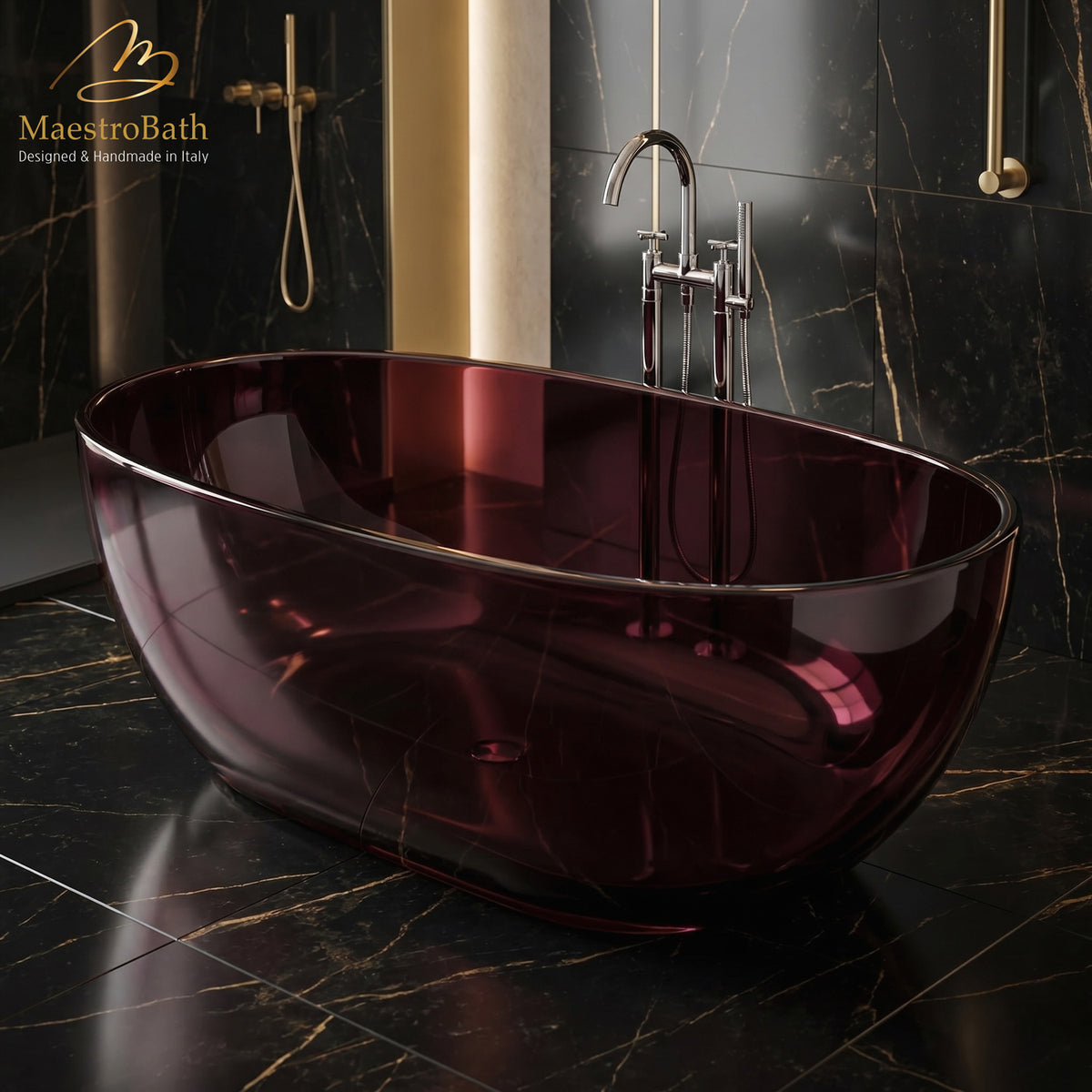
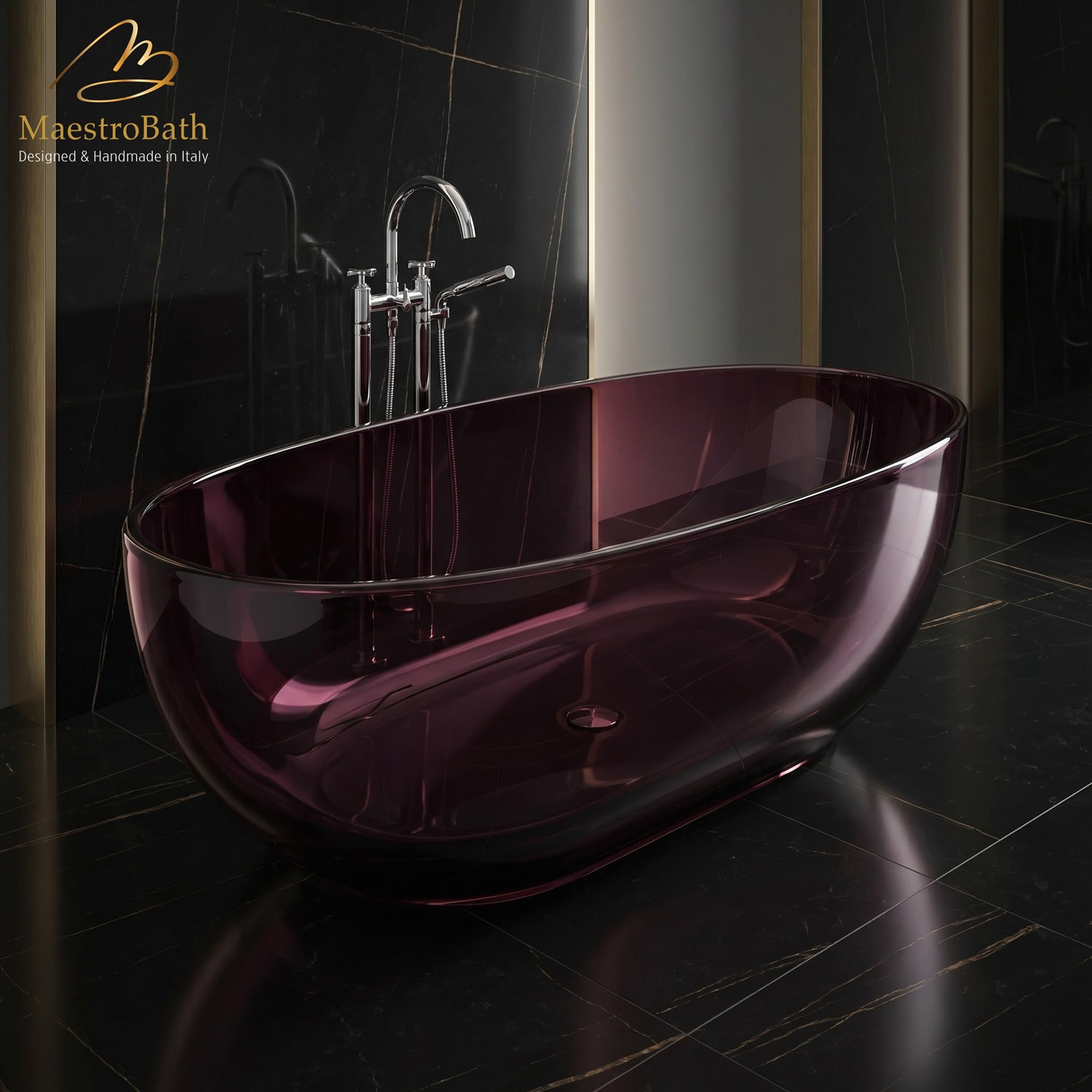
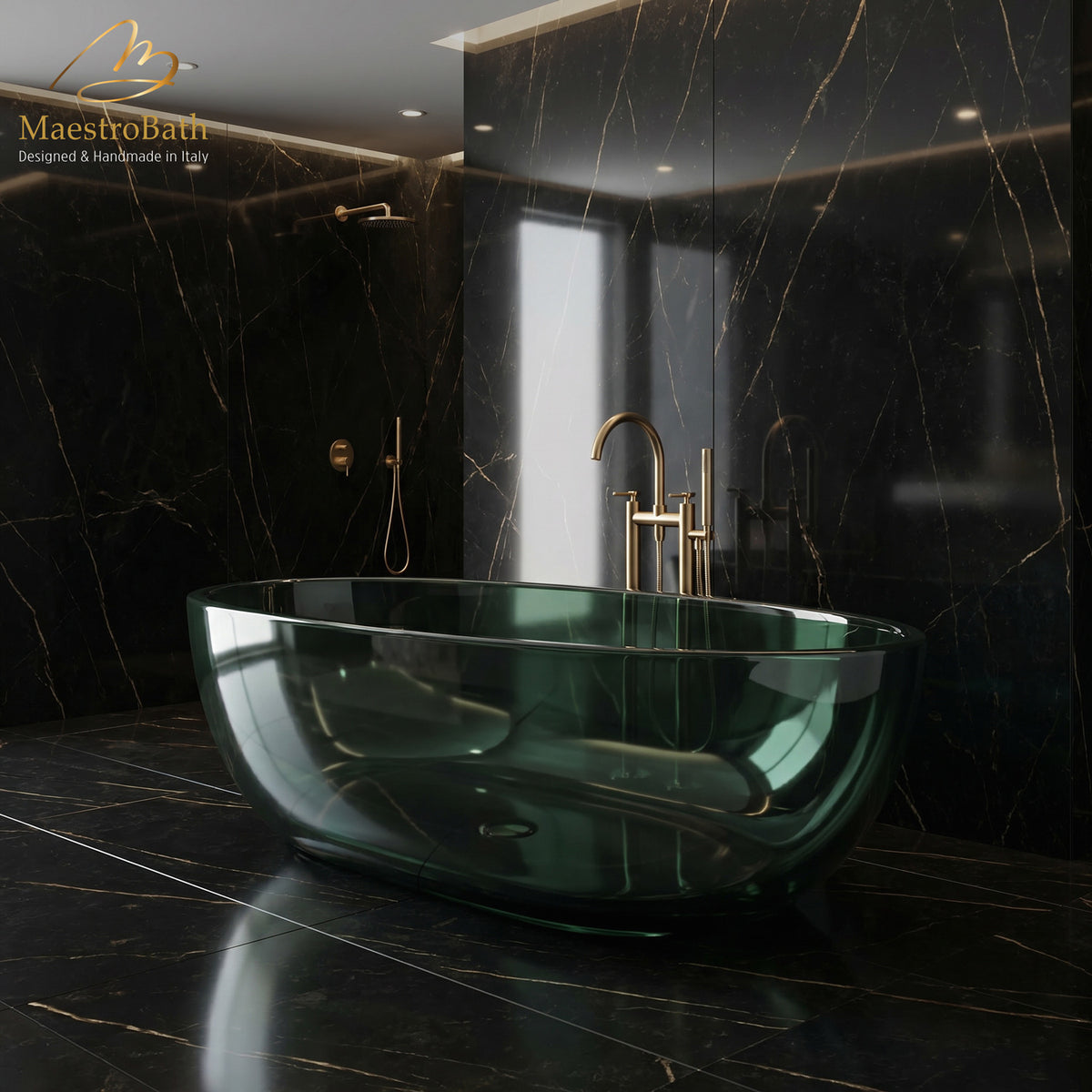
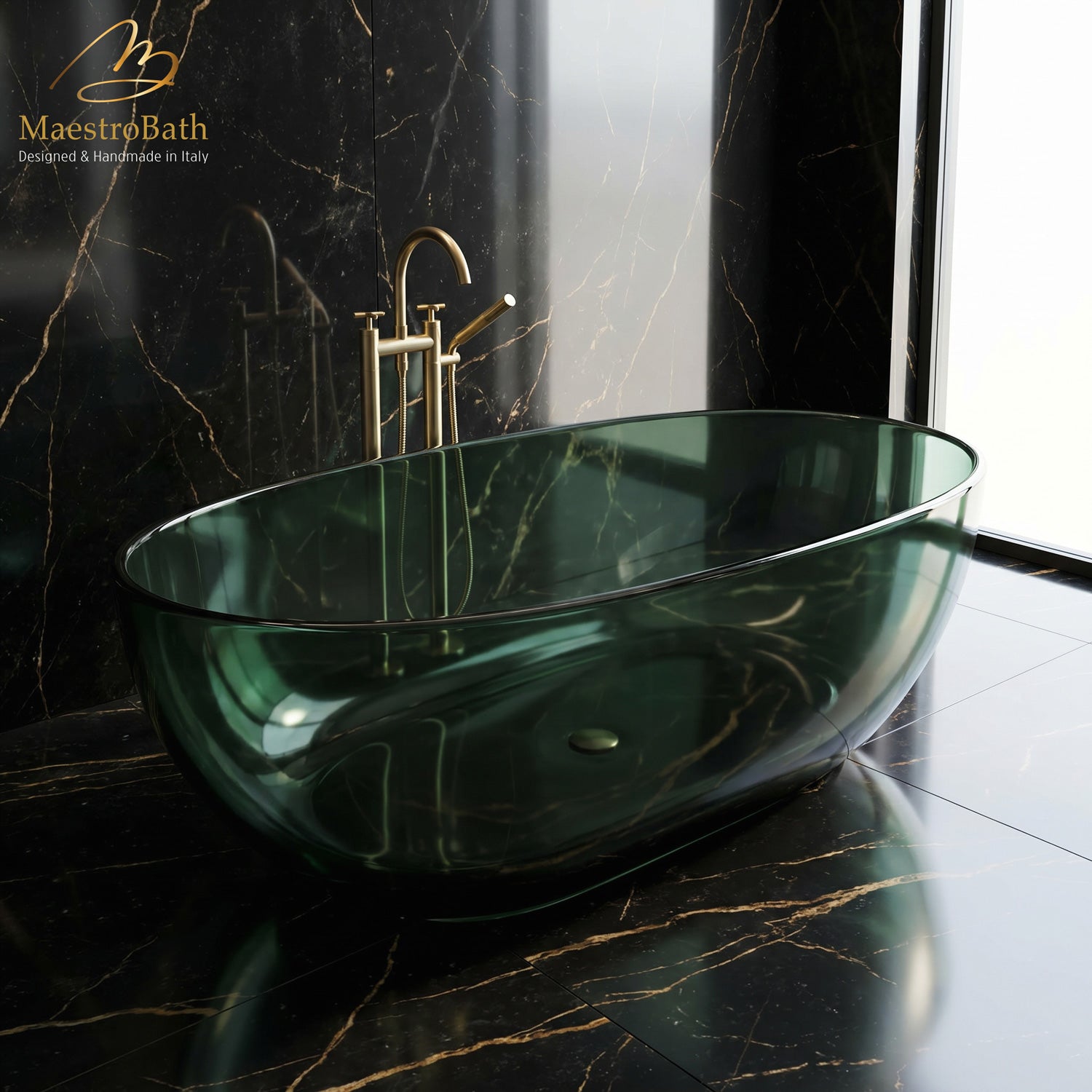
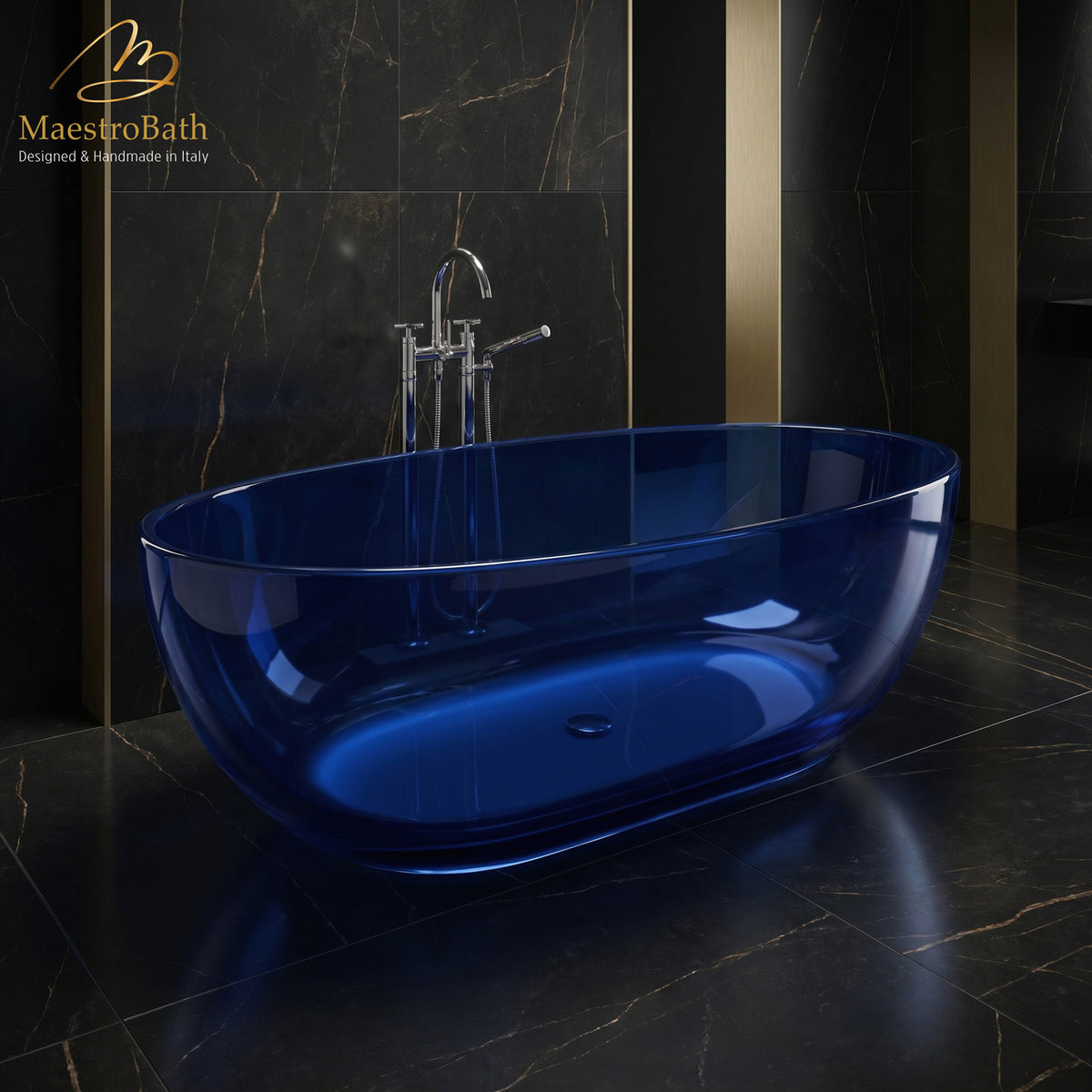
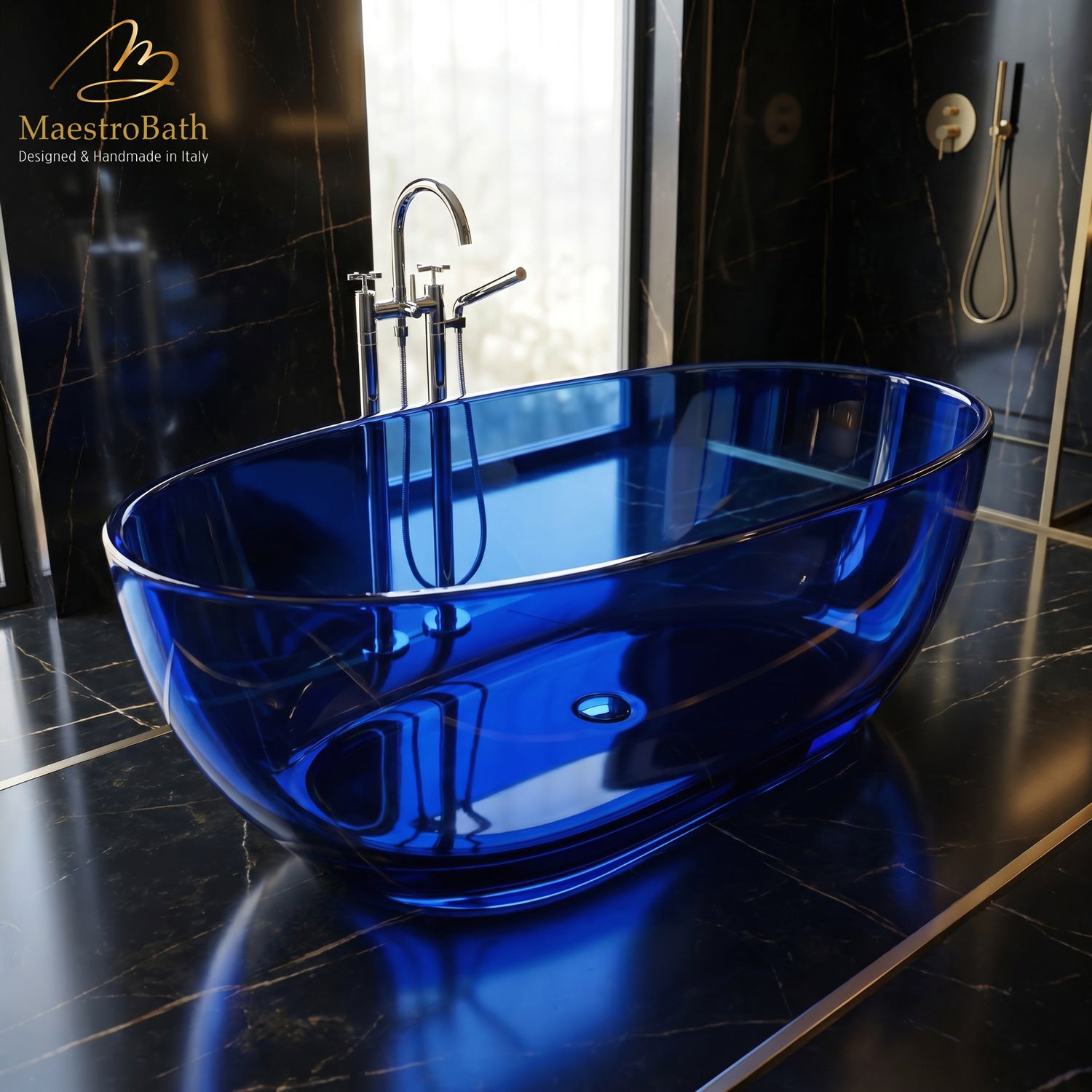
Translucent bathtubs are unlike anything else in the range. The color runs through the material rather than sitting on the surface, so light passes through the wall of the tub instead of reflecting off it. Five colors, and several are offered with integrated LED lighting that turns the tub into the light source in a dark bathroom.
Size, and the space a freestanding tub really needs
Our tubs run from 44.9 inches long to 70.9 inches, and from 27.9 inches wide to 61 inches across for the round models. Length is the number everyone checks. Clearance is the number everyone forgets.
A freestanding tub needs room on every side, because being seen from every side is the entire point of it. Allow space behind it for a wall mounted filler, or beside it for a floor mounted one, and enough room to pass without turning sideways. A tub that fits the floor plan on paper and leaves six inches to the bathroom vanity will feel like a mistake every single day. Where the room is tight, a freestanding bathroom sink gives back more floor than a cabinet does, and keeps the freestanding language consistent.
Depth, and what a soaking tub is actually for
Interior depth across the range runs from 22 inches to 36.6 inches, and it changes the experience more than length does. A shallower tub is easier to step into and quicker to fill. A deep one covers your shoulders, which is the whole argument for a soaking tub and the reason anyone who wants one is rarely talked into something else.
If the tub is for children, or for anyone who would rather not climb over a high wall, the shallower models and the compact tubs at 44.9 inches are the practical answer.
Shape
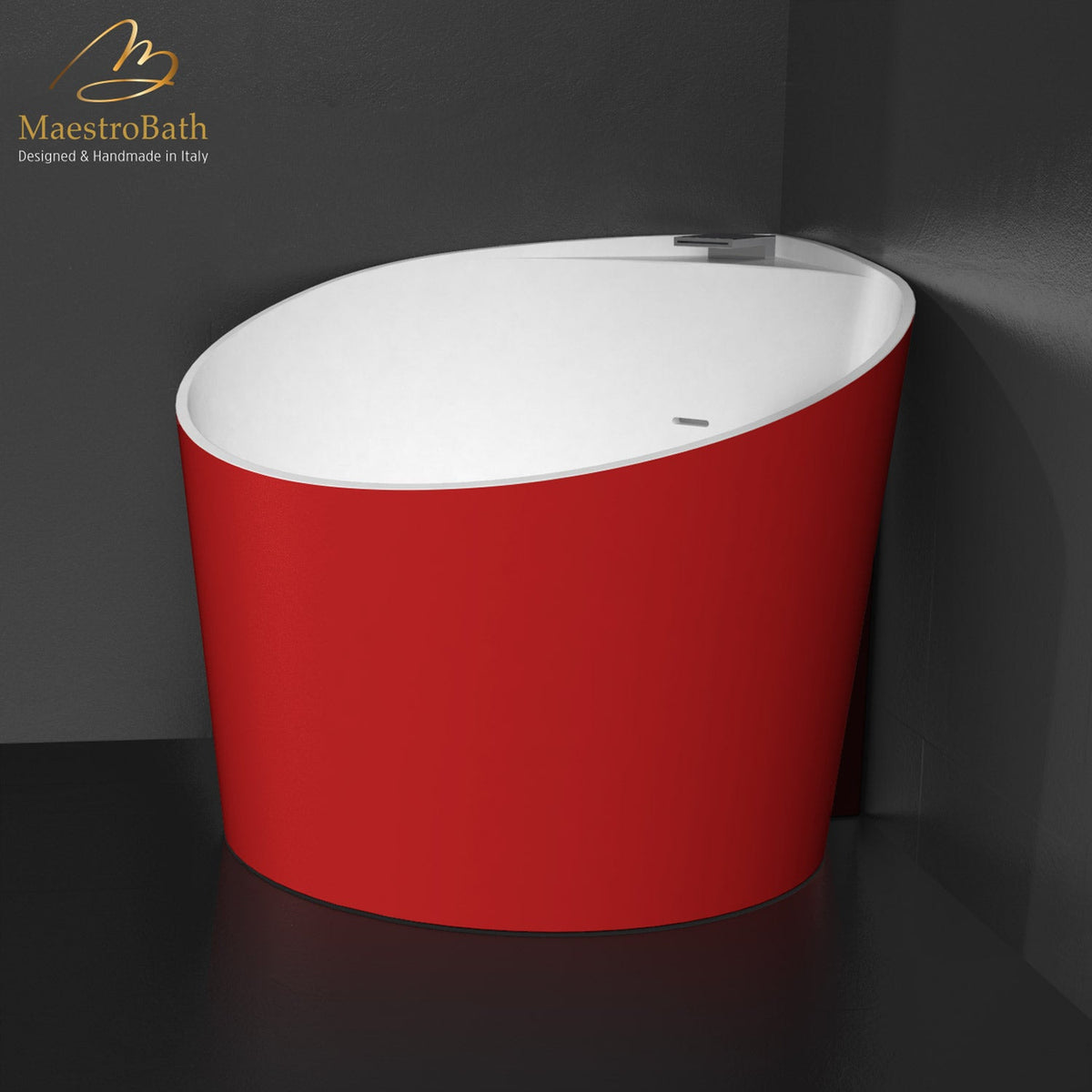
Oval and rounded tubs soften a room built on hard lines, and they read smaller than their footprint suggests. Rectangular tubs sit tighter to a wall and suit an interior already made of straight edges. Round tubs, including one measuring 61 inches across, are a centerpiece and need a room that can give them air on every side. A clawfoot lifts the tub off the floor, which makes it read lighter and makes the floor beneath it far easier to clean.
Choosing the tub filler
A bathtub does not come with a faucet. The tub filler is bought separately, and the choice changes both the plumbing and the look. A floor mounted filler stands beside the tub on its own column and needs a supply brought up through the floor, which has to be decided before the floor goes down. A wall mounted filler needs the tub positioned within reach of the wall. Neither is more correct, but the decision has to be made early, because it is not easily undone afterwards.
Several of our fillers carry a handheld on a flexible hose, which is what most people actually use to rinse the tub down and to wash hair. If yours does not, a separate hand shower solves the same problem. Where the tub shares a wet room with a shower, our shower systems and complete shower sets are finished in the same families as the fillers.
The floor and the wall behind it
A freestanding tub is heavy and it stands directly on the finished floor, so the floor is part of the decision rather than a separate one. Porcelain tile handles the weight and the standing water, and a large format tile keeps grout lines away from the base of the tub where they collect. If there is a feature wall behind the tub, Murano glass tile is the one material in the range that competes with a leafed finish without arguing with it.
The last thing people plan is the one they notice daily: somewhere to put a towel. A towel bar or a robe hook within arm's reach of the tub, rather than across the room, is the difference between a beautiful bathroom and a usable one. The wider range of bathroom accessories is finished in the same families as the tubs and the fillers.
Common Questions
How much space do I need around a freestanding bathtub?
Allow clearance on every side rather than only at the ends. Leave room behind the tub for a wall mounted filler, or beside it for a floor mounted one, and keep the walkway on the access side wide enough to pass without turning. A freestanding tub pushed tight into a corner loses the reason you bought it.
What is the difference between a soaking tub and a standard bathtub?
Depth. A soaking tub is built deep enough to cover your shoulders when you are seated, generally 22 inches of interior depth or more. A standard bathtub is shallower, because it is designed as much for showering in as for bathing.
What size bathtub fits a small bathroom?
Our compact models measure 44.9 inches long, roughly two feet shorter than a full size tub, and they gain back interior depth so the bathing experience is not diminished by the smaller footprint. A round tub can also suit a small room provided it can sit clear of the walls, since it needs no long straight run.
Do your bathtubs come with a faucet?
No. Tub fillers are sold separately, which is deliberate, since floor mounted and wall mounted fillers call for different plumbing and that decision belongs with the room rather than with the tub.
How do I clean a bathtub without damaging the finish?
Warm water, a soft cloth and a mild non abrasive cleaner. Scouring cream will permanently dull a gloss surface and will damage a leafed one. Gold leaf, silver leaf and matte black are the three finishes least tolerant of the wrong product.
Where are MaestroBath bathtubs made?
In Italy. MaestroBath is designed and handmade there, which is also why no two leafed tubs are quite identical to one another.
About MaestroBath Bathtubs
A bathtub is the largest single object most people ever put in a bathroom, and it is bought perhaps twice in a lifetime. That is the standard we build to. We work directly with the workshops in Italy rather than through distributors, which is how a range this size stays this particular. The Tonino Lamborghini collection includes one of our freestanding tubs and shows that most clearly.
Our showroom is in Newport Beach, California, where a number of these tubs can be seen in person. If you would like help fitting one to a room, or deciding between a floor mounted and a wall mounted filler, call 800-320-1120 or email info@maestrobath.com and someone who knows the range will answer.