A linear shower drain is what makes a modern wet room possible. Instead
of sloping the floor toward a central point, the floor falls in one direction toward a single
long channel, which means large format tile can run unbroken across the shower floor without
being cut into four sloping planes. It is the detail that separates a properly designed
shower from a retrofitted one.
Three lengths
MaestroBath linear drains are made in three sizes, and the choice depends on where the
drain sits rather than on the size of the shower:
-
100 mm. A compact square point drain for a conventional four way fall,
or for a small shower where a full channel is not needed.
-
600 mm. The most common linear length, usually set against the back
wall or the threshold of a standard enclosure.
-
915 mm. A full width channel for a large or open wet room, and the one
that allows the widest tile format.
Four finishes
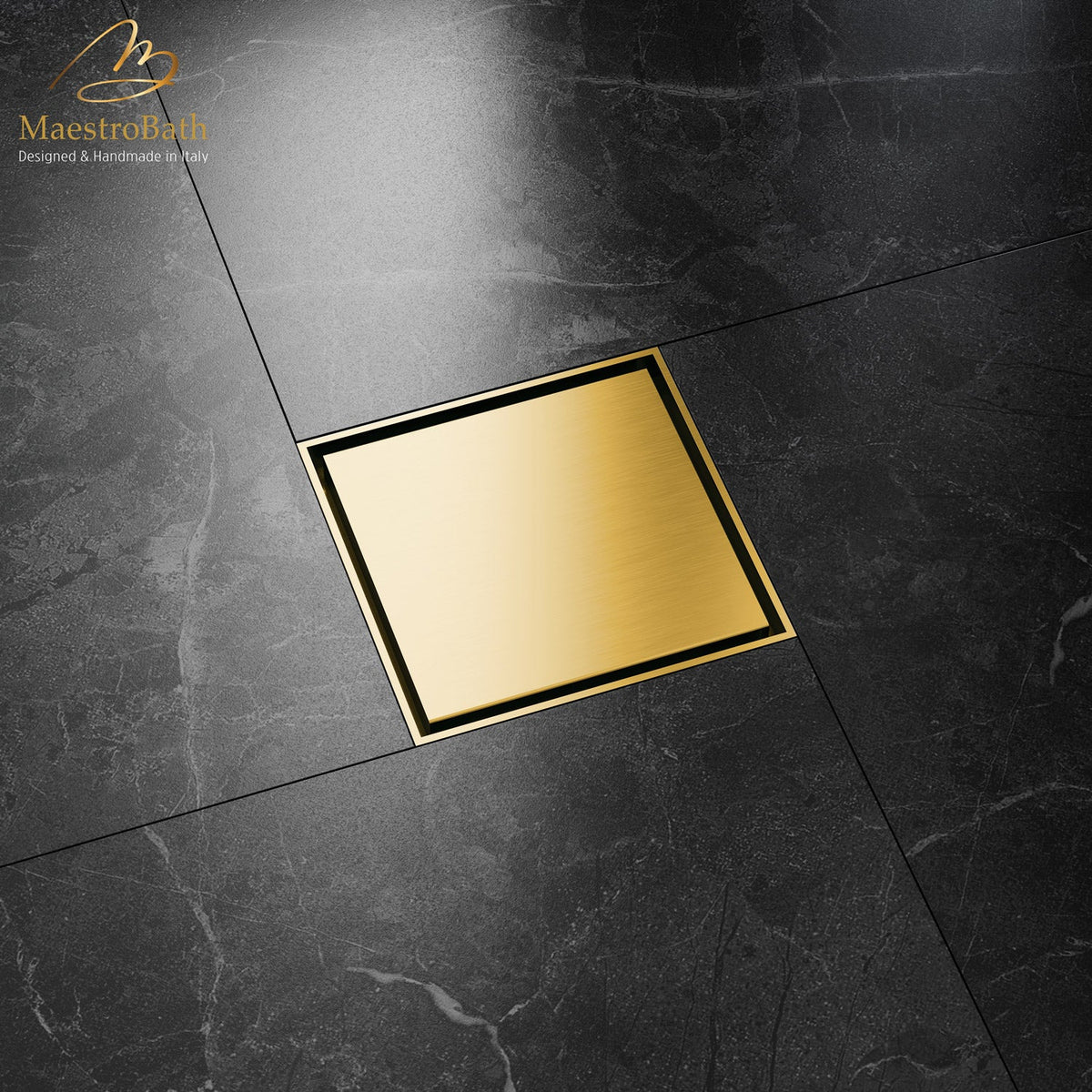
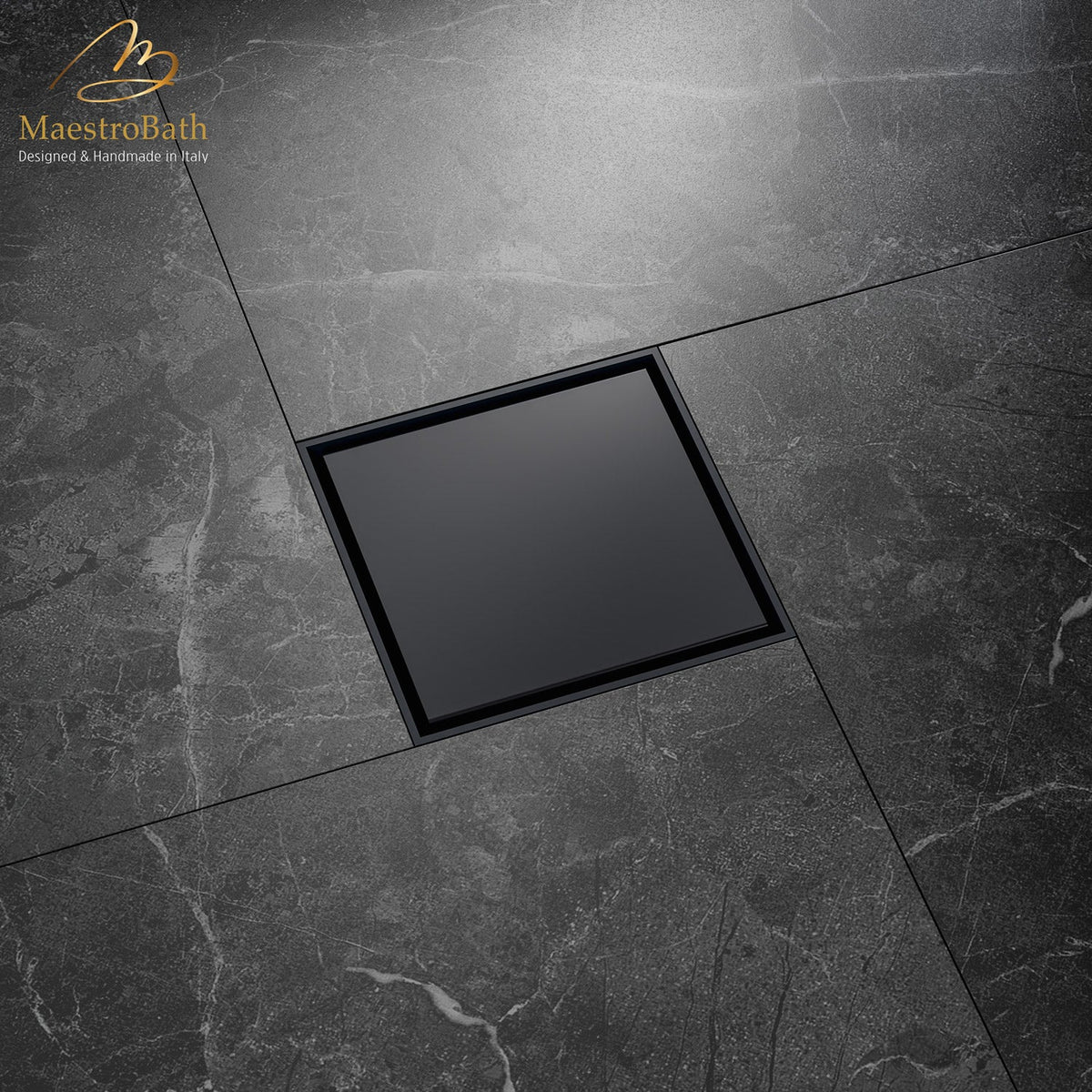
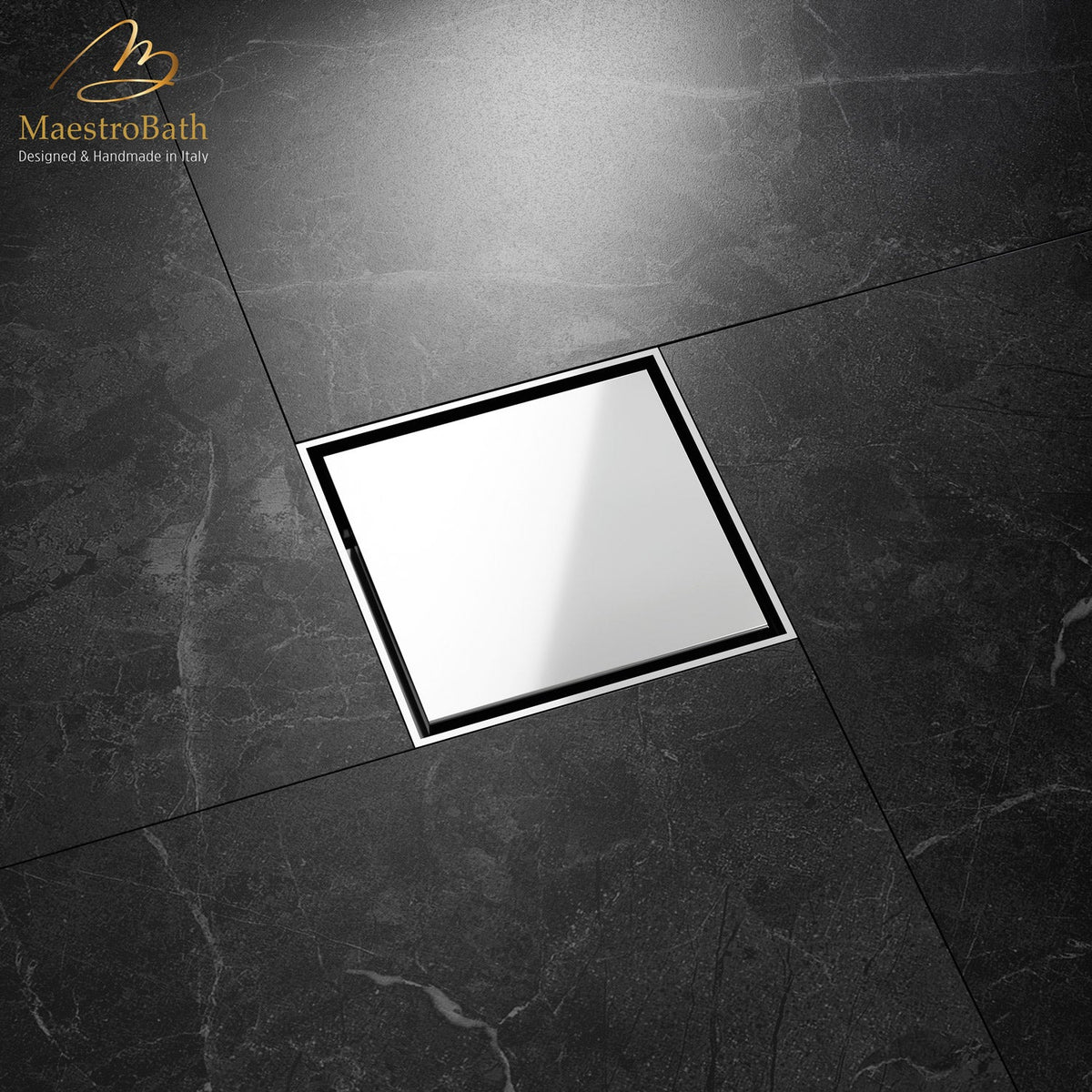
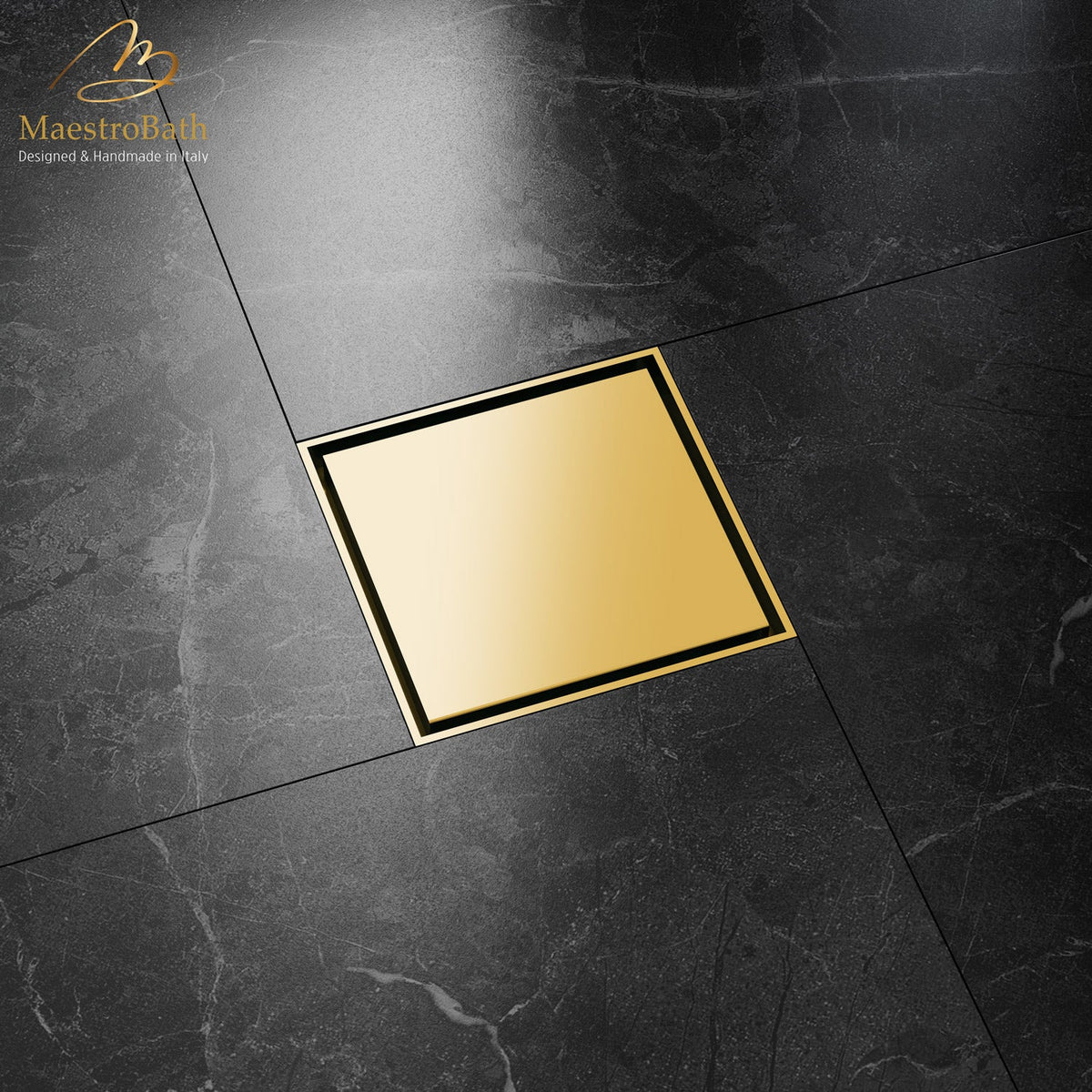
Every length is available in all four finishes, so a drain can be matched to the shower
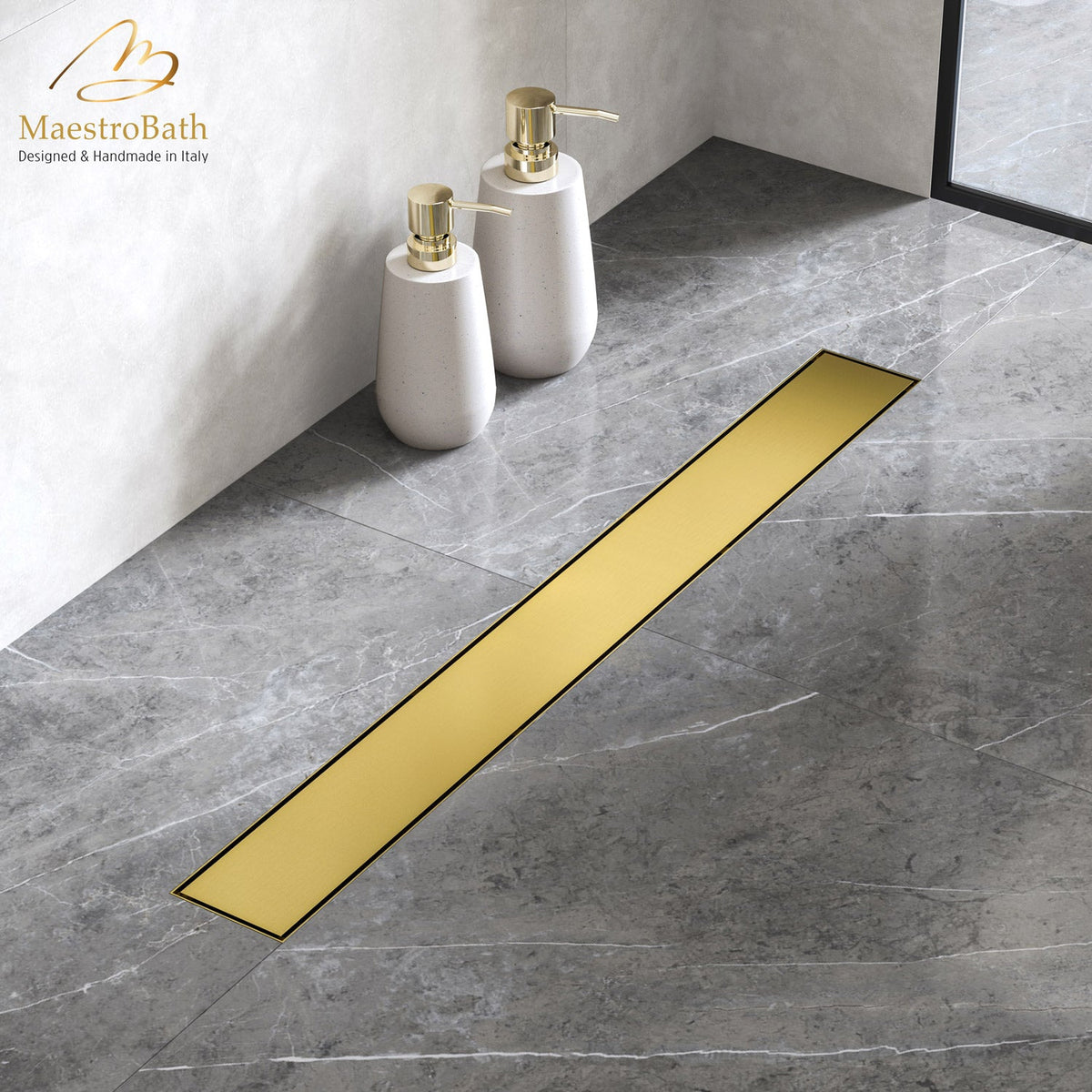
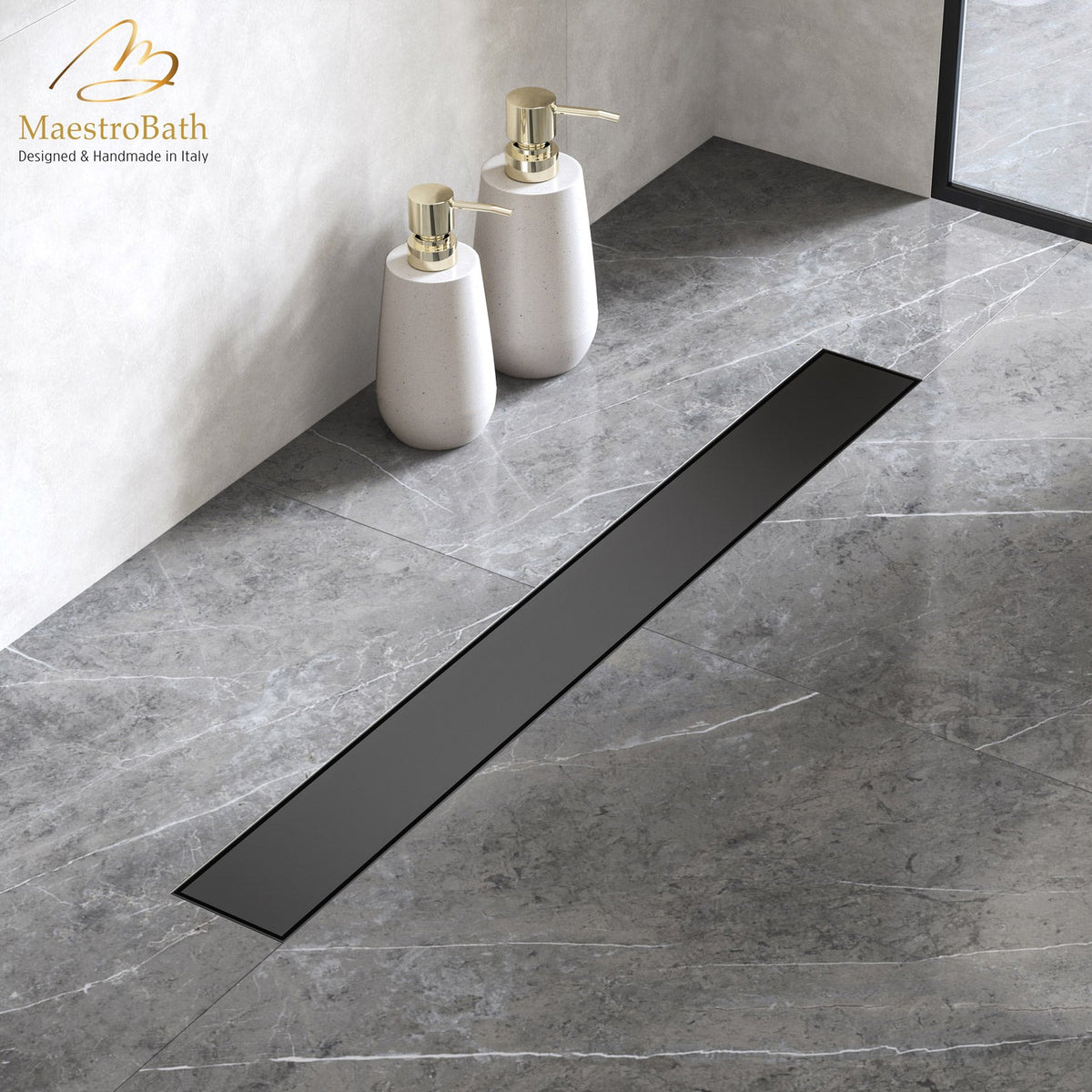
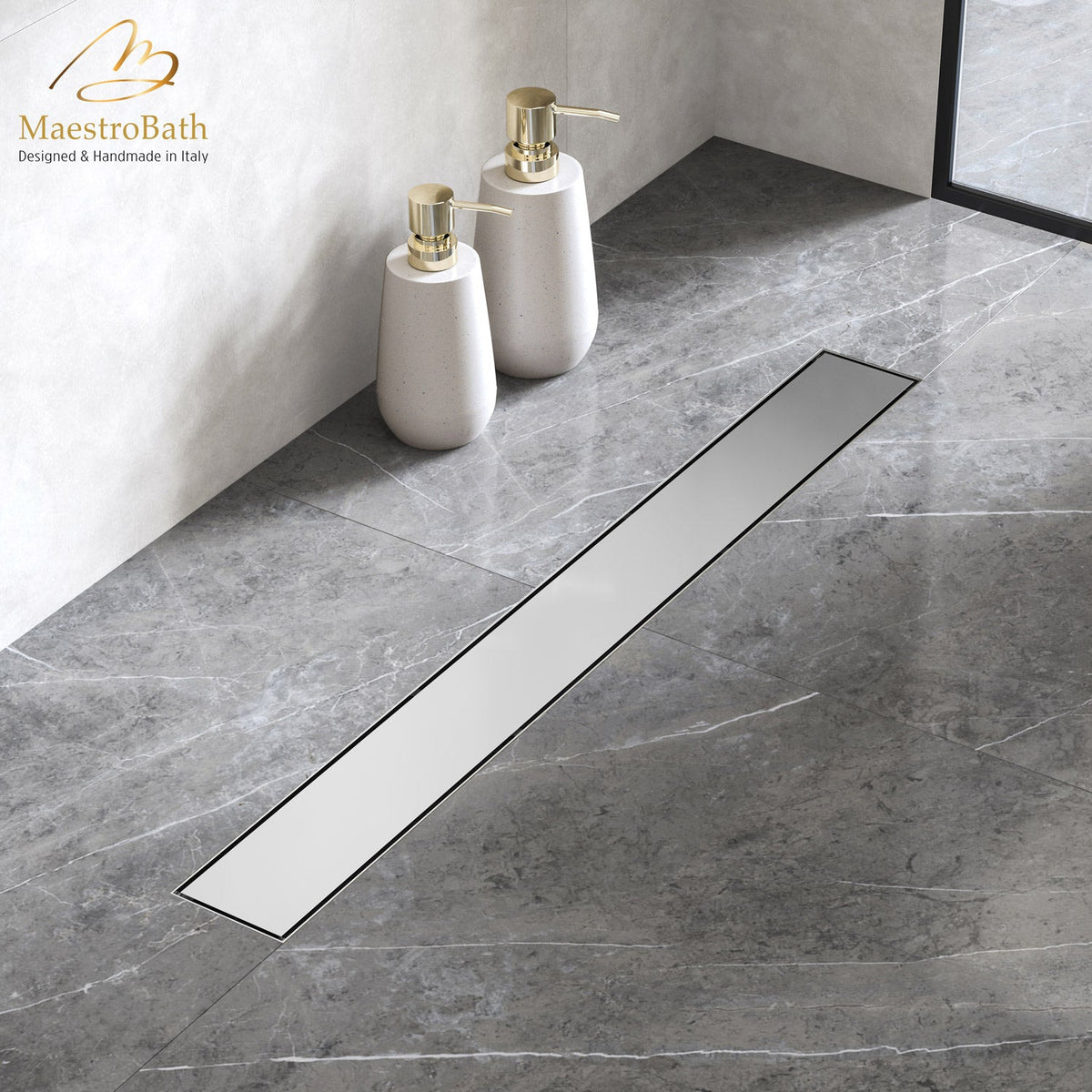
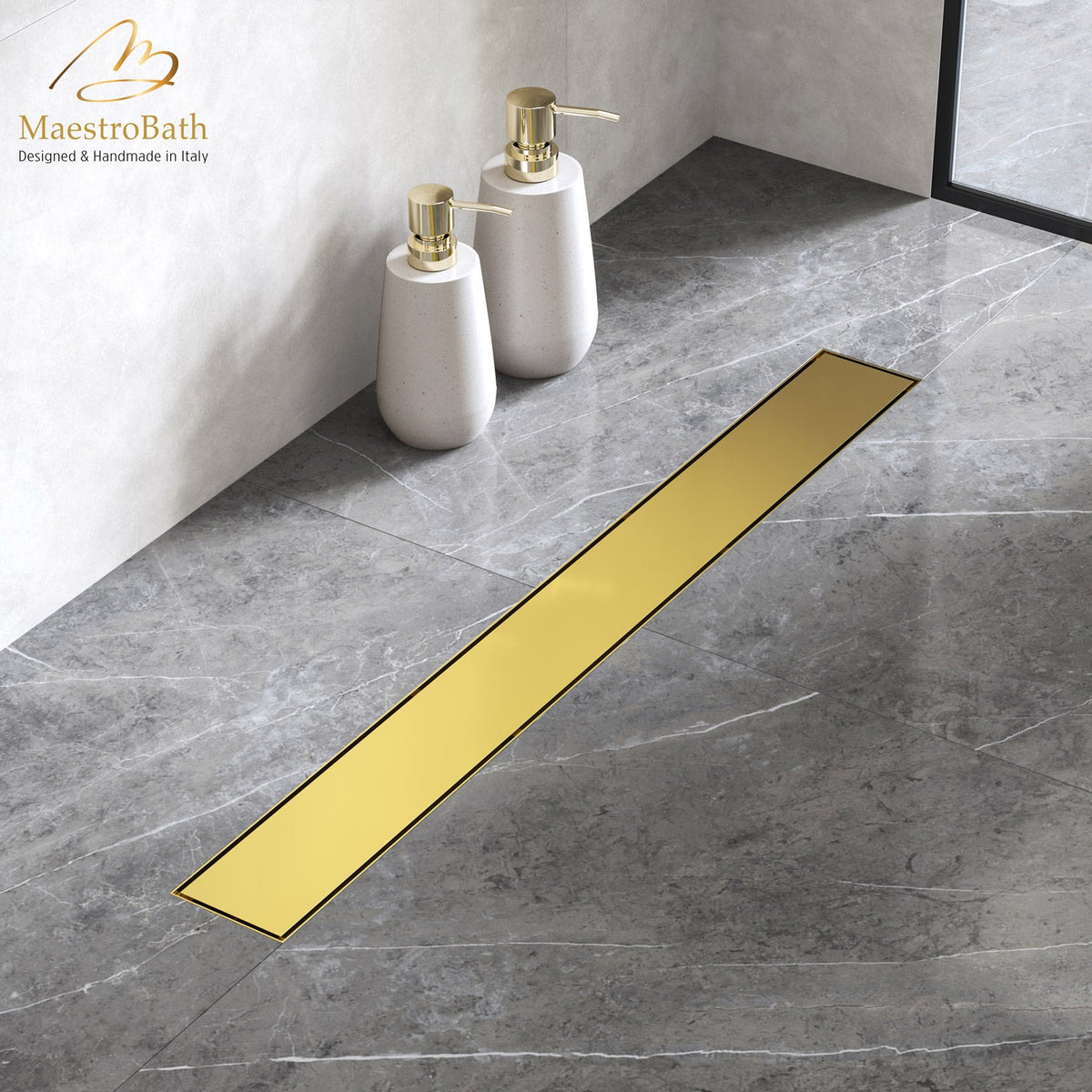
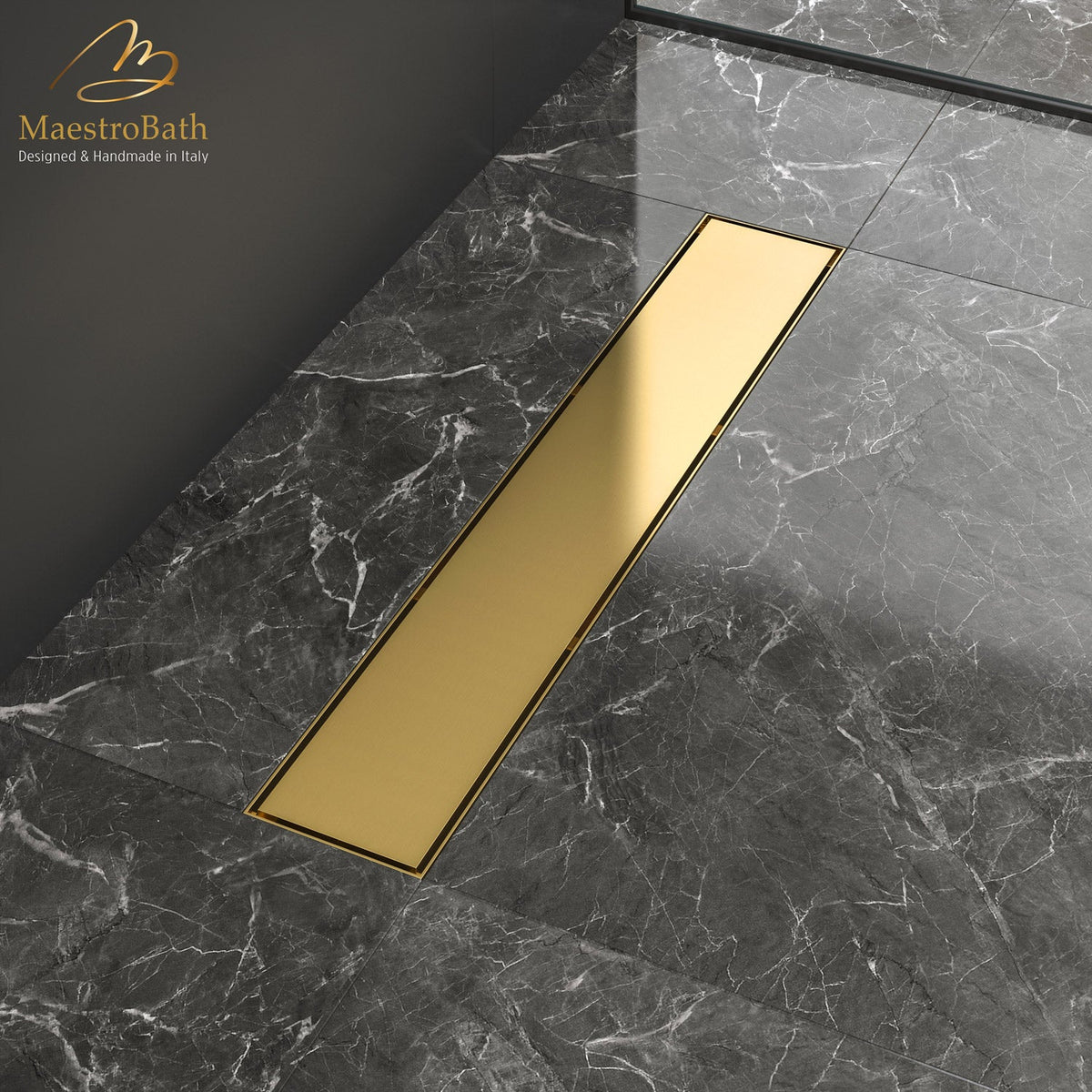
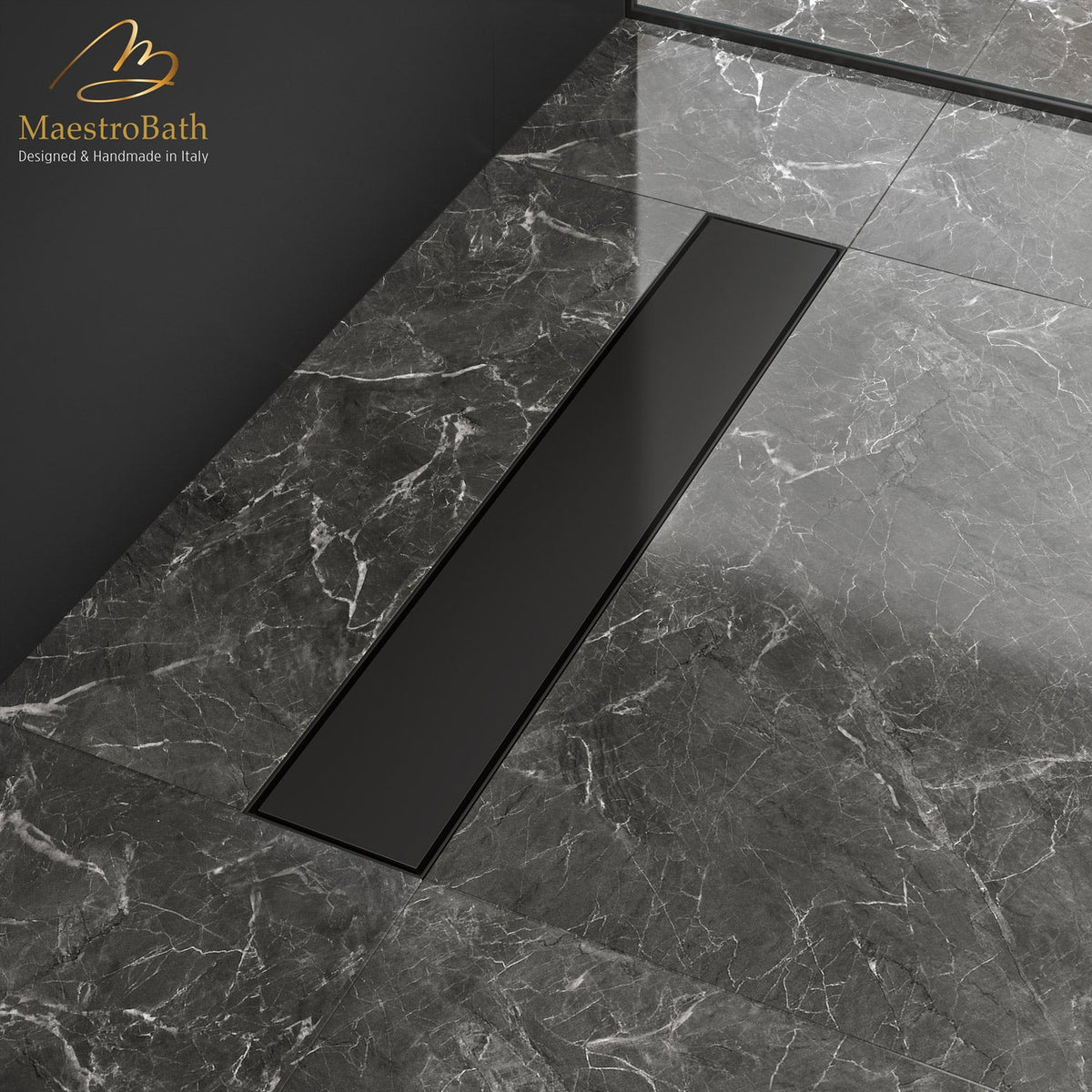
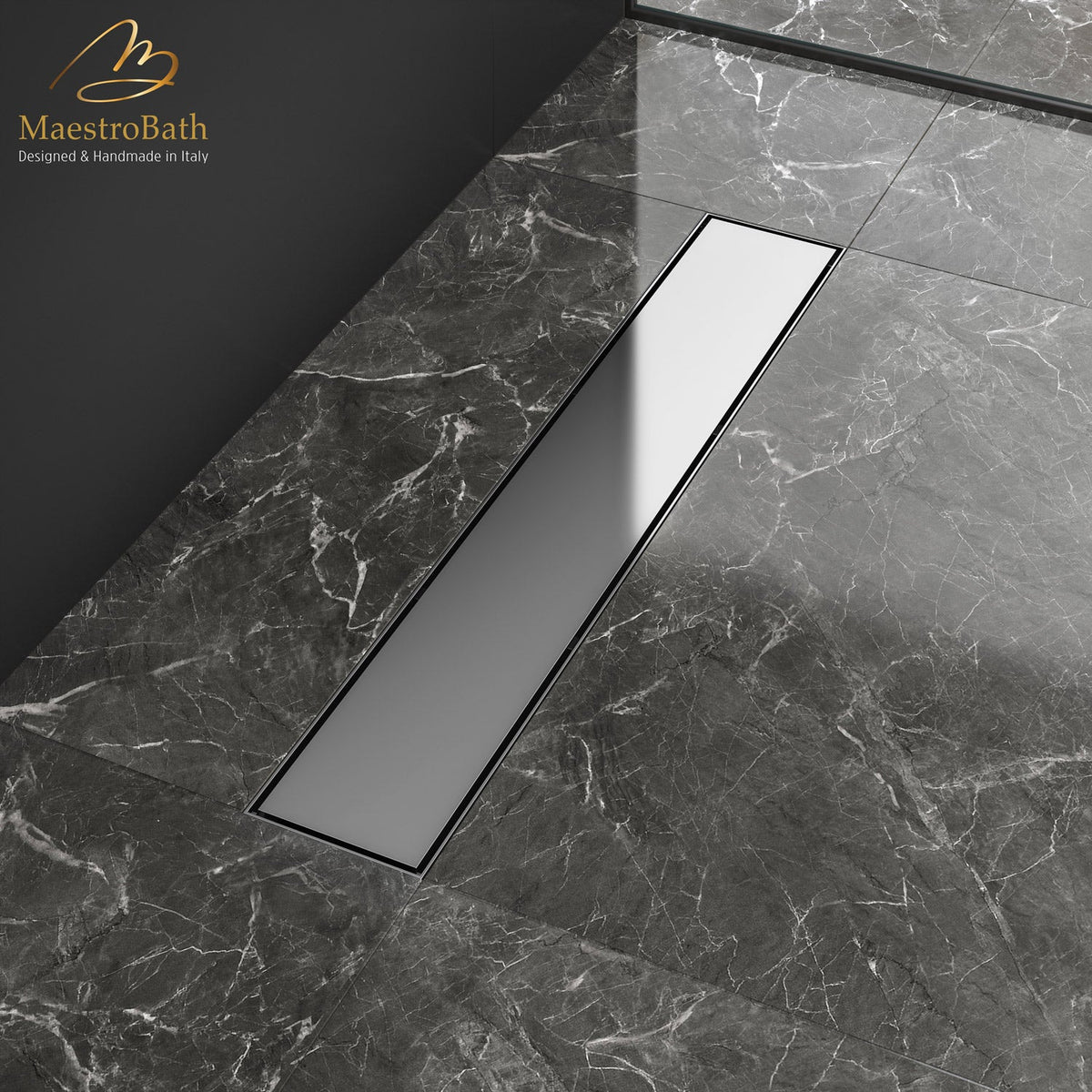
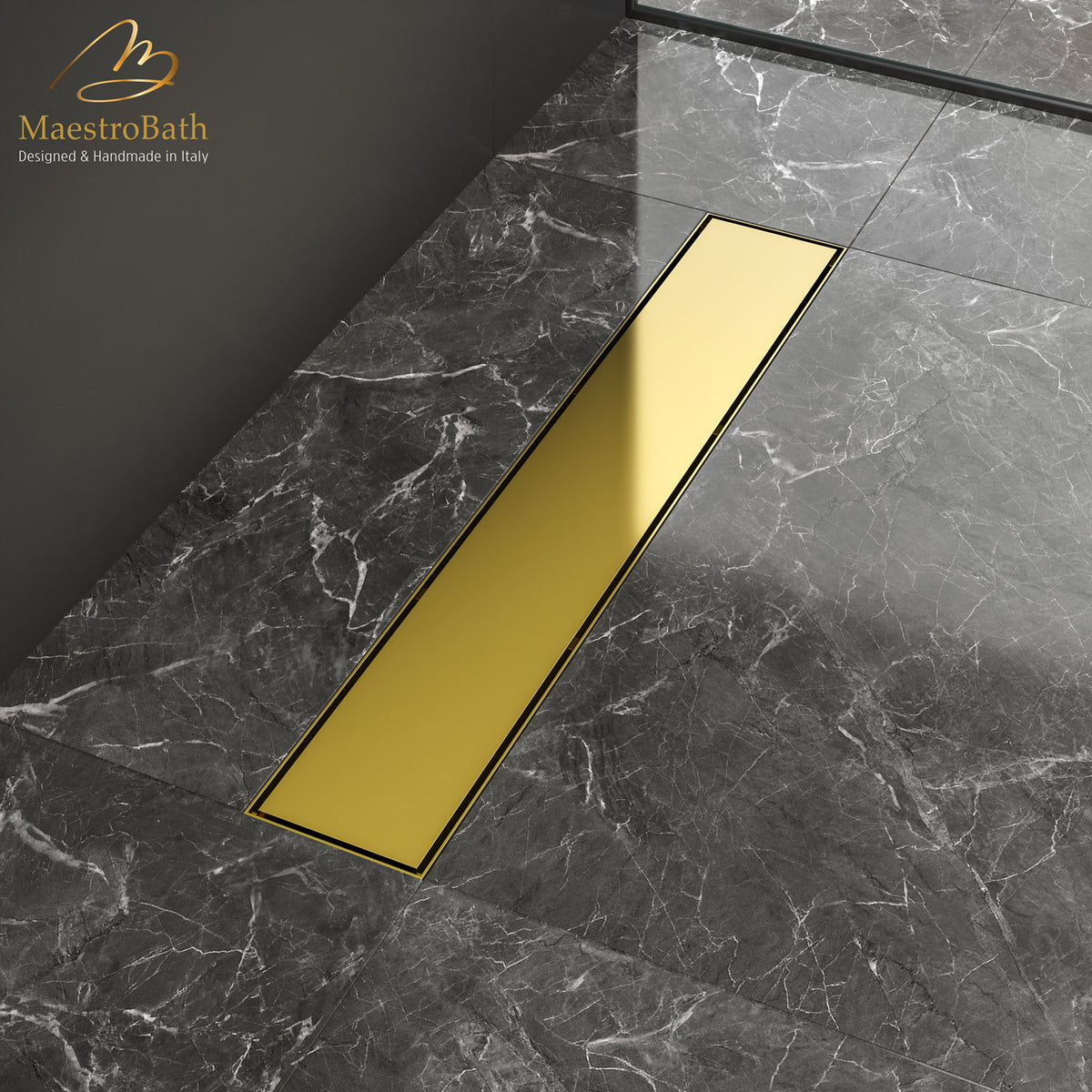
system rather than left as a stainless afterthought: polished gold,
brushed gold, polished chrome and matte
black. Matching the drain to the shower head and valve trim is a small thing that
makes a bathroom look specified rather than assembled.
Material
These drains are made from lead-free brass, not pressed stainless or
plastic. That matters in a drain more than almost anywhere else in the bathroom, because it
is a permanent fitting set into the floor build up. Replacing one later means lifting tile,
so it is worth doing once in a material that will not corrode or distort.
Plan it before the tile
A linear drain has to be decided before the floor is built, because the fall of the screed
is set to it. If you are at the design stage, choose the drain length and position now, and
give both to your tiler along with the tile format. If the tiling is already done, a 100 mm
point drain is usually the only option that can still be retrofitted.