Choosing a Bathroom Sink
A basin is the one fixture in a bathroom that is seen from above, which is why it carries more of the room than its size suggests. It is also the decision that constrains two others: how it mounts determines which faucets will work, and its depth determines the height you end up washing at.
Work through it in this order: how it mounts, what it is made of, and then the finish. These are handcrafted in Italy.
Start with how it mounts
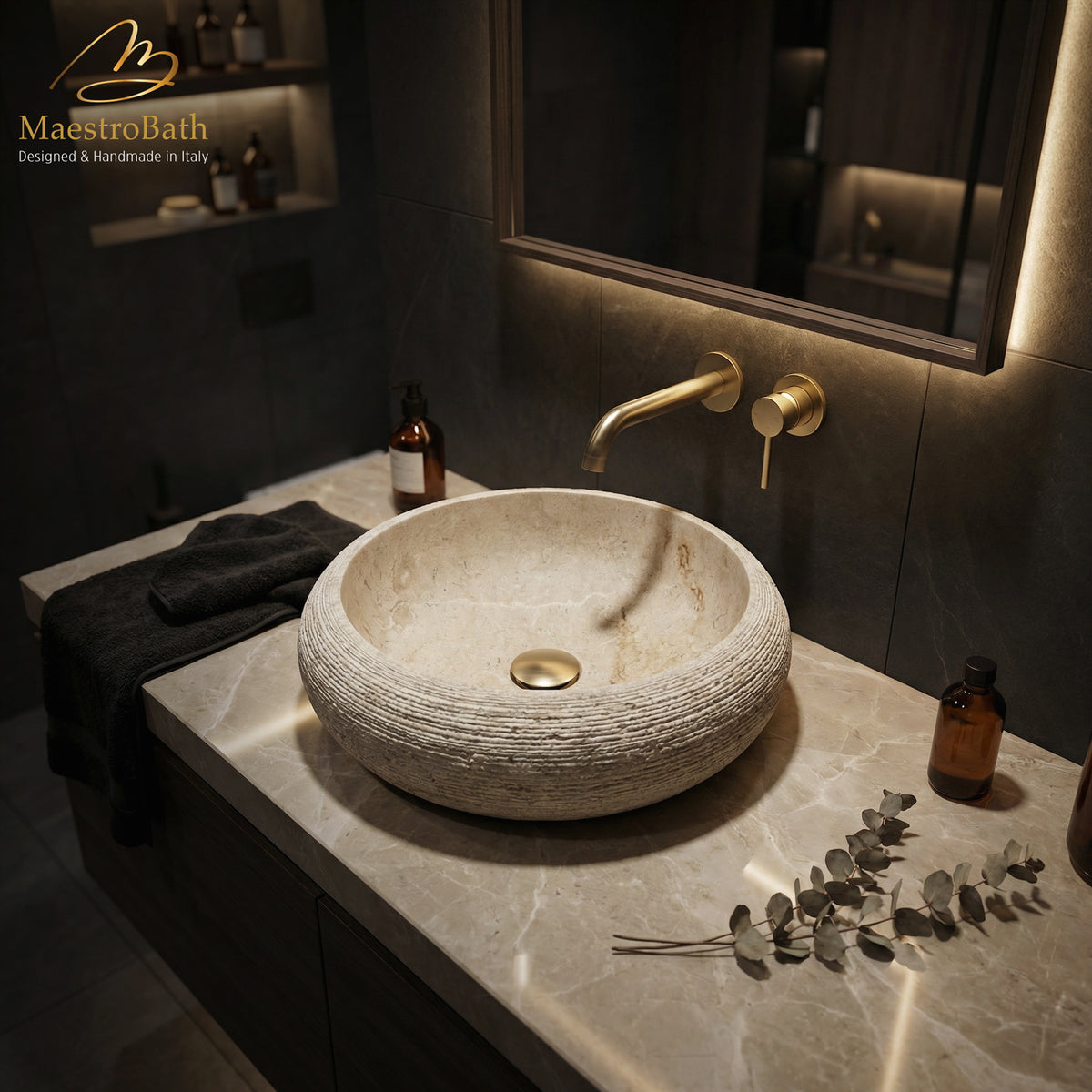
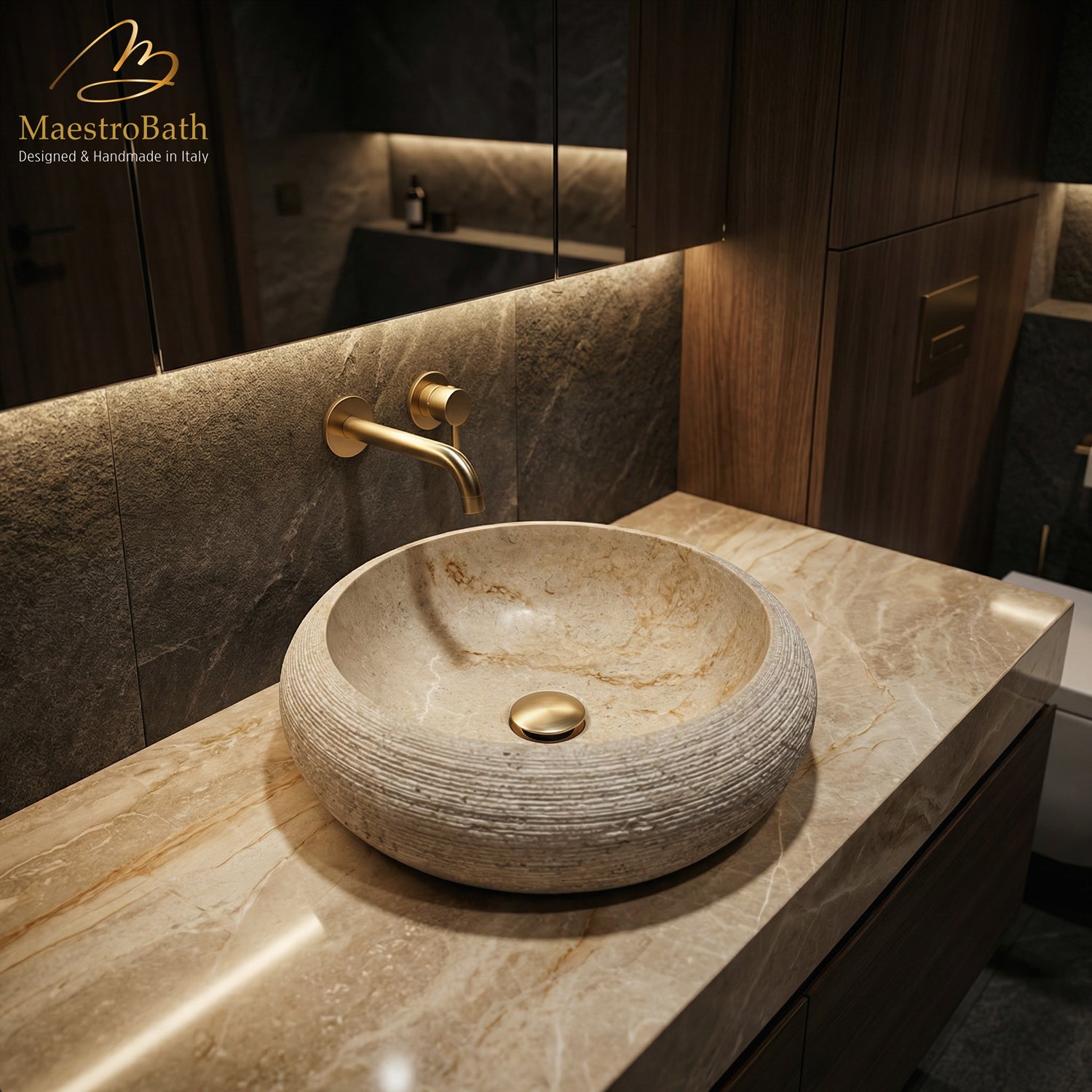
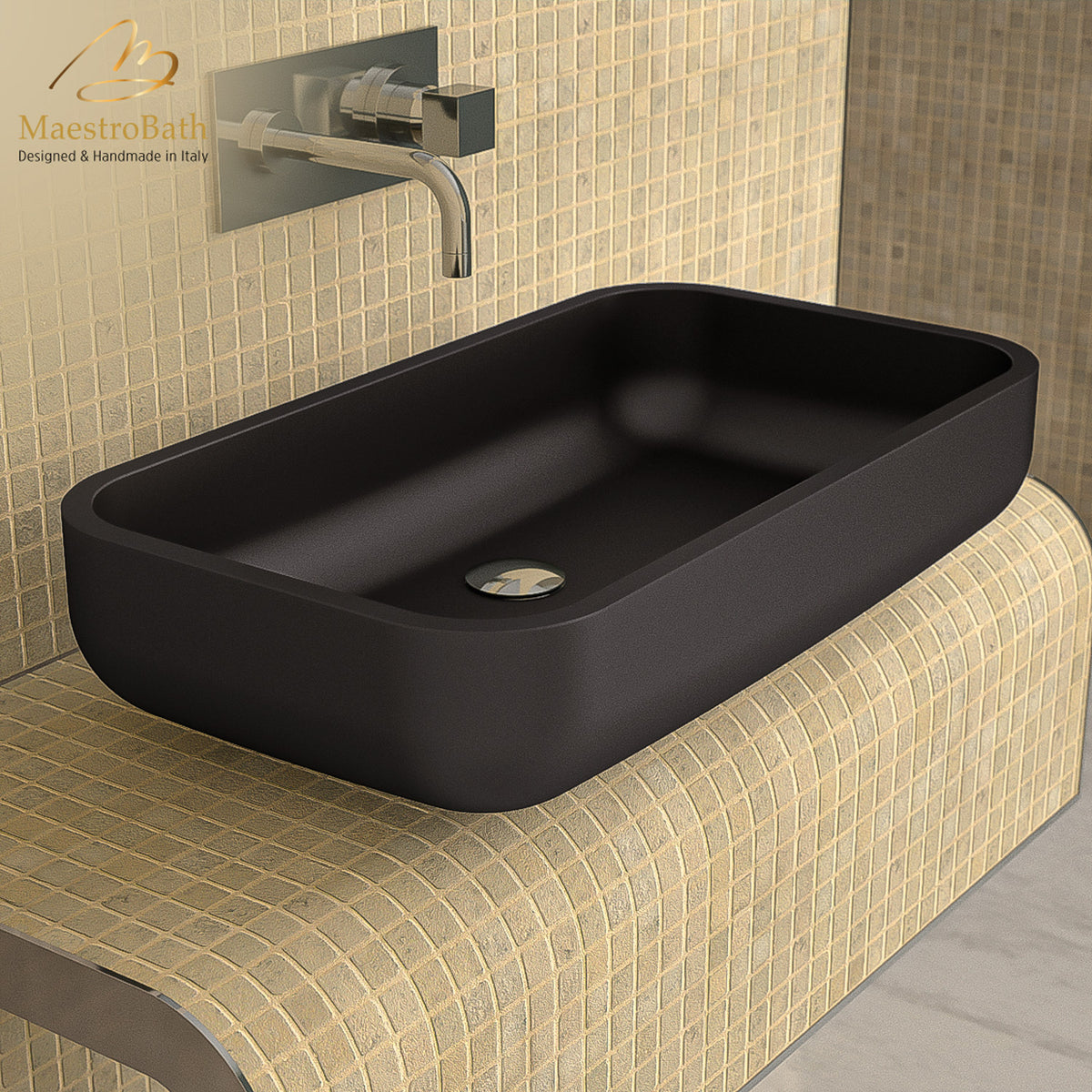
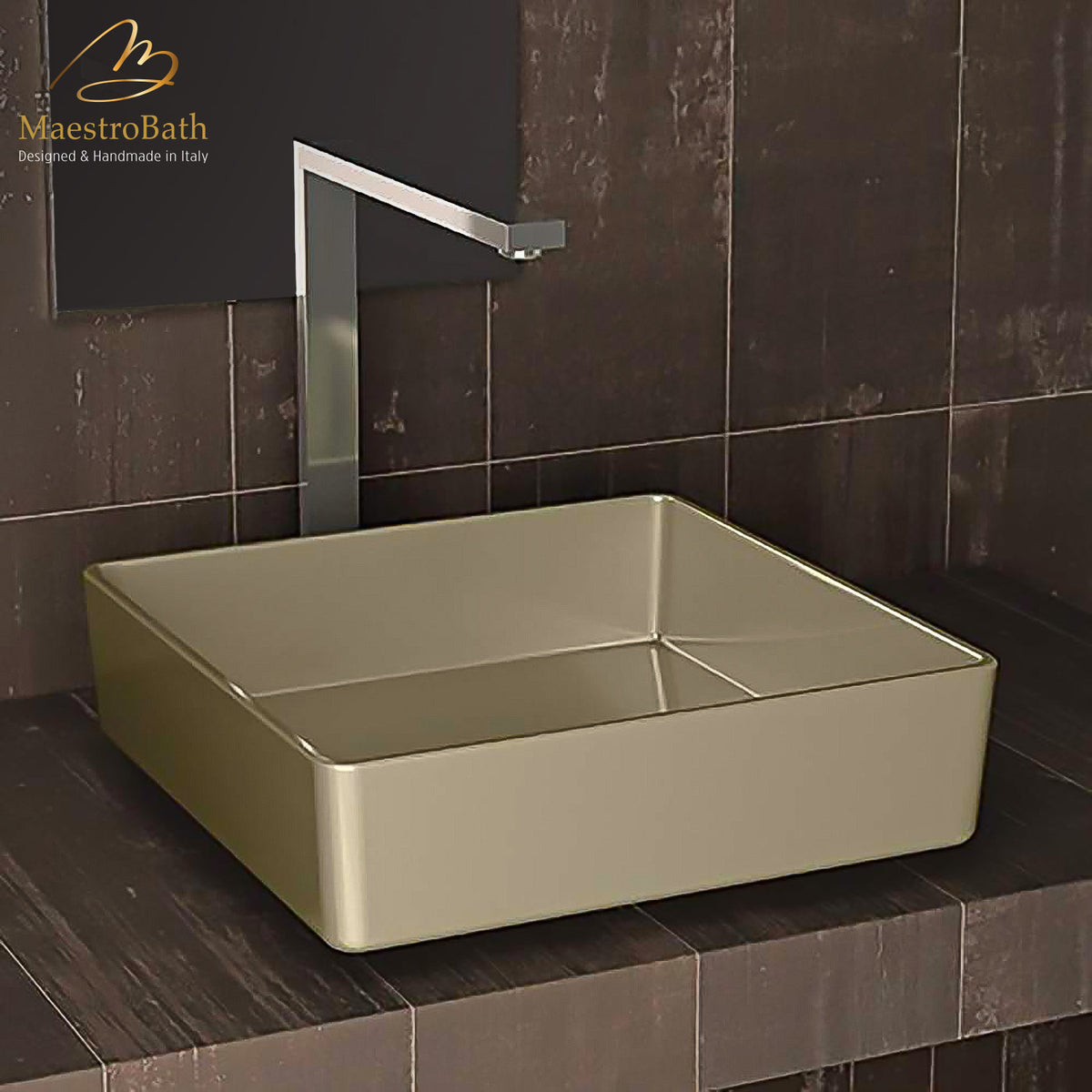
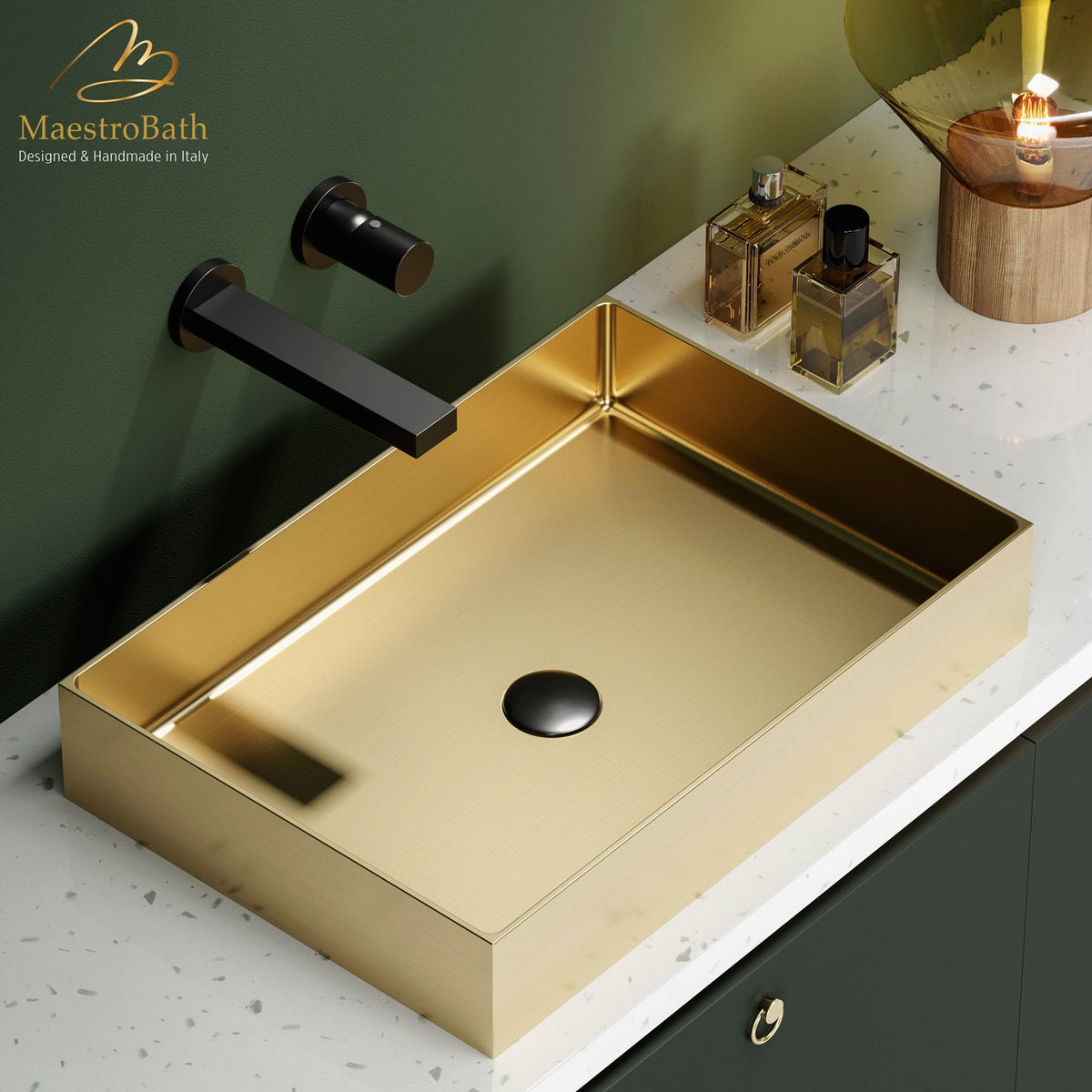
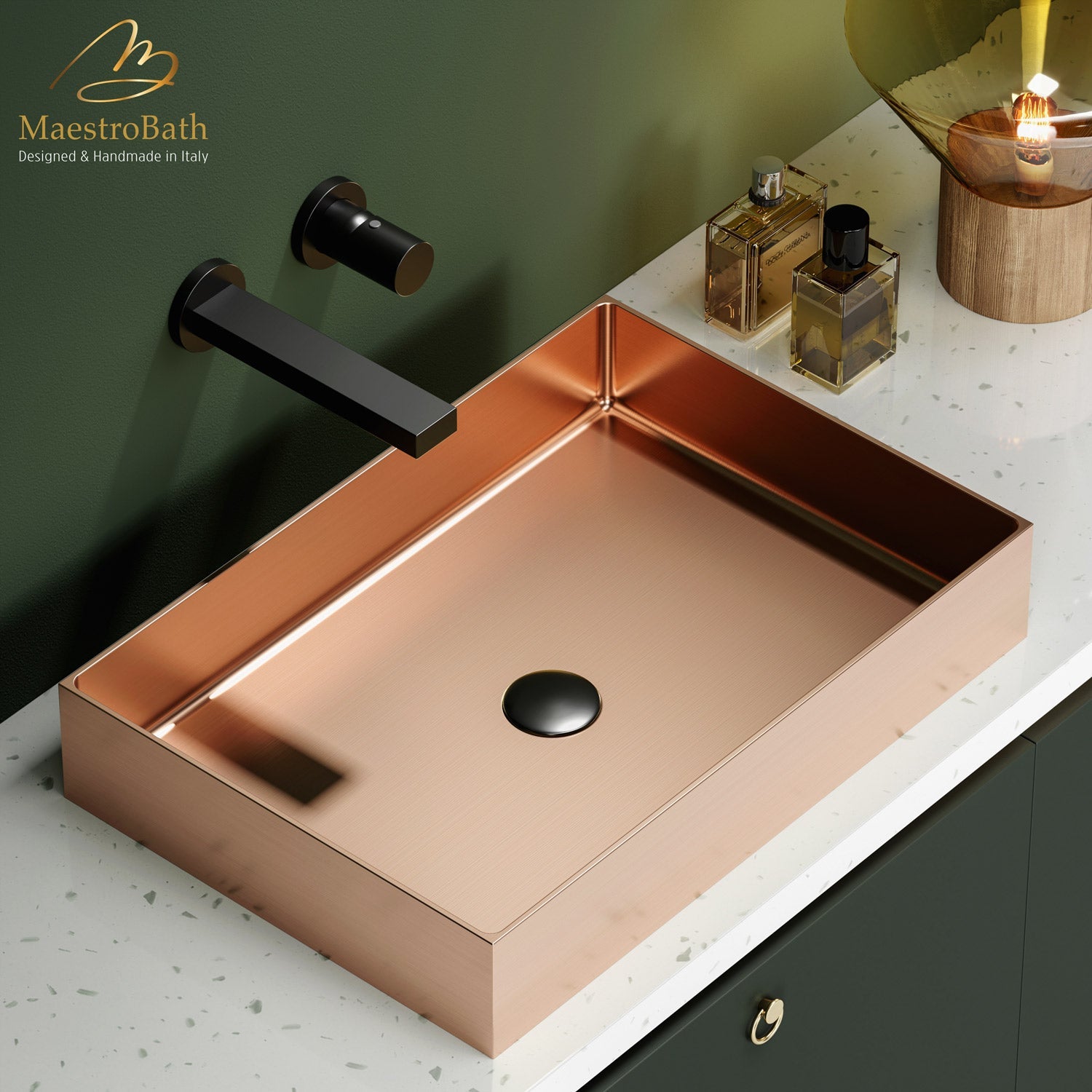
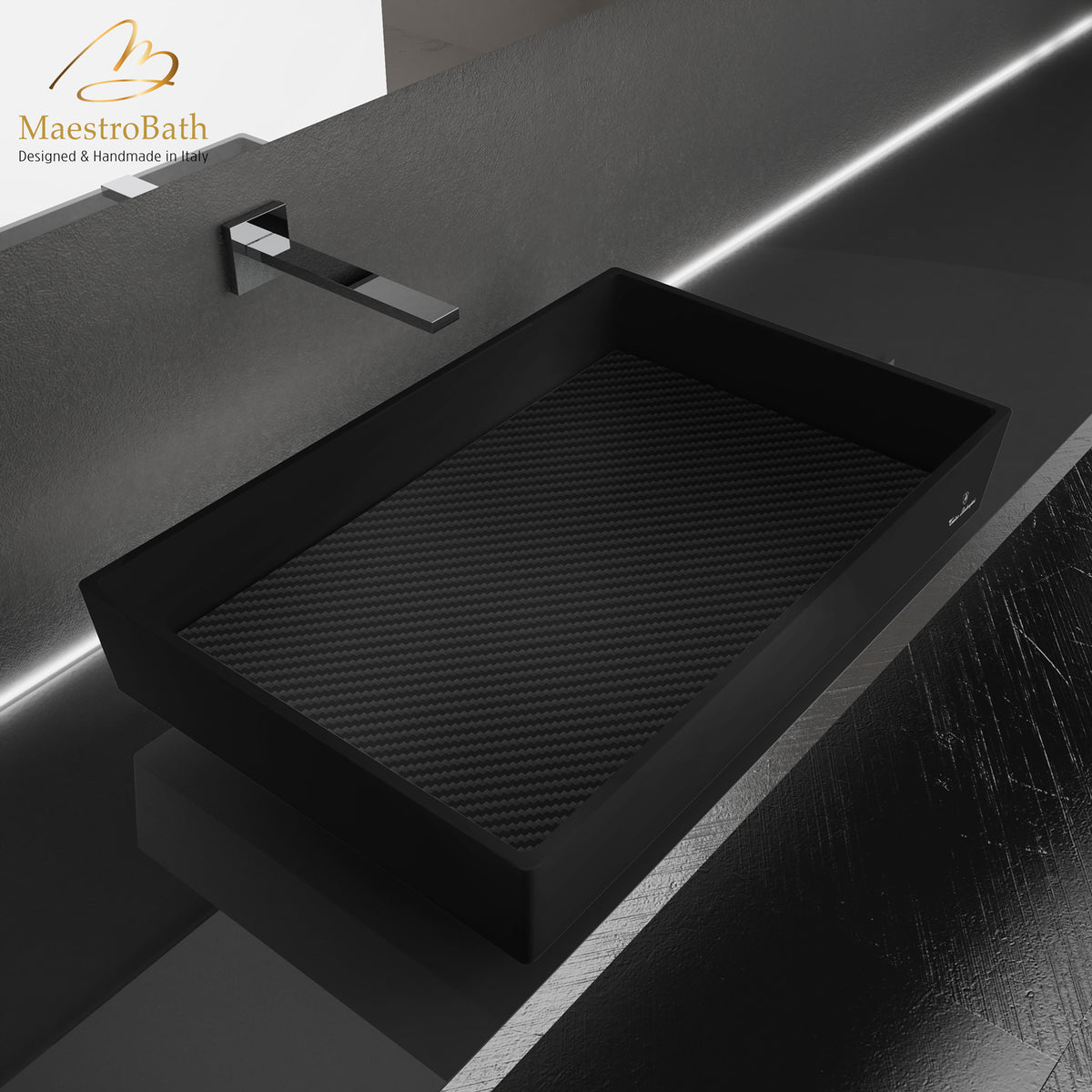
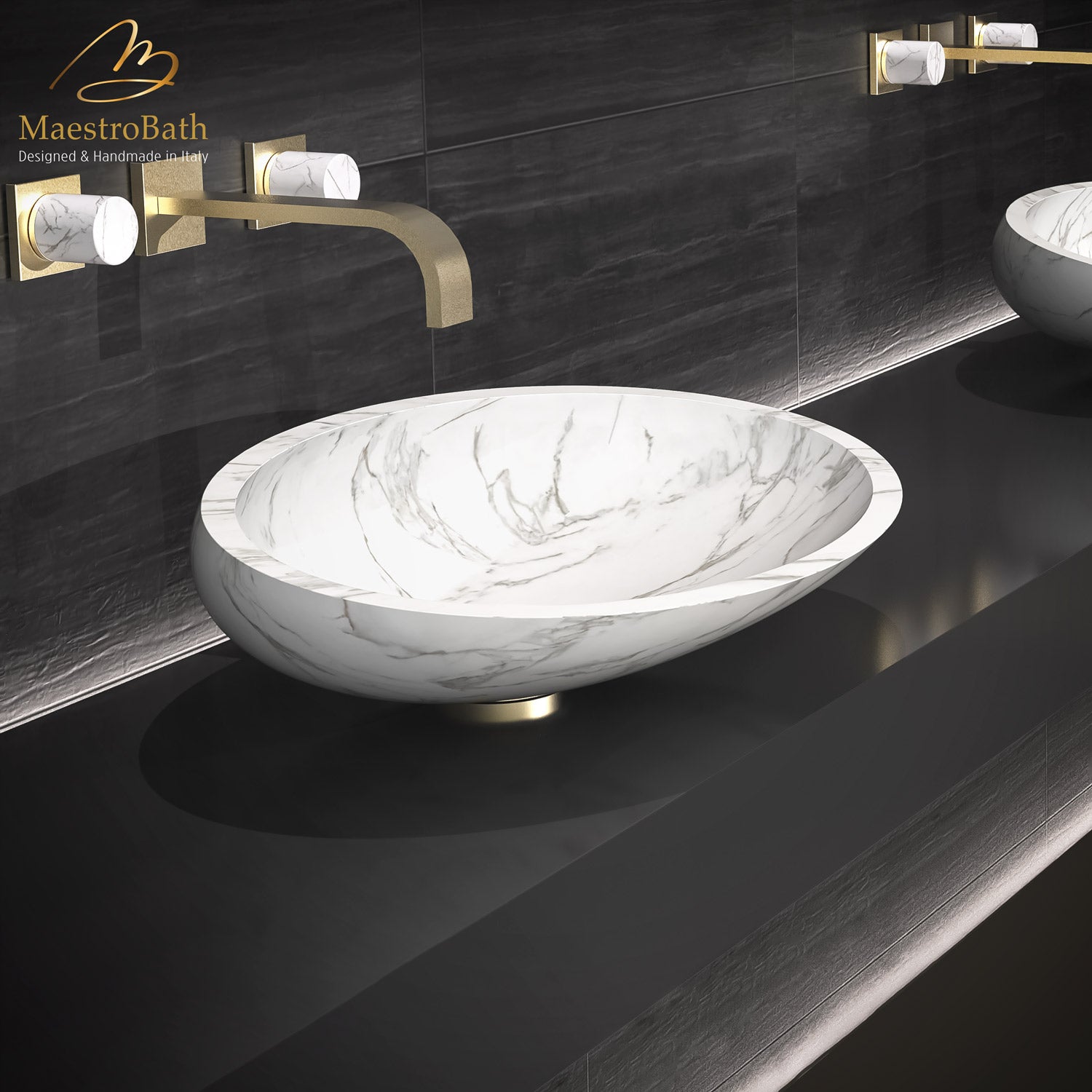
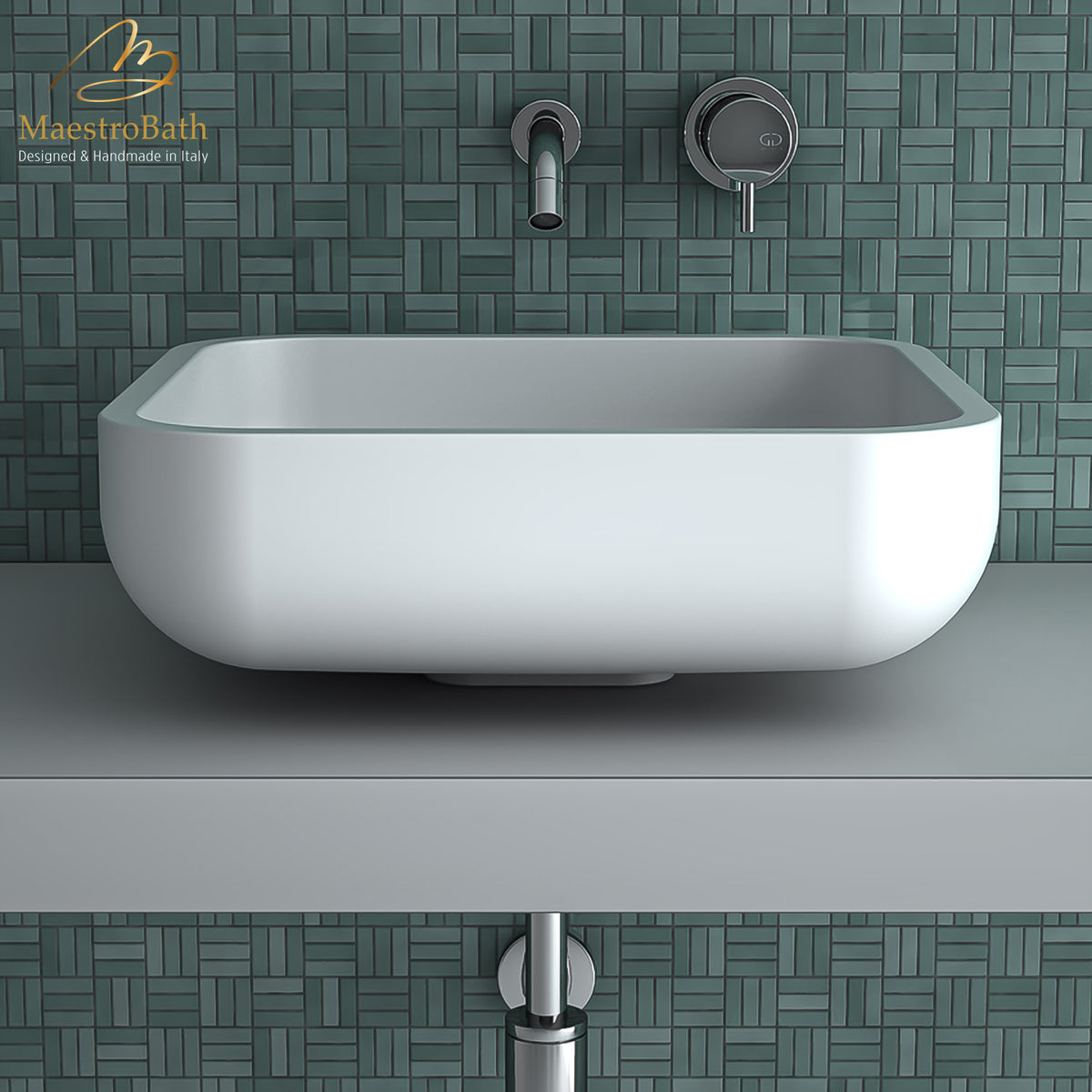
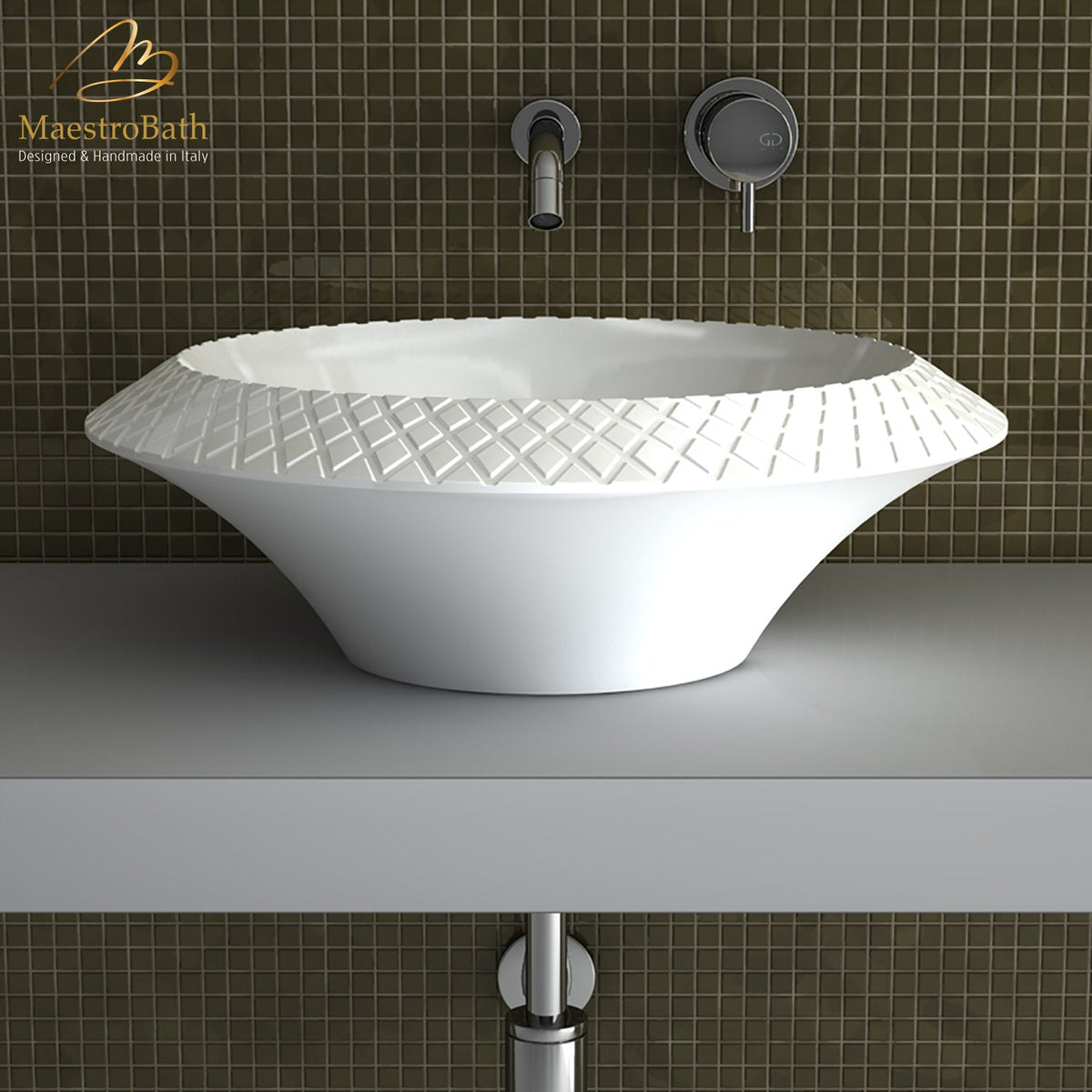
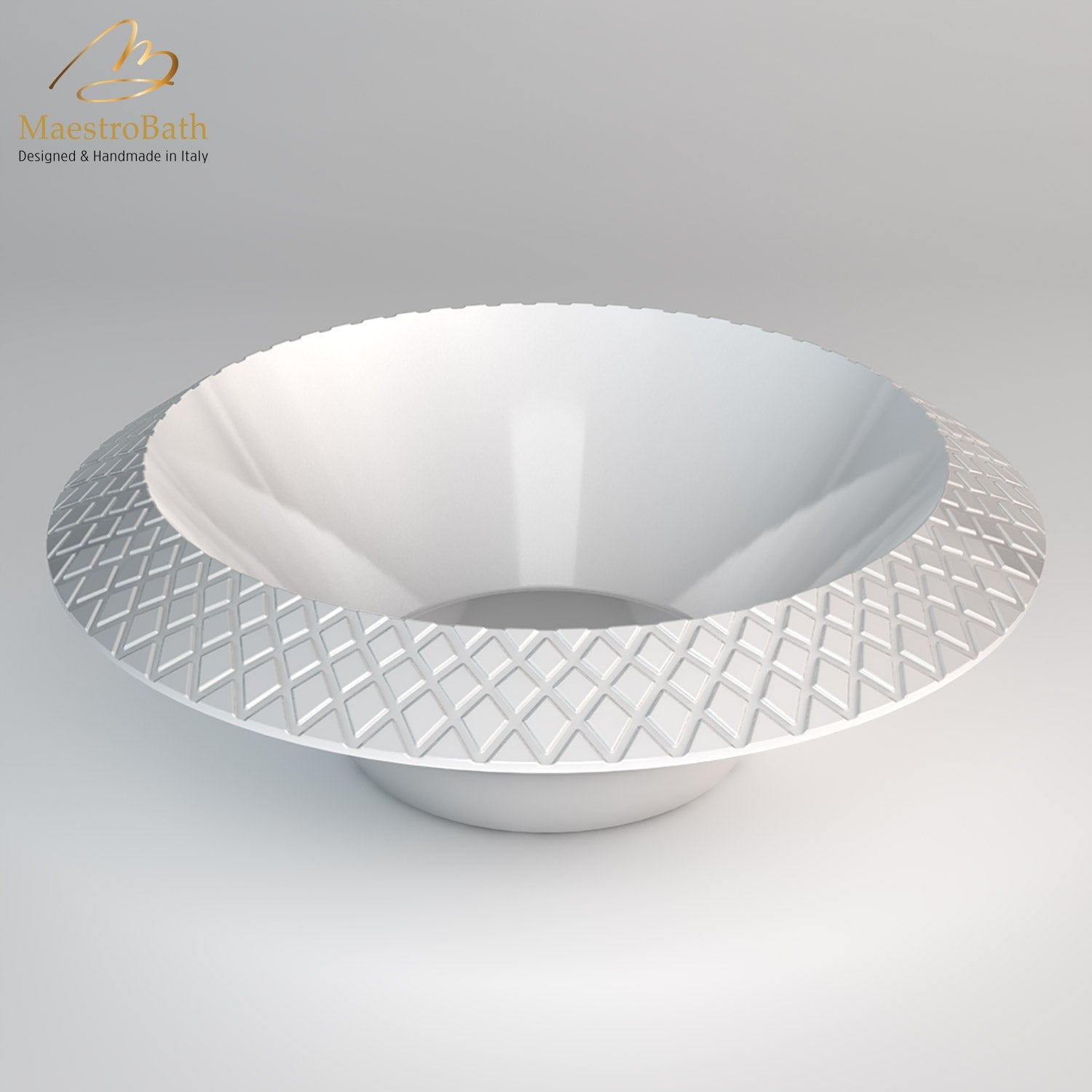
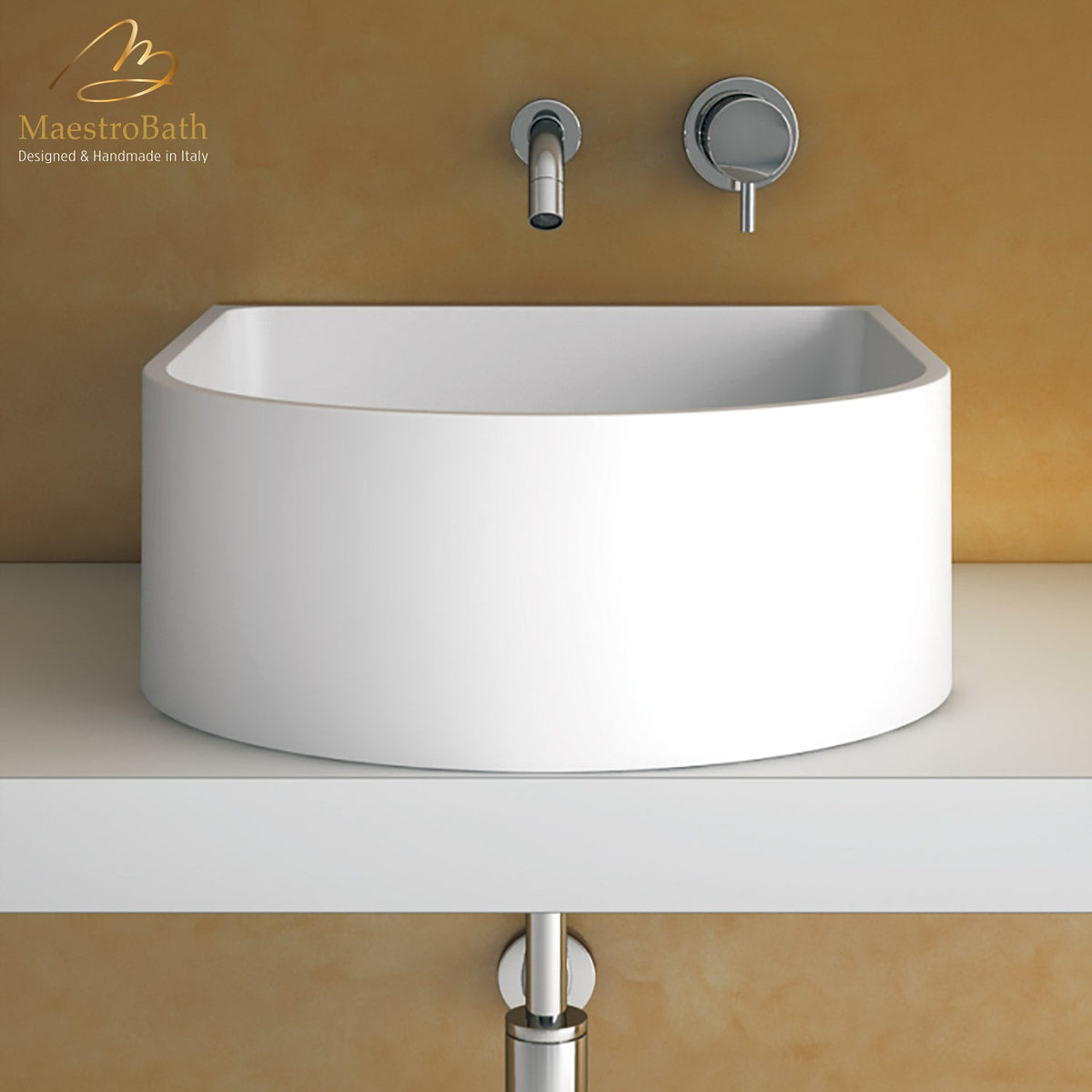
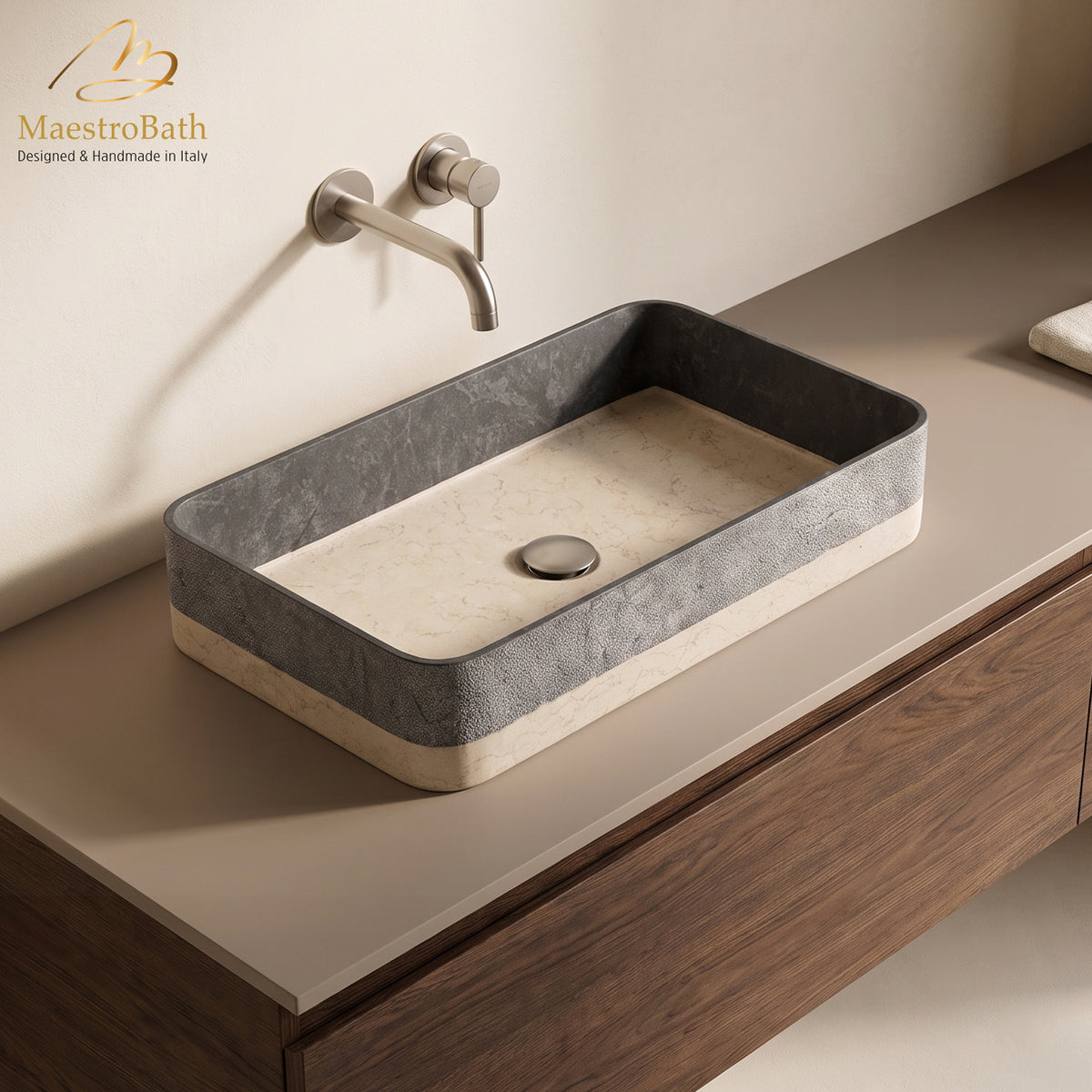
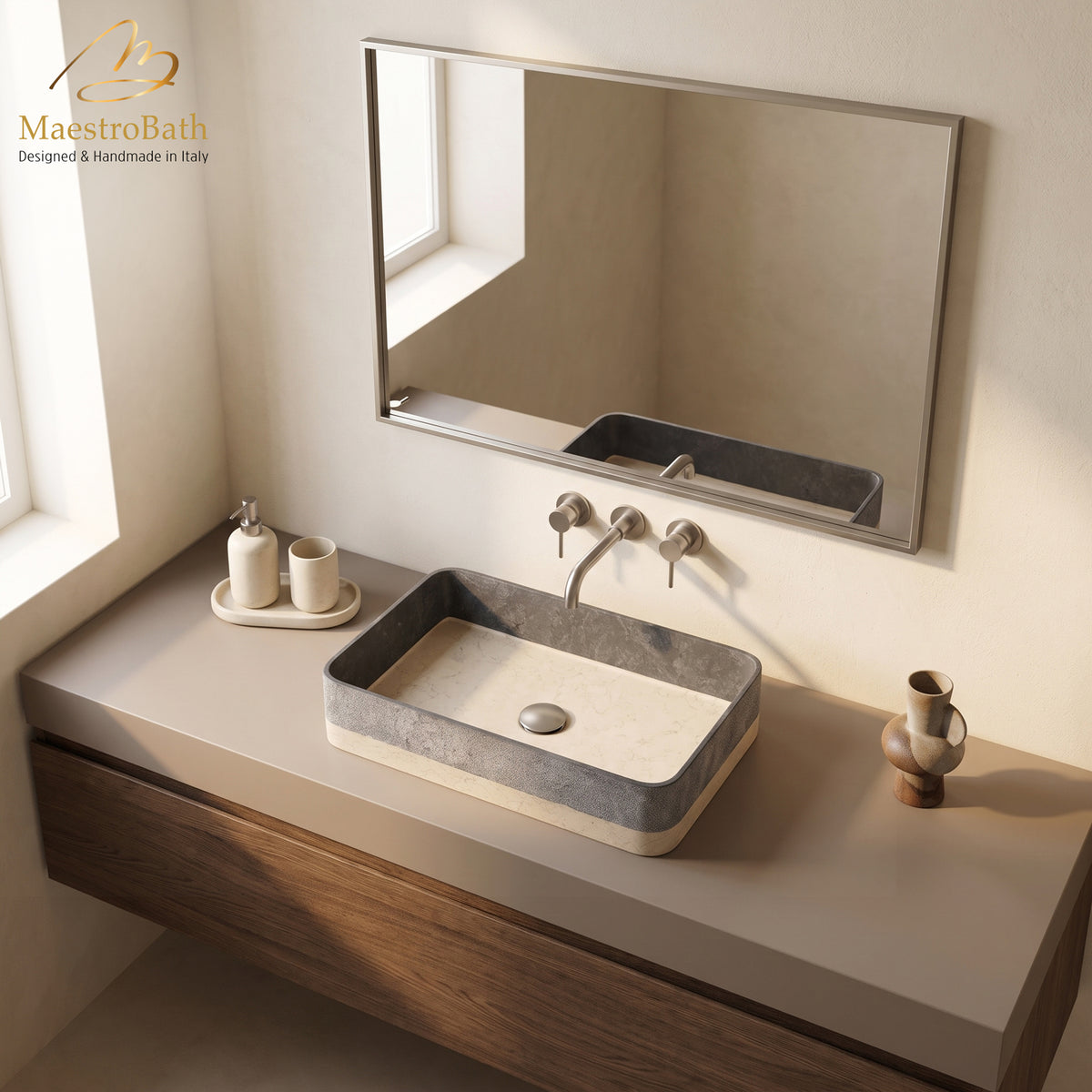
Vessel sinks sit on top of the counter and are the reason most people are on this page. The basin is fully visible, so it reads as an object rather than as plumbing, and it is the only mounting where the material really shows. The trade is height: a vessel adds its full depth to the counter, so measure the total before ordering.
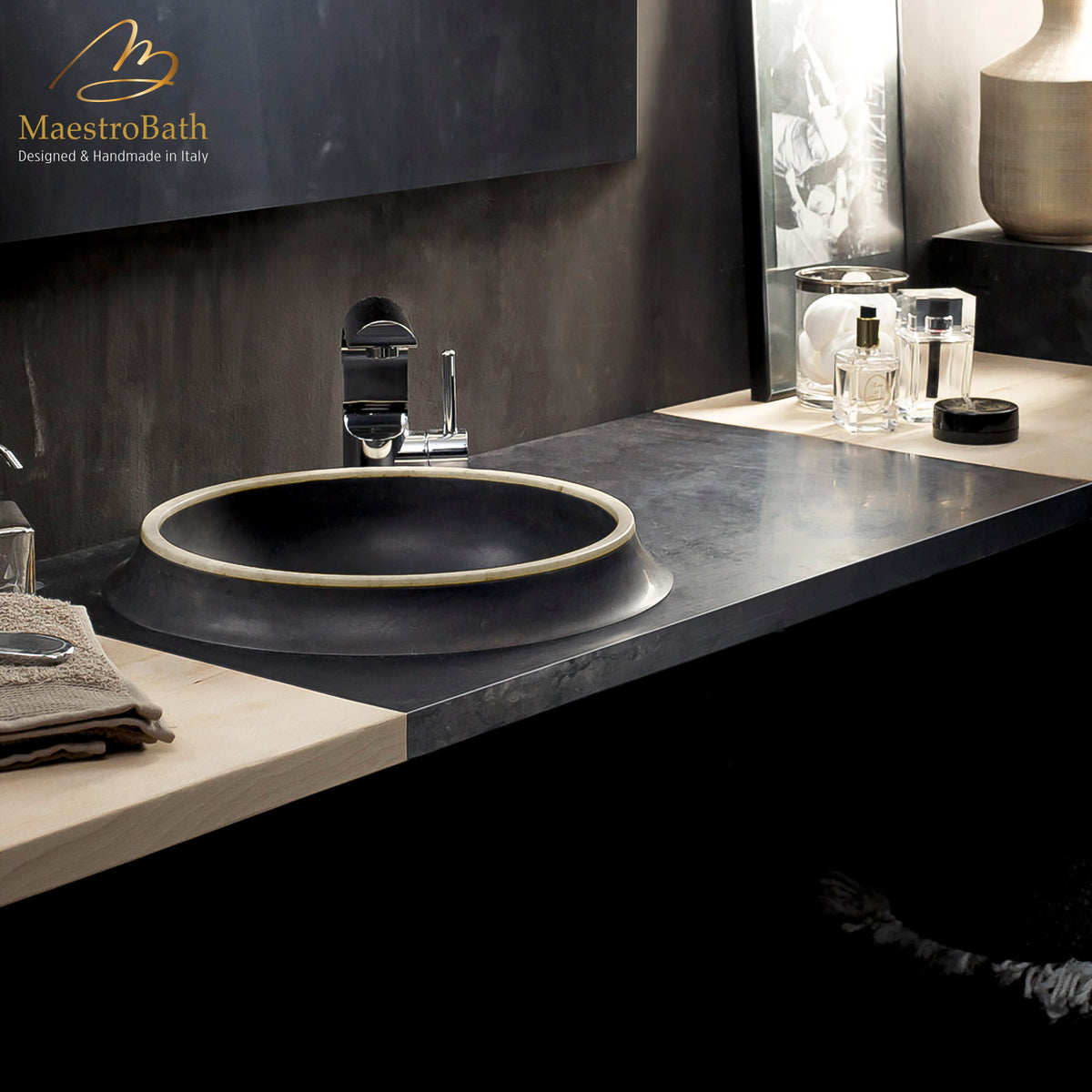
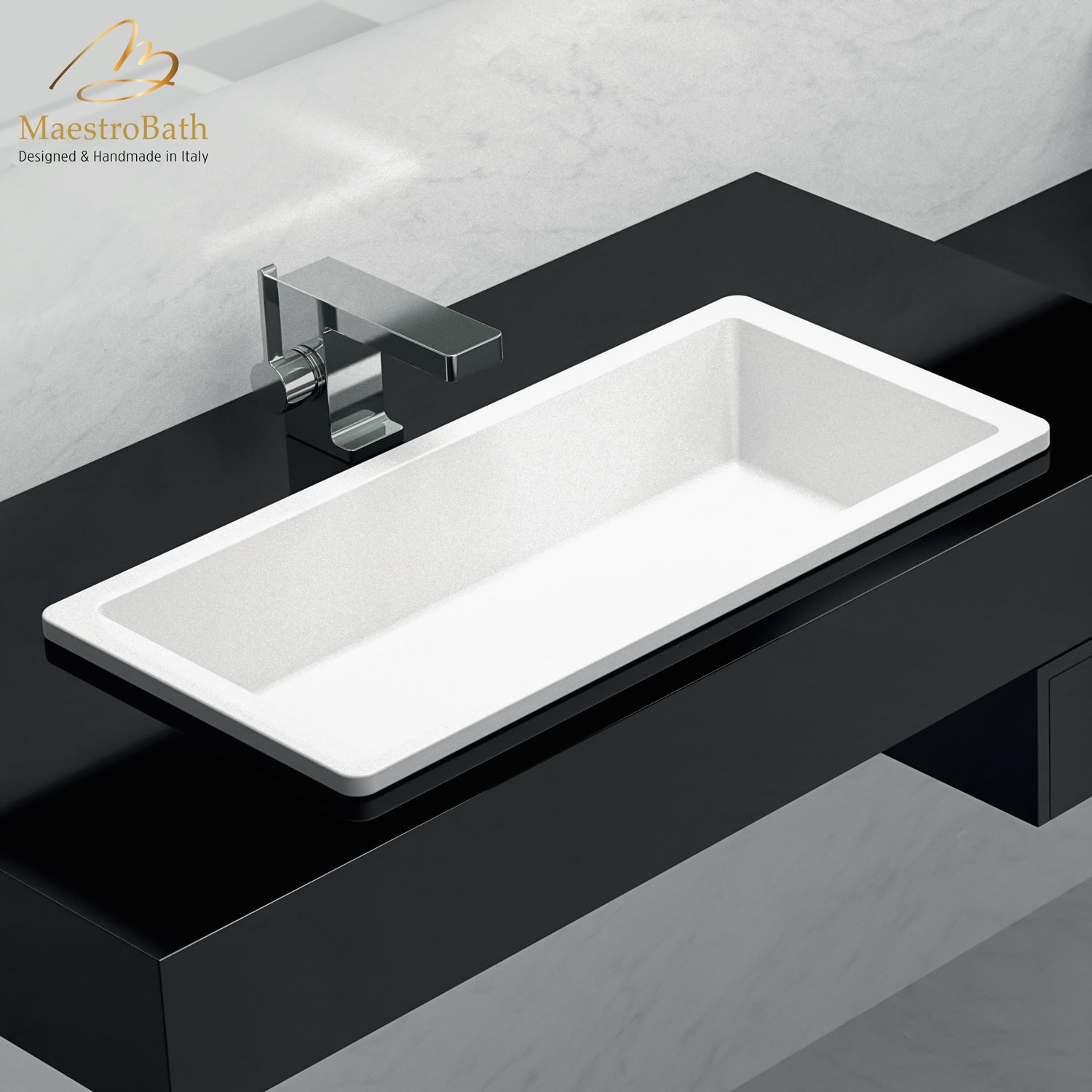
Drop in sinks set into a cut opening with the rim resting on the counter. Simpler to install than an under-mount and more forgiving of a slightly imperfect cut. Under-mount sinks fix beneath the surface so the counter runs uninterrupted to the edge of the bowl, which lets you wipe straight into the basin. It is the practical choice in a bathroom used by a family.
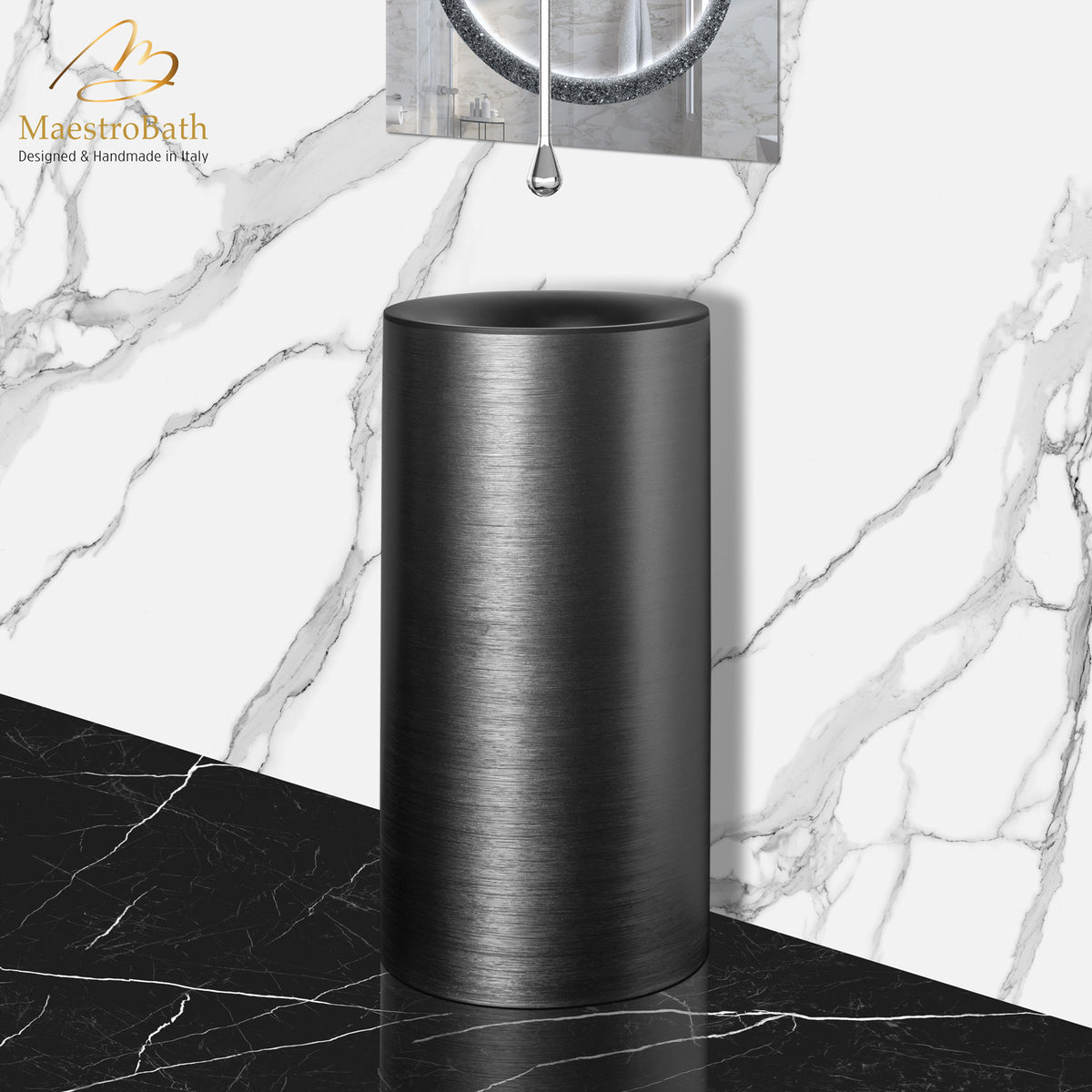
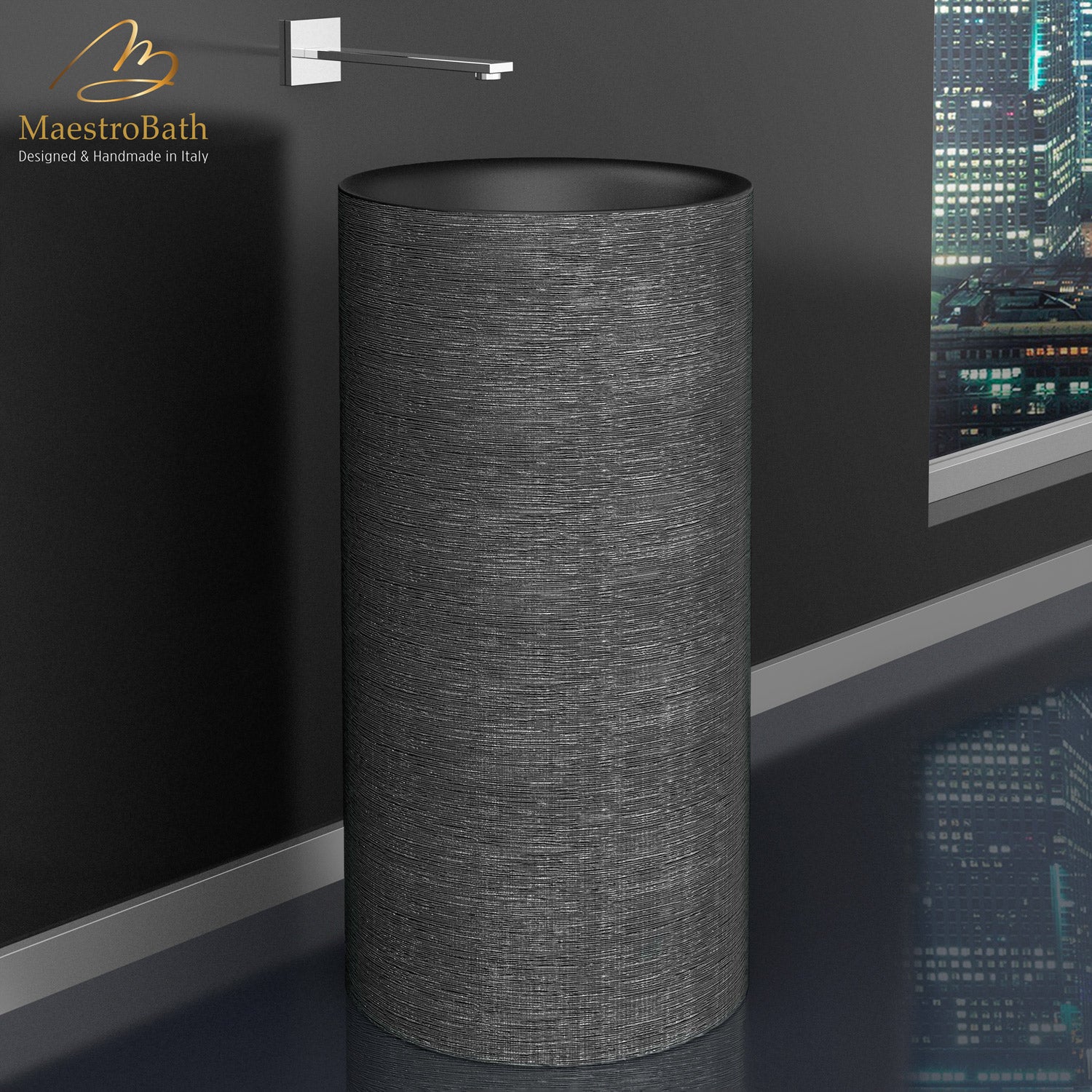
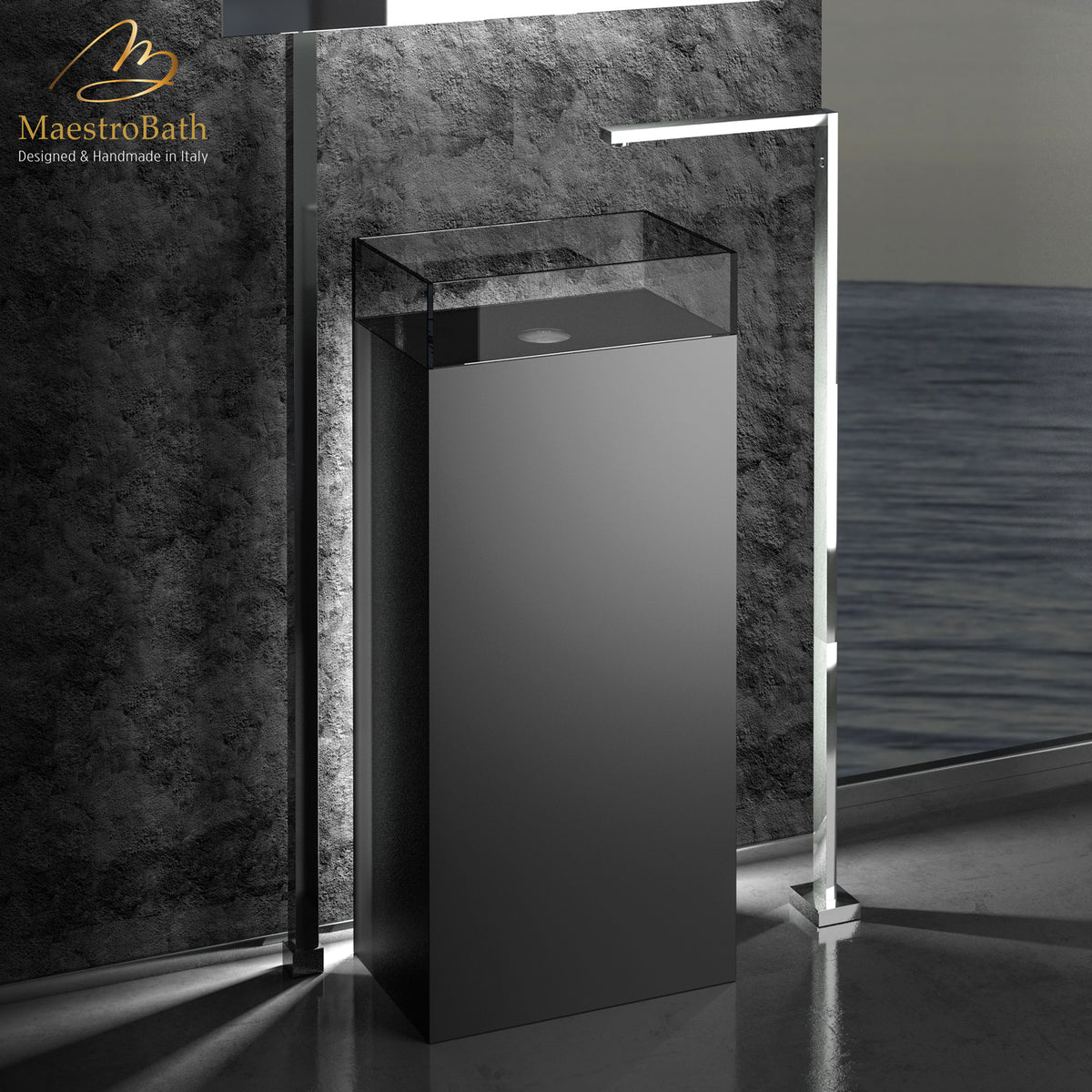
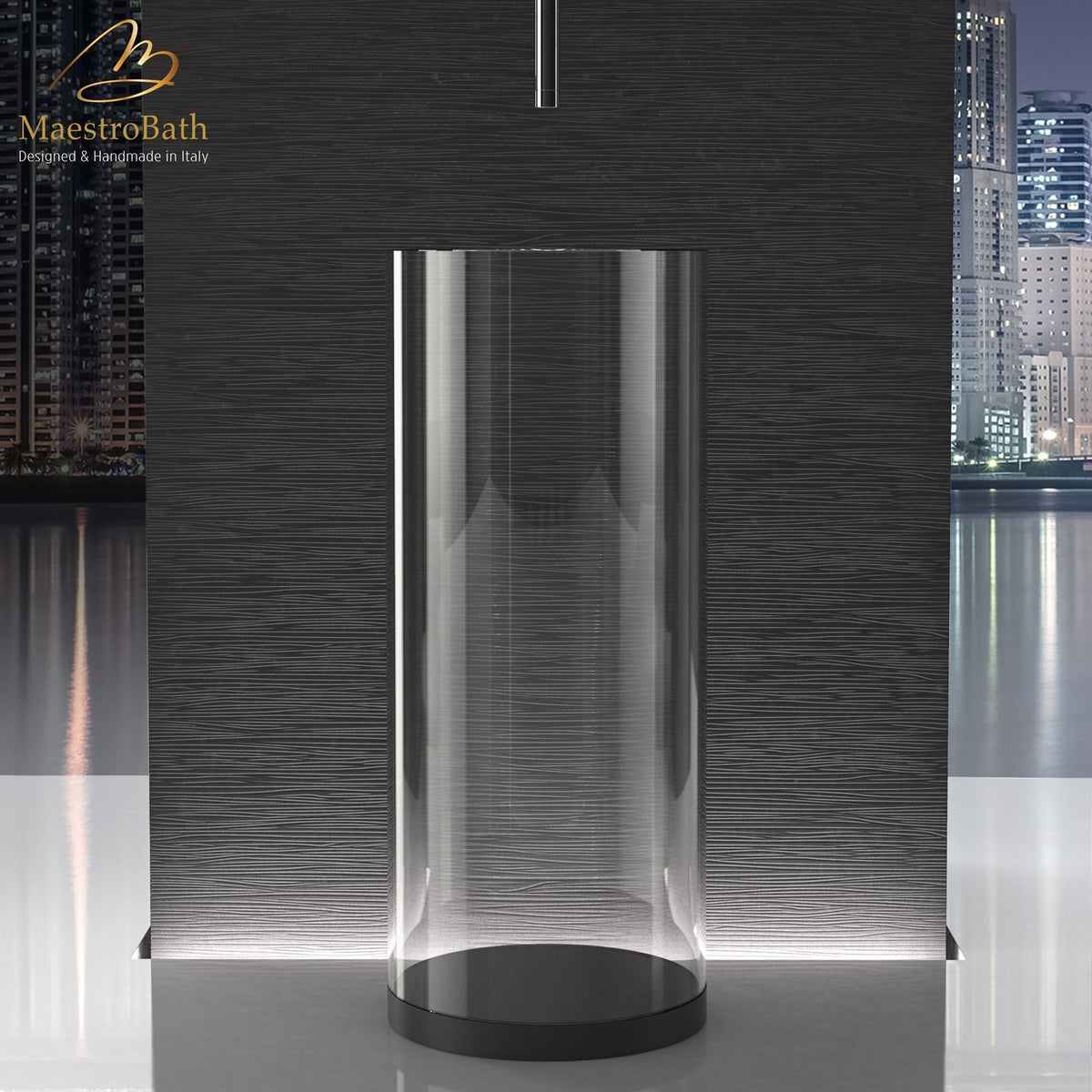
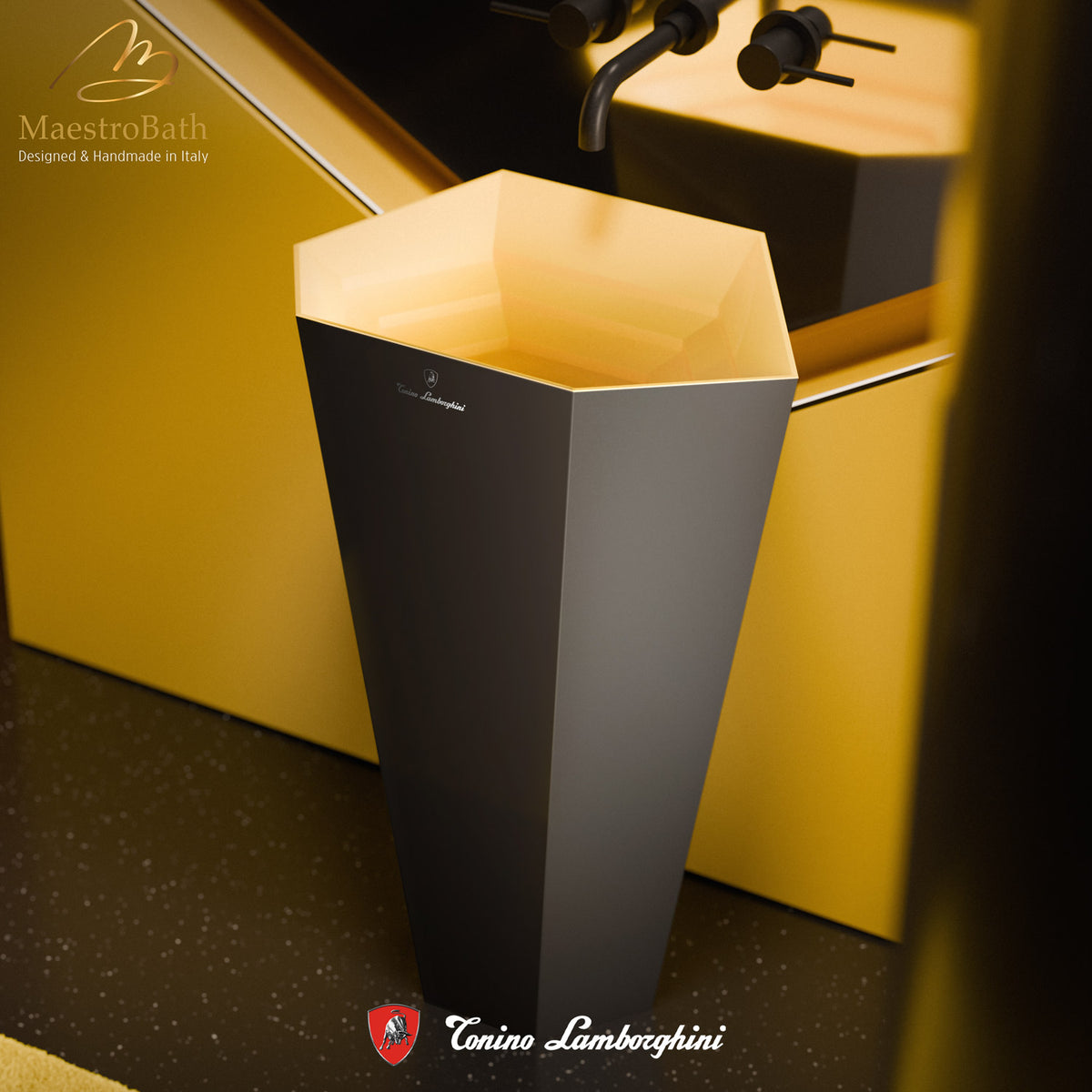
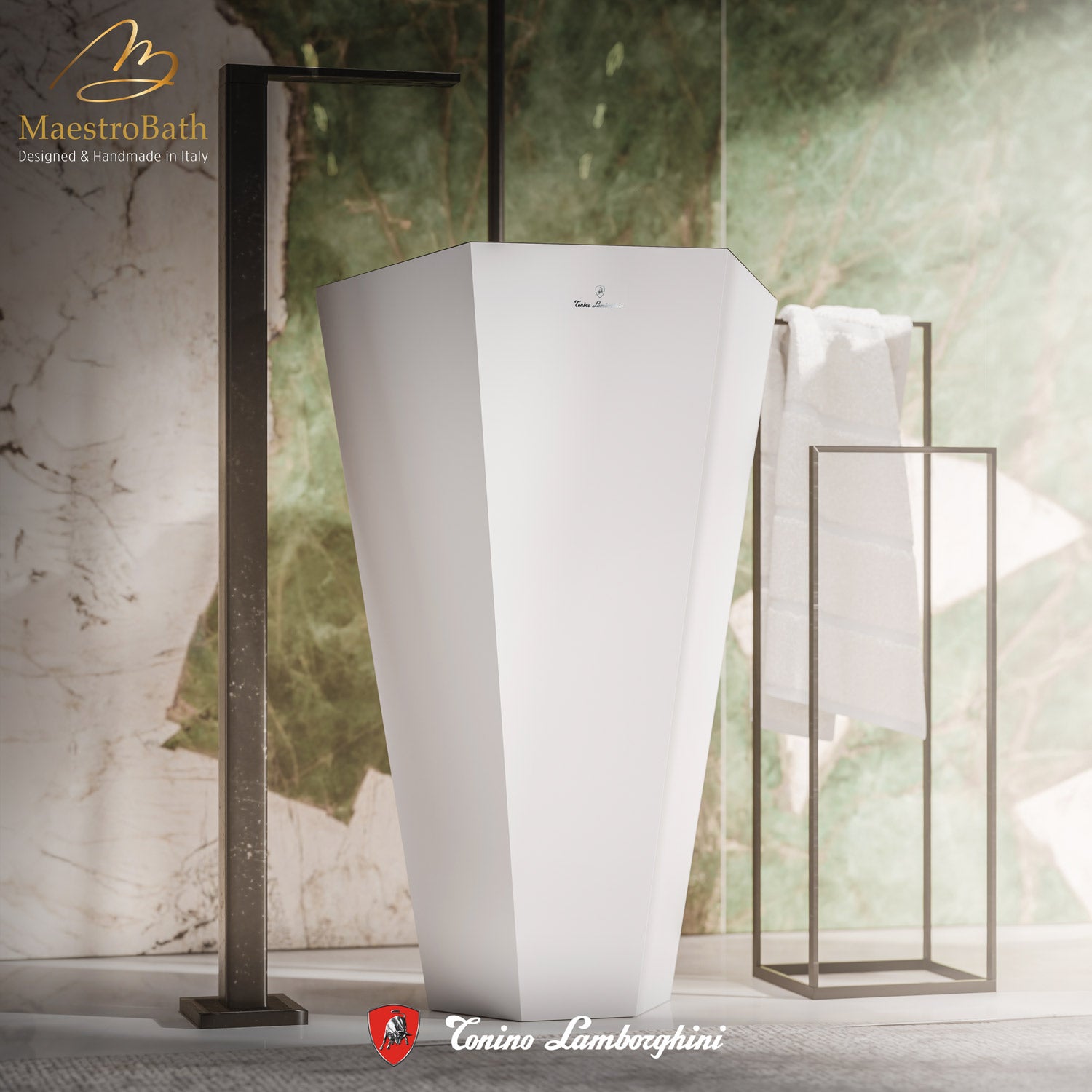
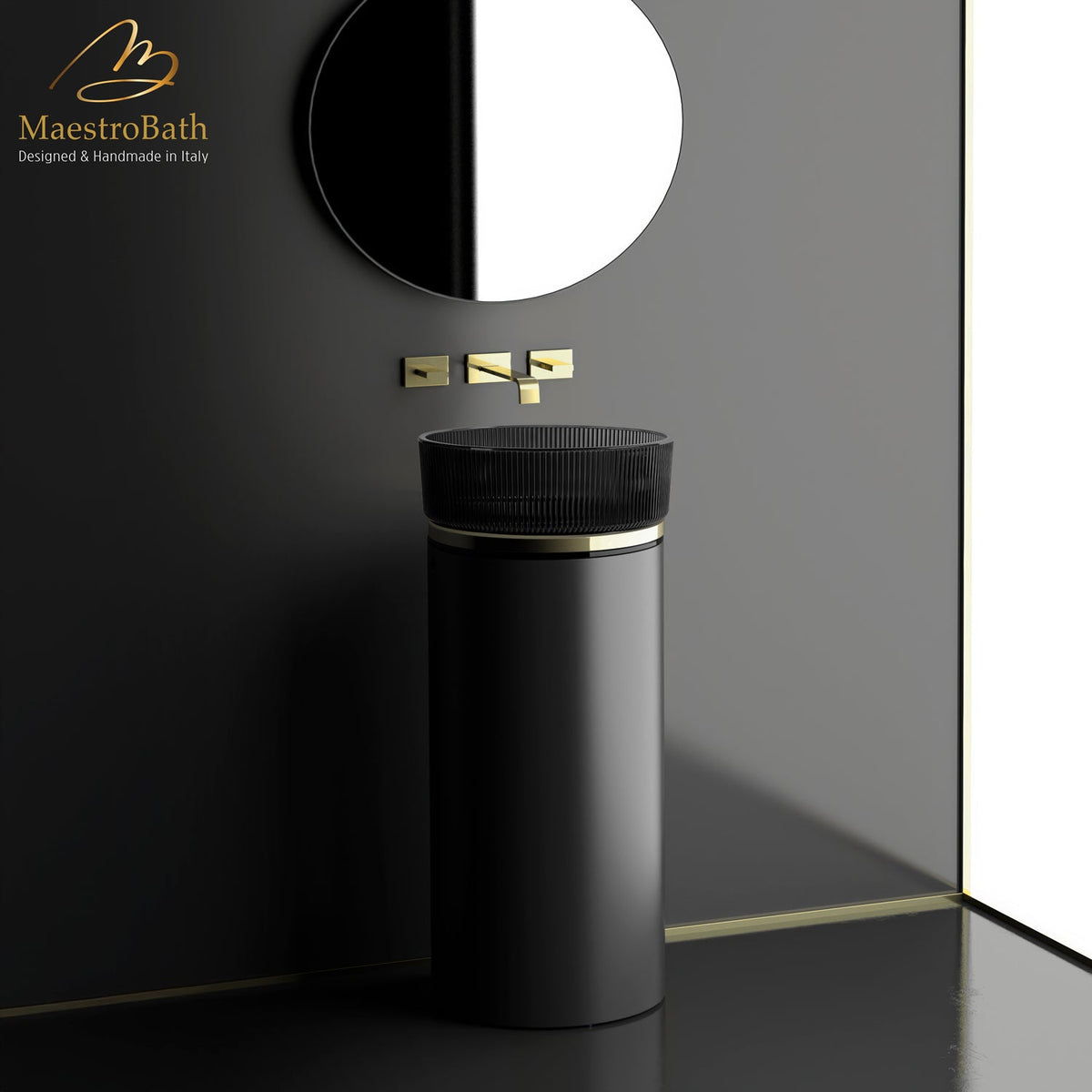
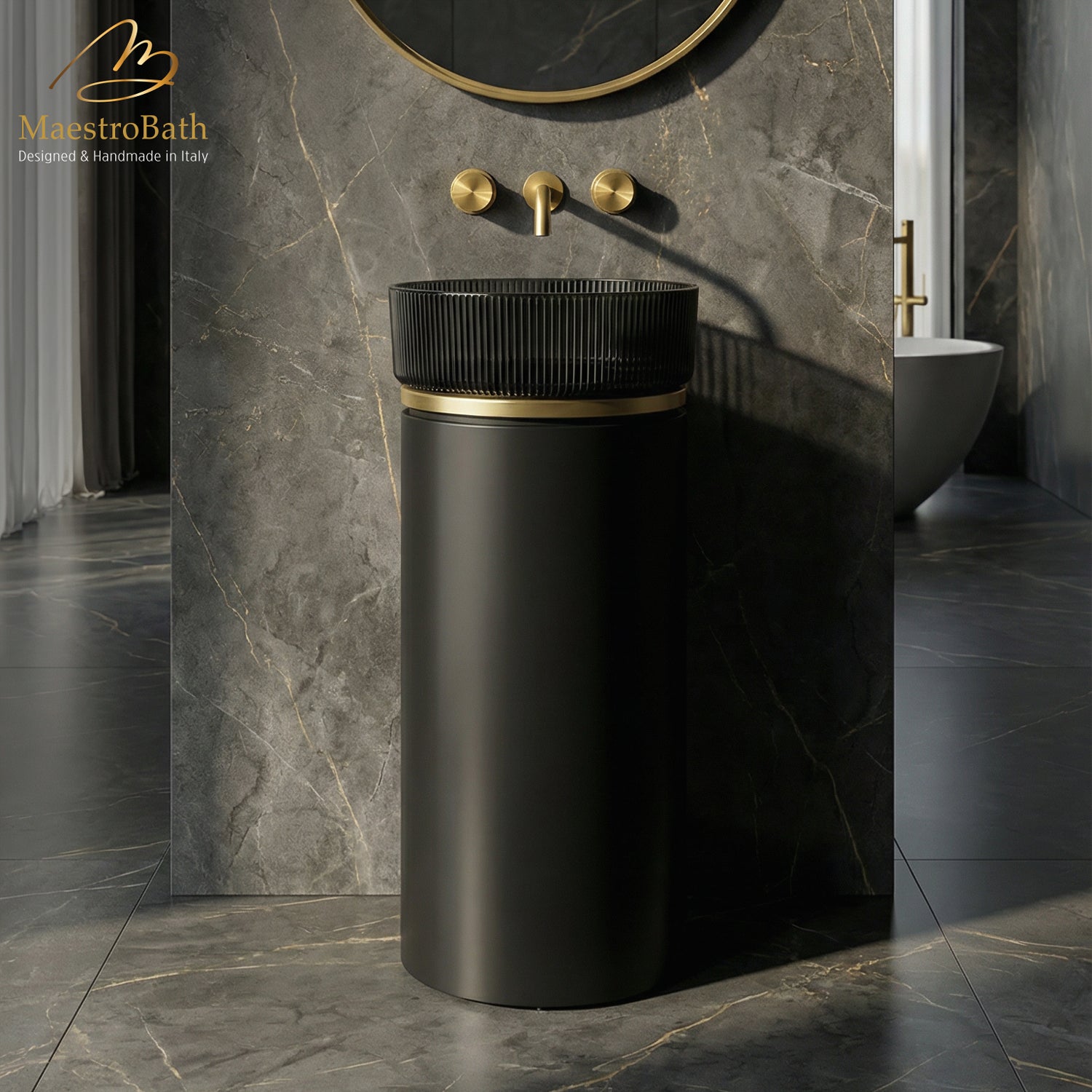
Free standing basins need no vanity at all. In a powder room, or anywhere the floor is worth seeing, they recover more space than a cabinet ever will.
Then the material
Material decides how the basin behaves in light, and it is the thing photographs least well, so it is worth understanding before ordering.
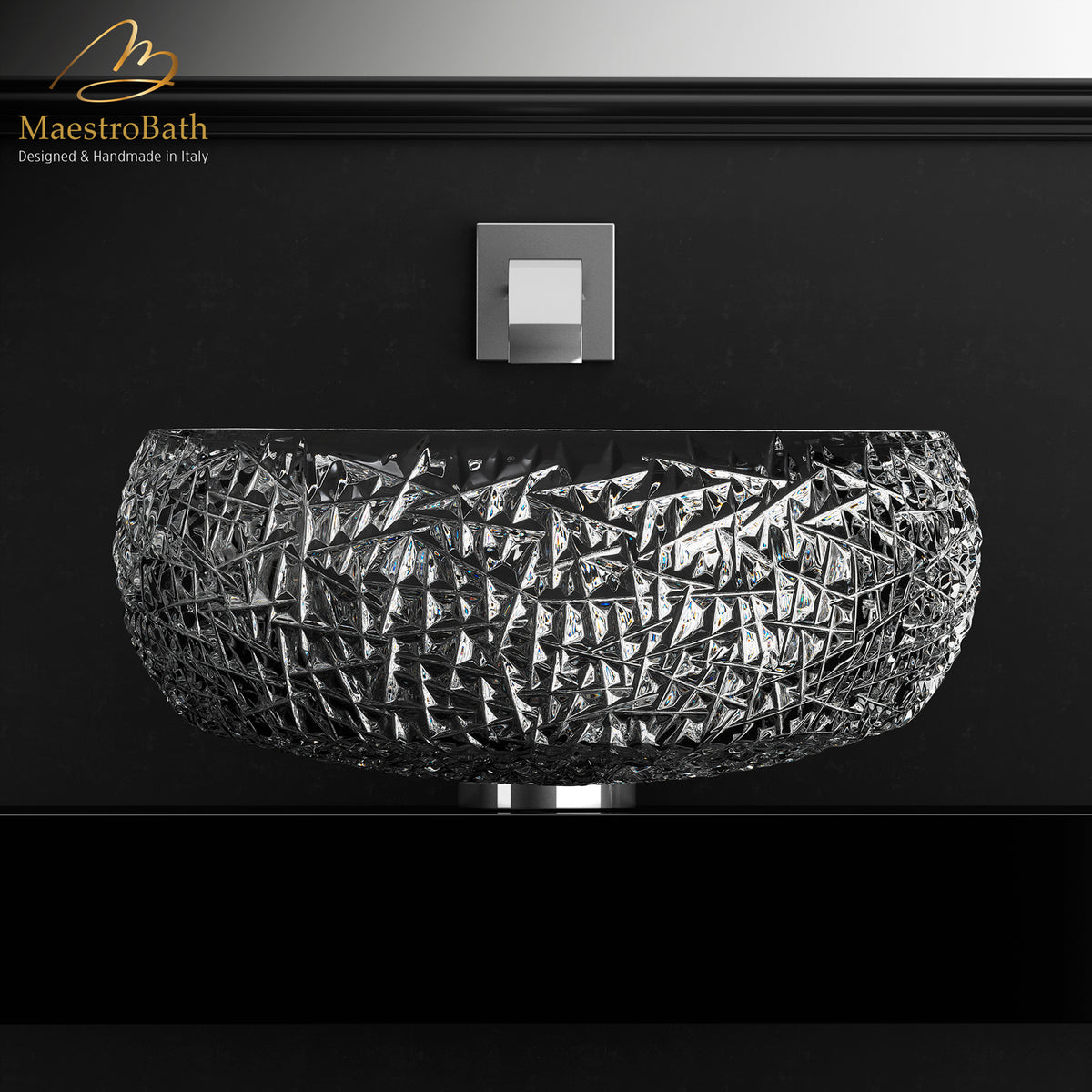
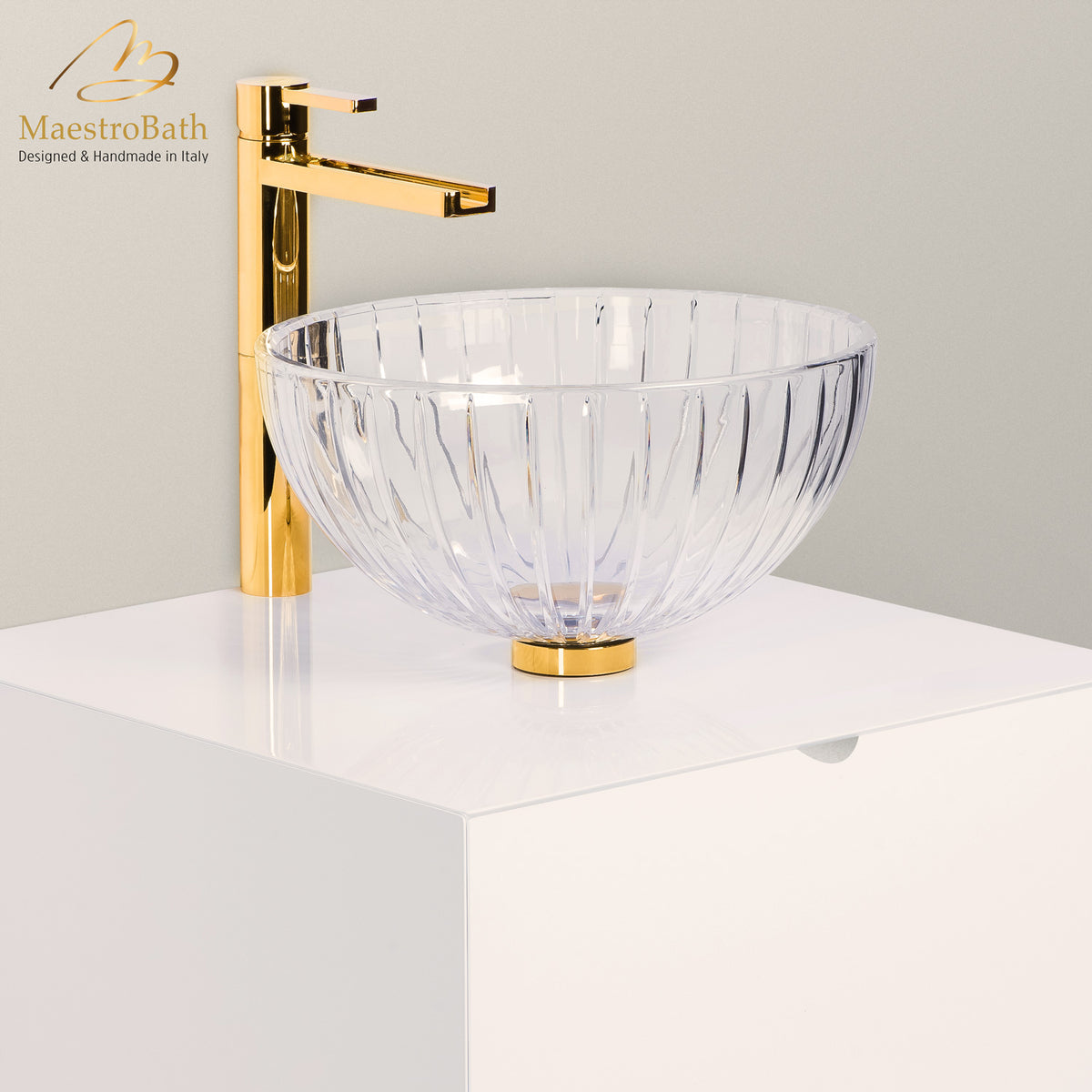
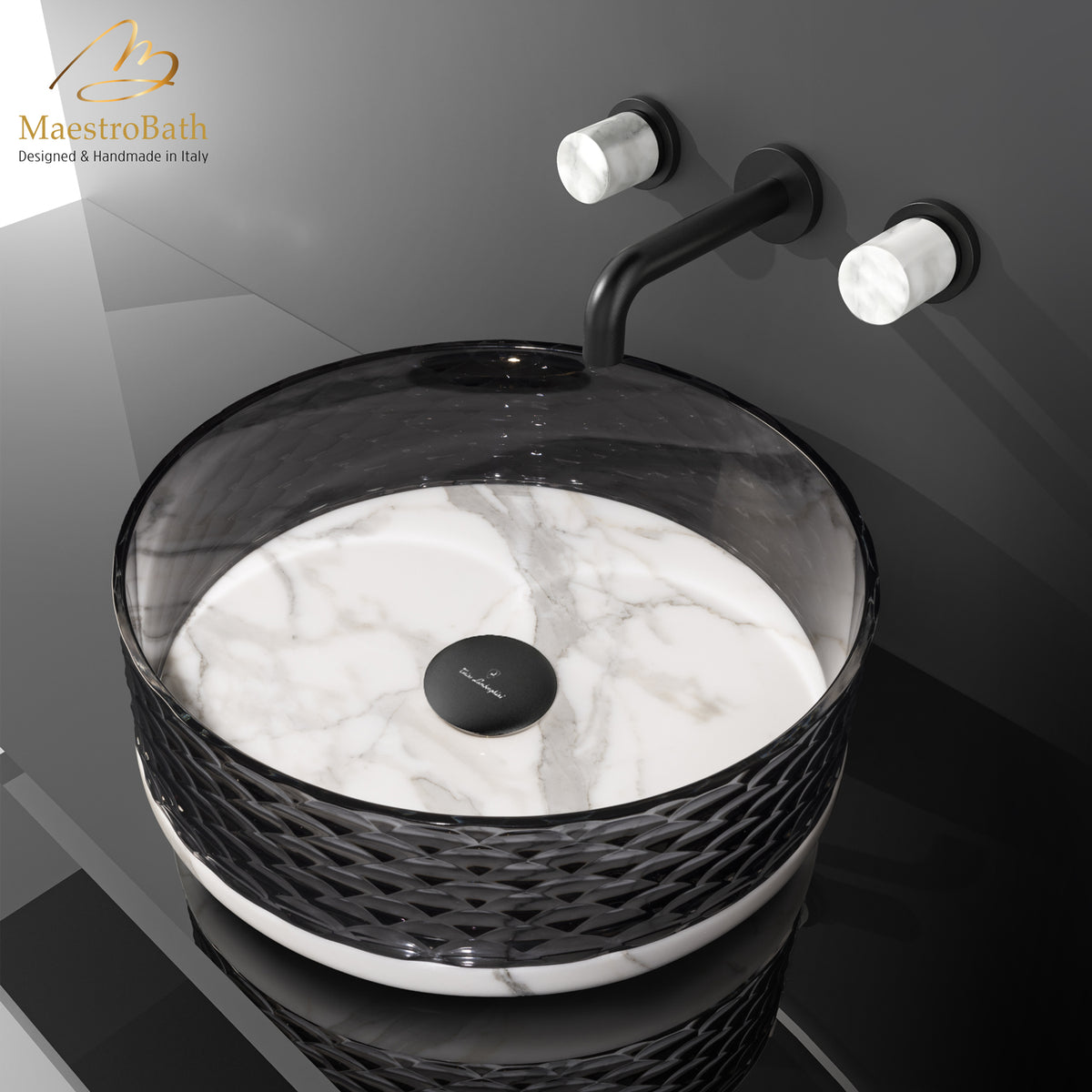
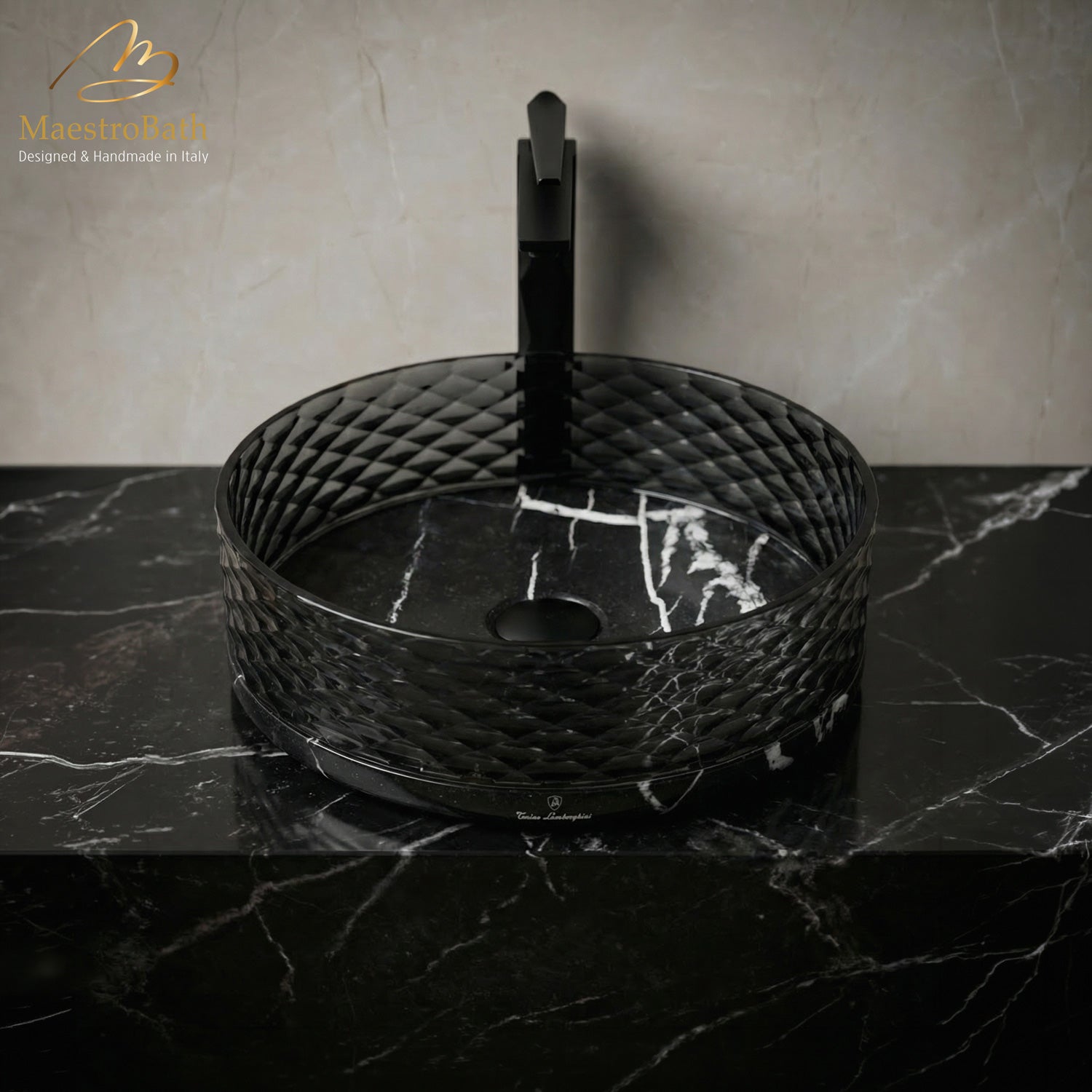
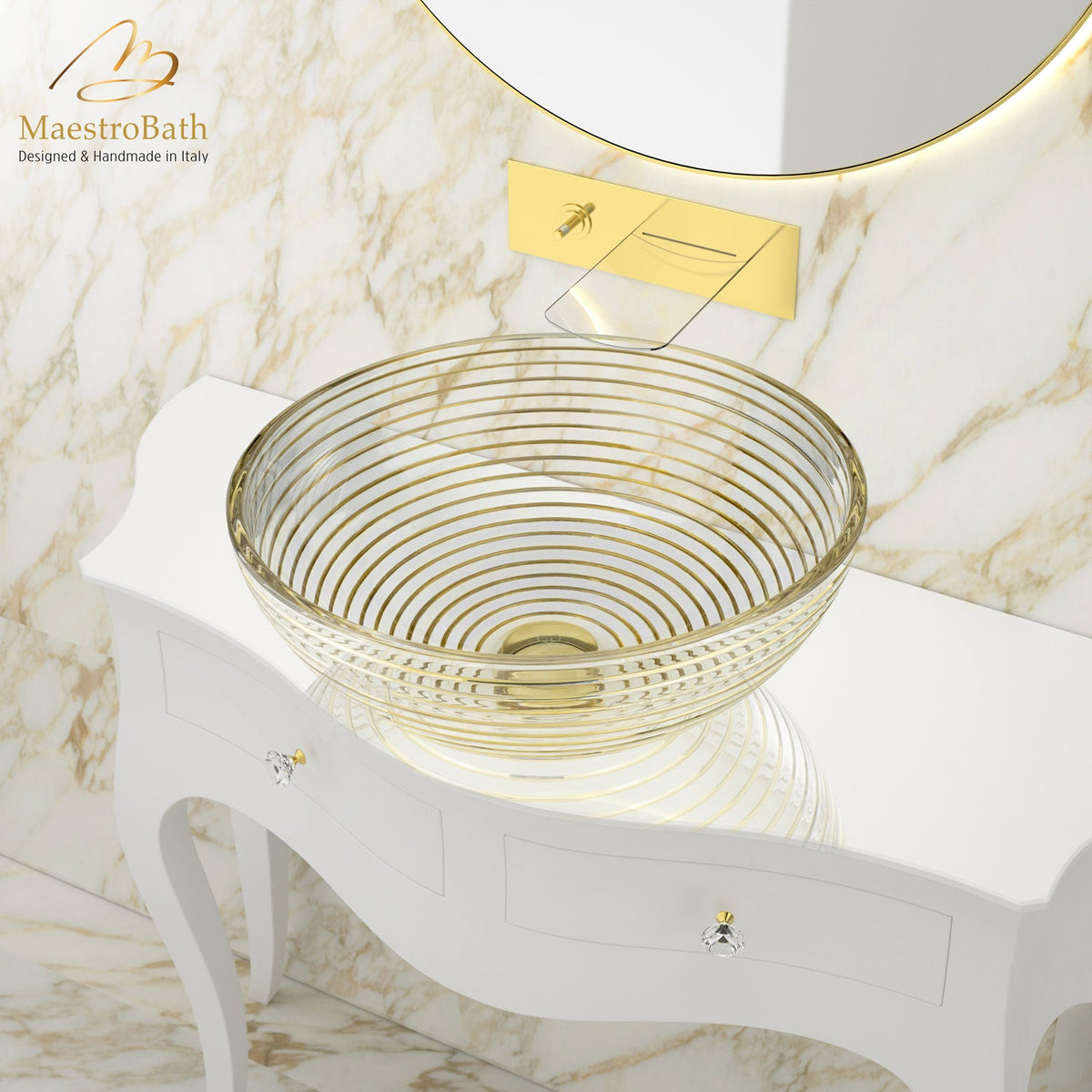
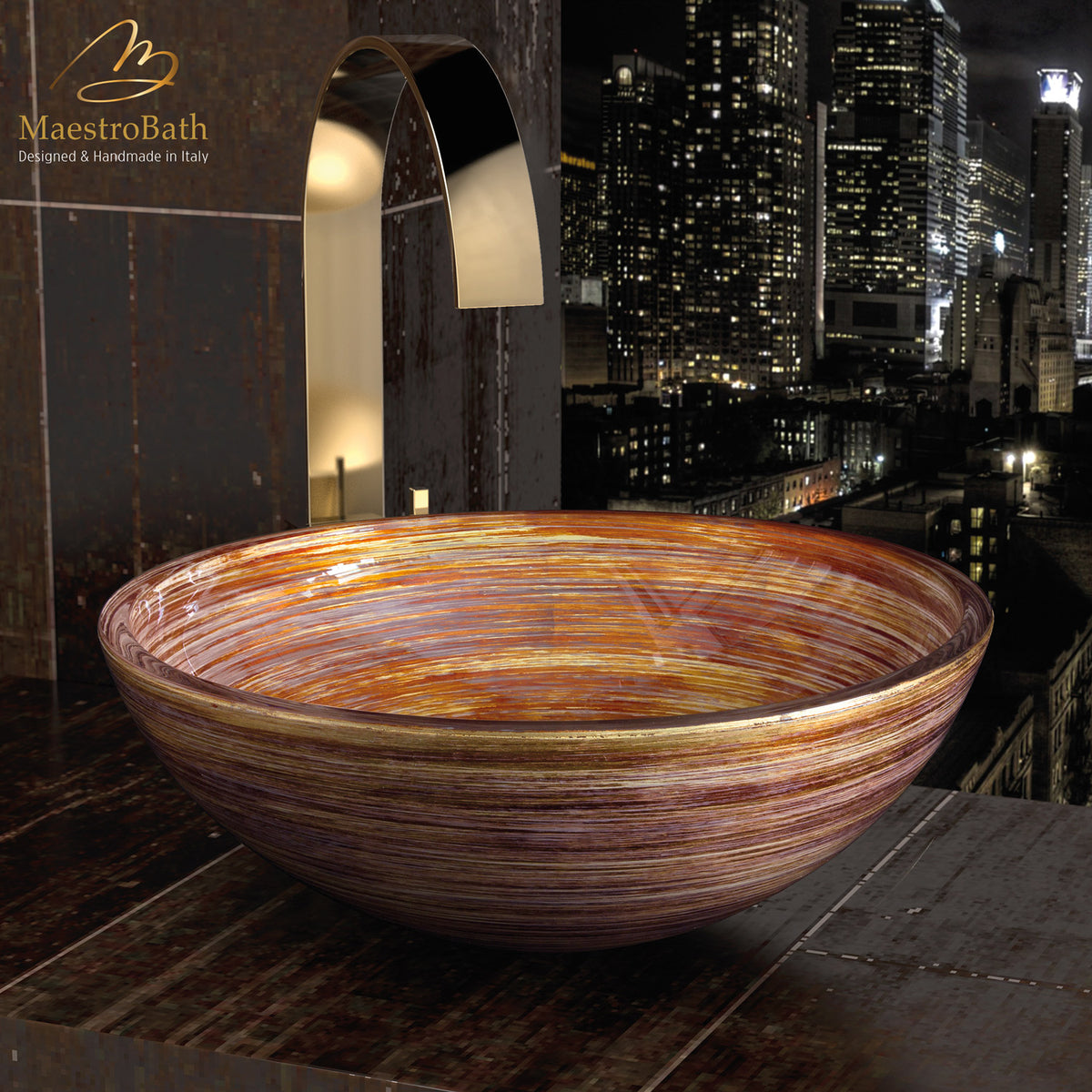
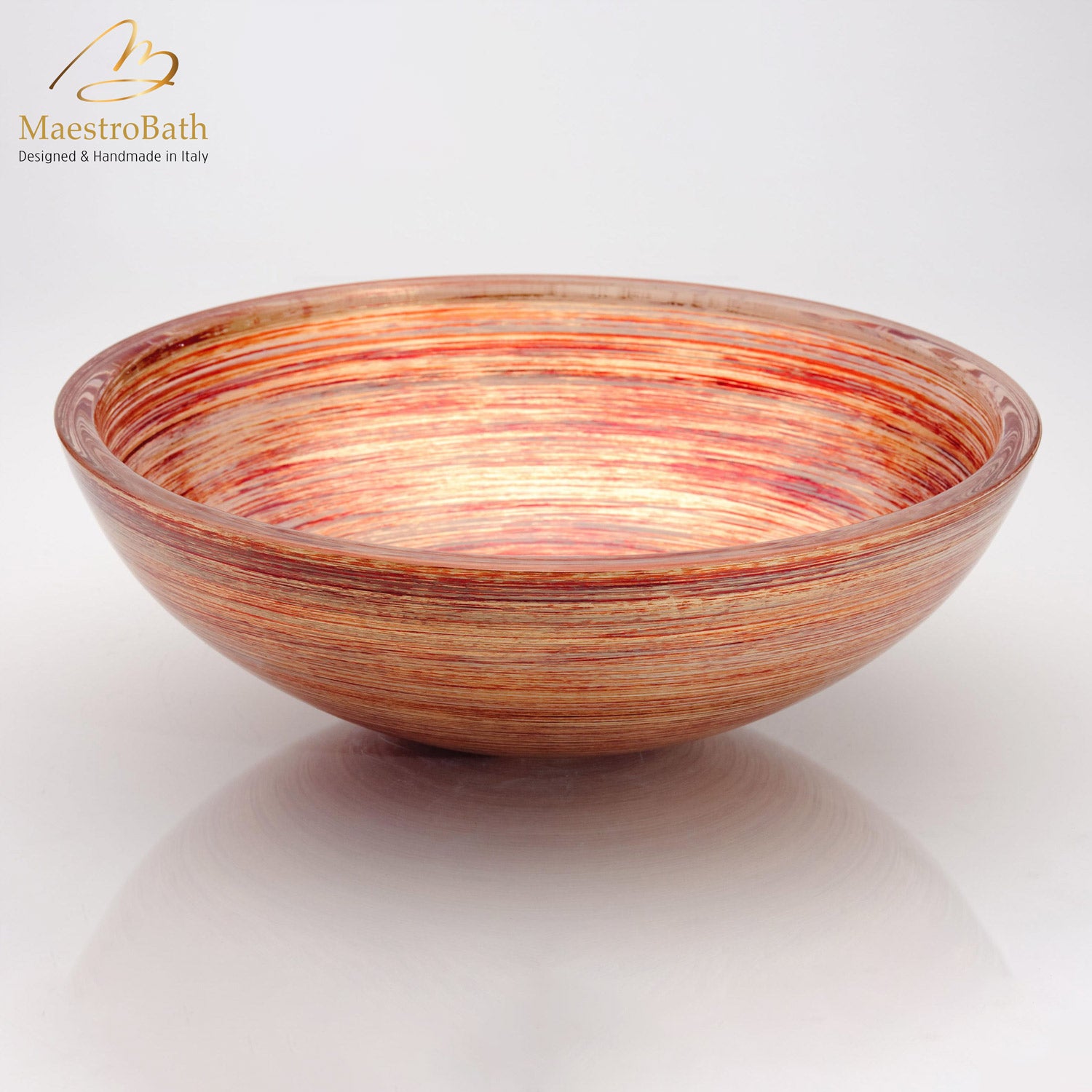
Crystal is the most reflective and the most faceted. It throws light around a room rather than absorbing it. Murano and art glass carries color through the body of the material rather than on the surface, so the basin deepens as it fills and lightens as it empties.
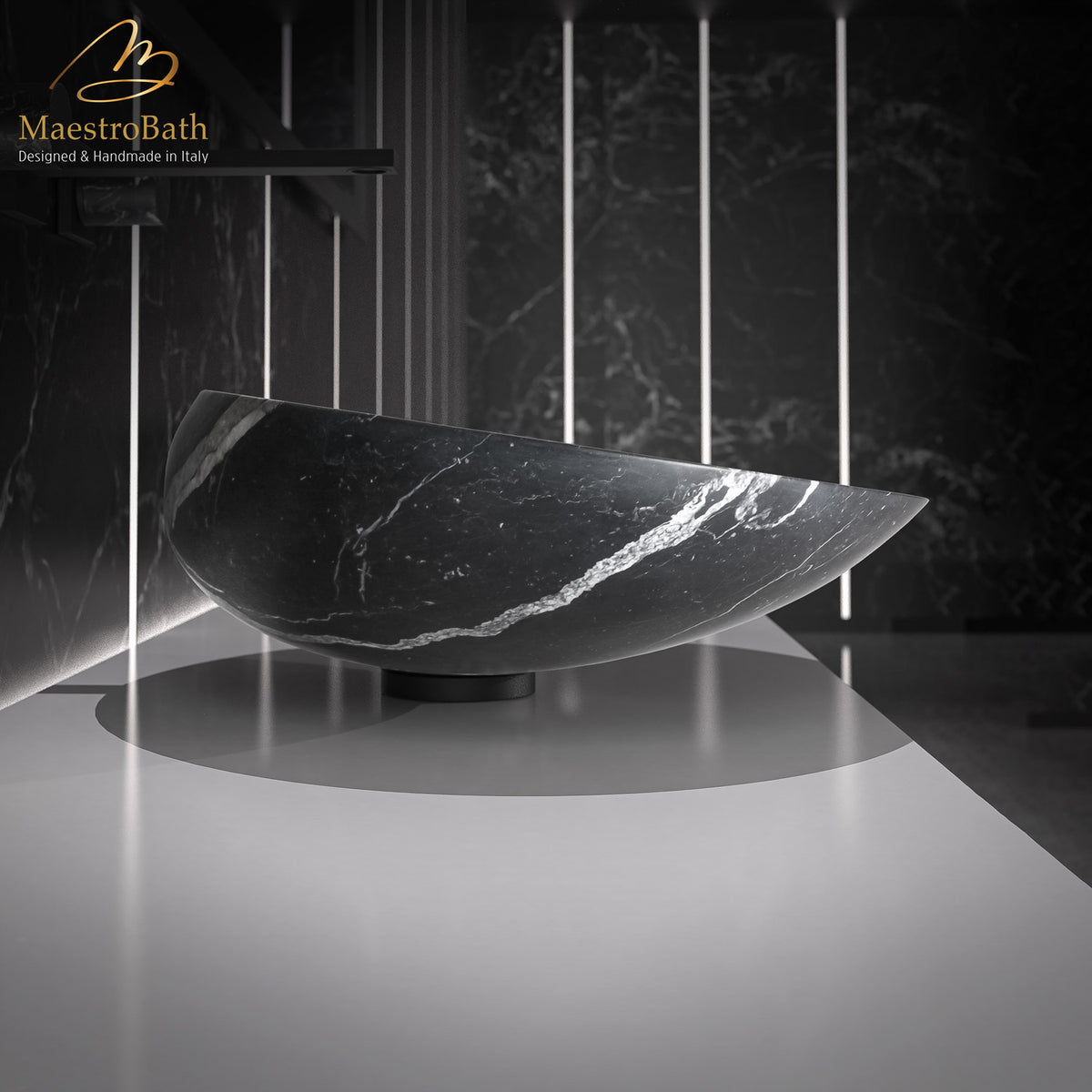
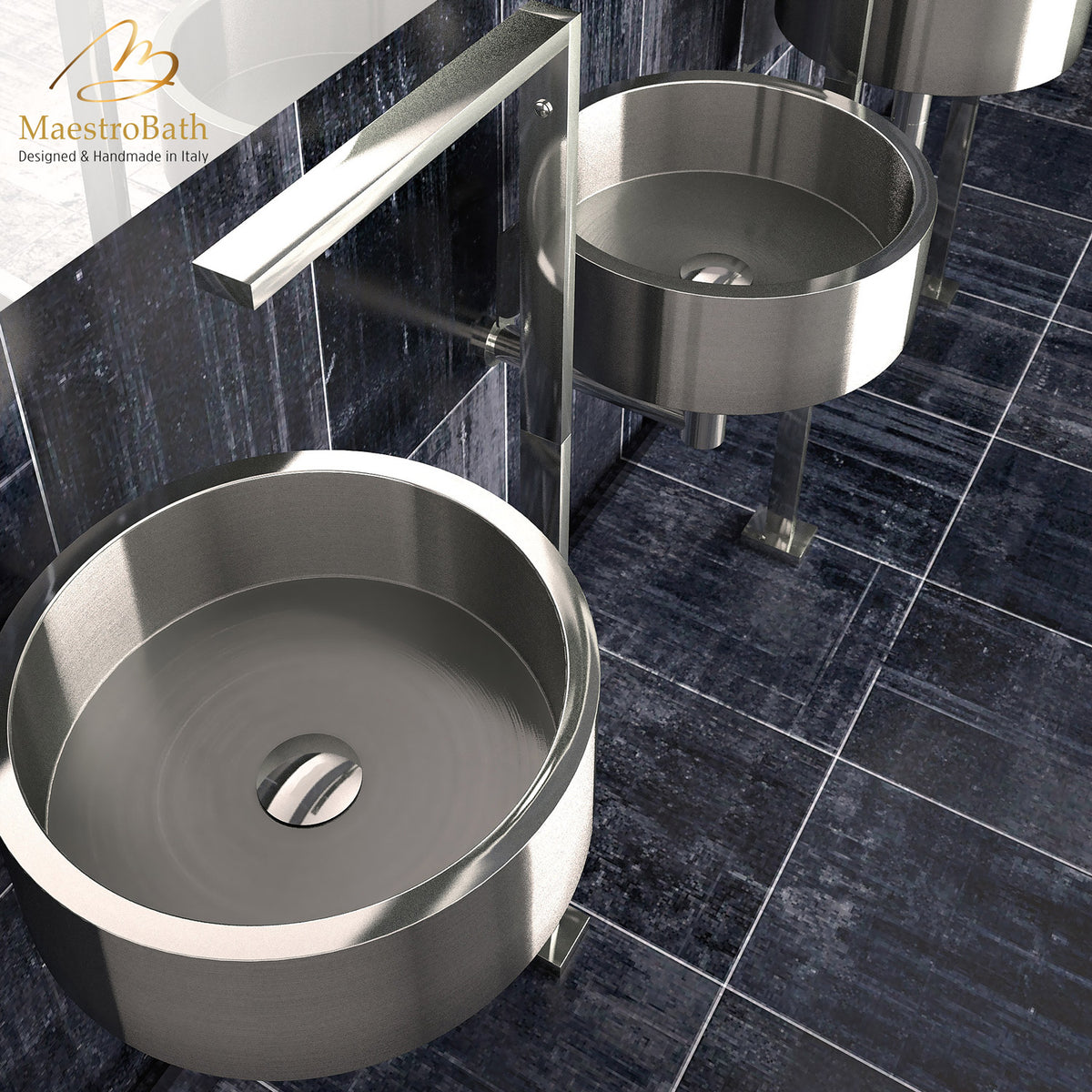
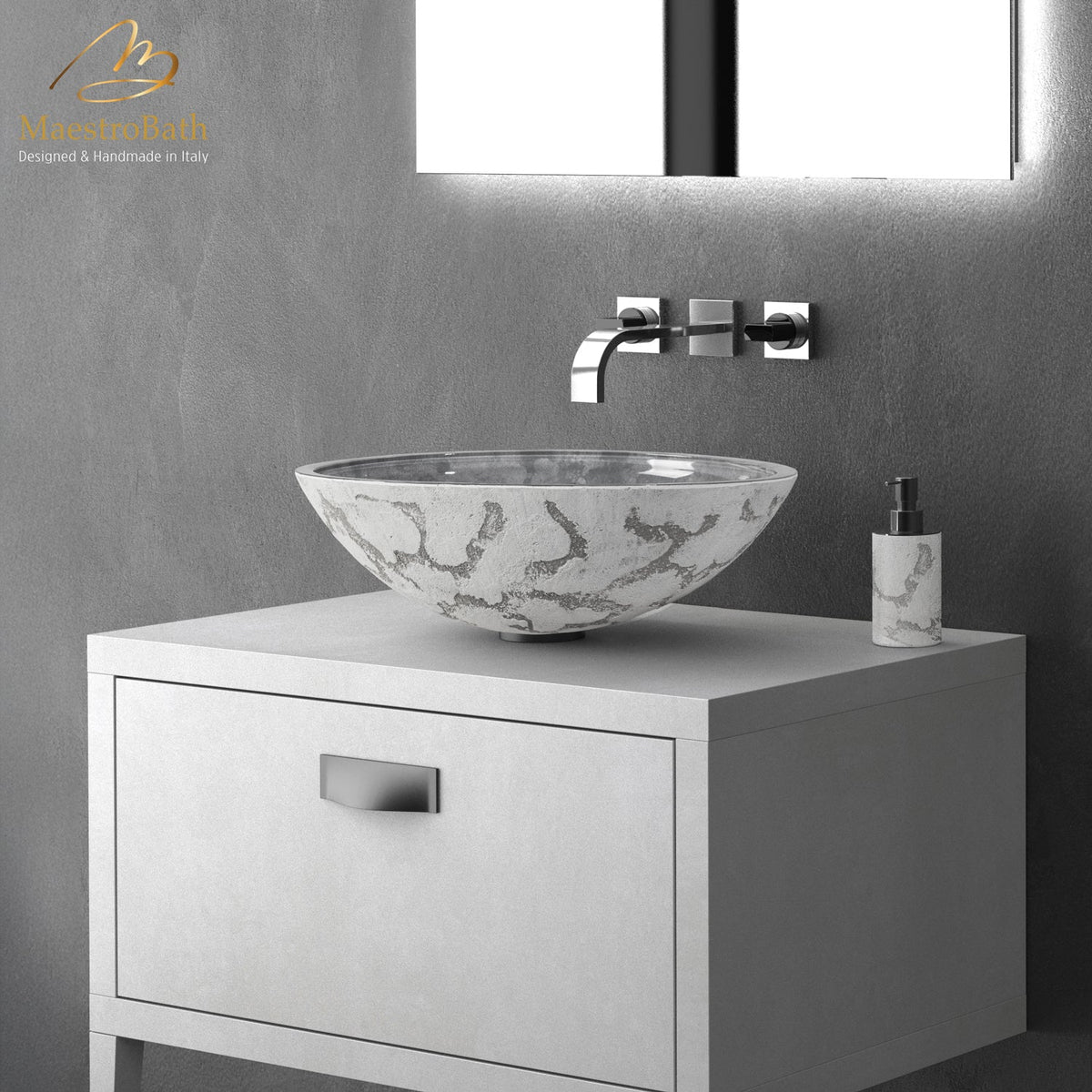
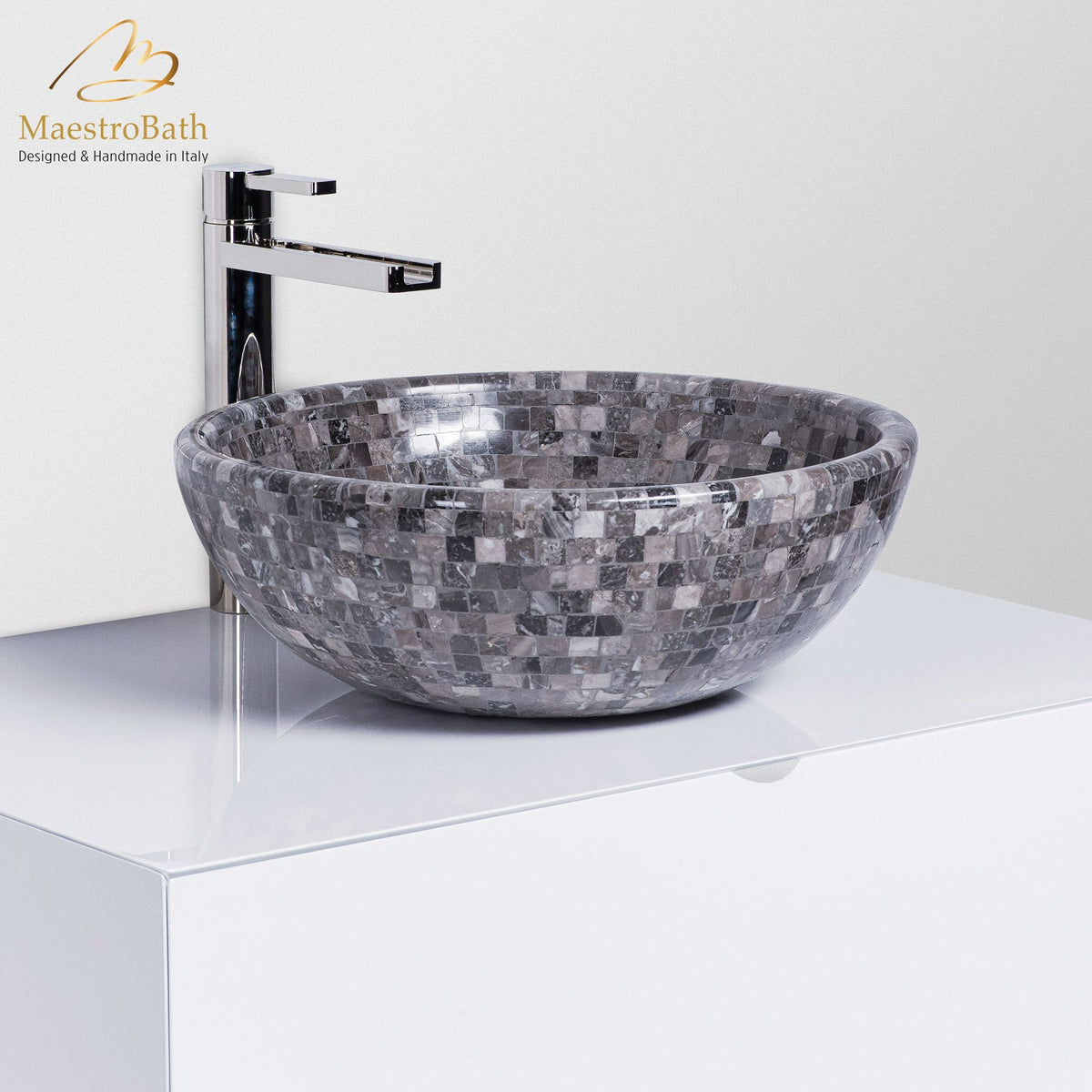
Marble and natural stone are the two where no two basins are alike, because the veining is the stone's own. Stainless steel is the most durable and the least precious, which is a virtue in a bathroom that gets real use. Ceramic is the quietest and the easiest to clean.
Shop bathroom sinks by finish
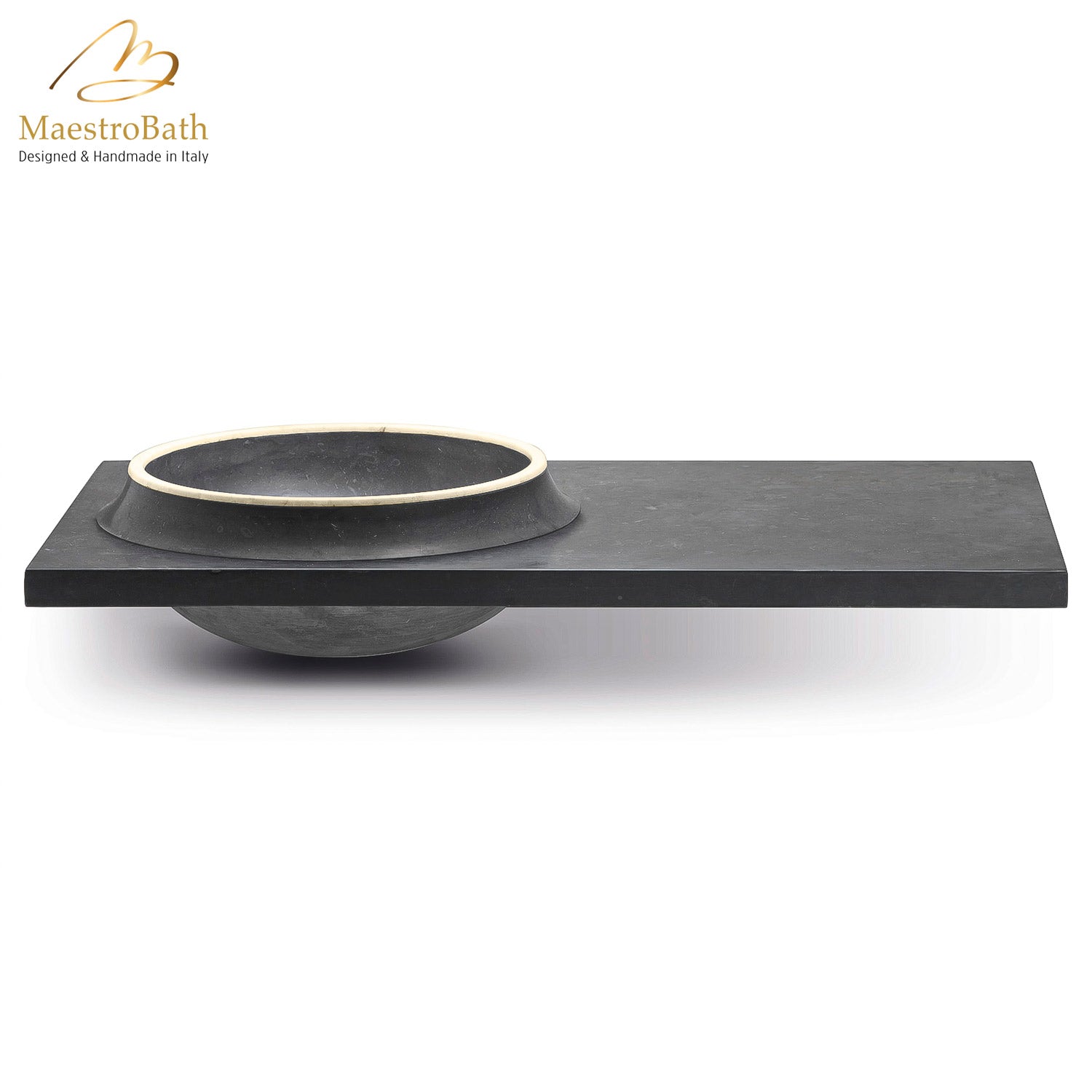
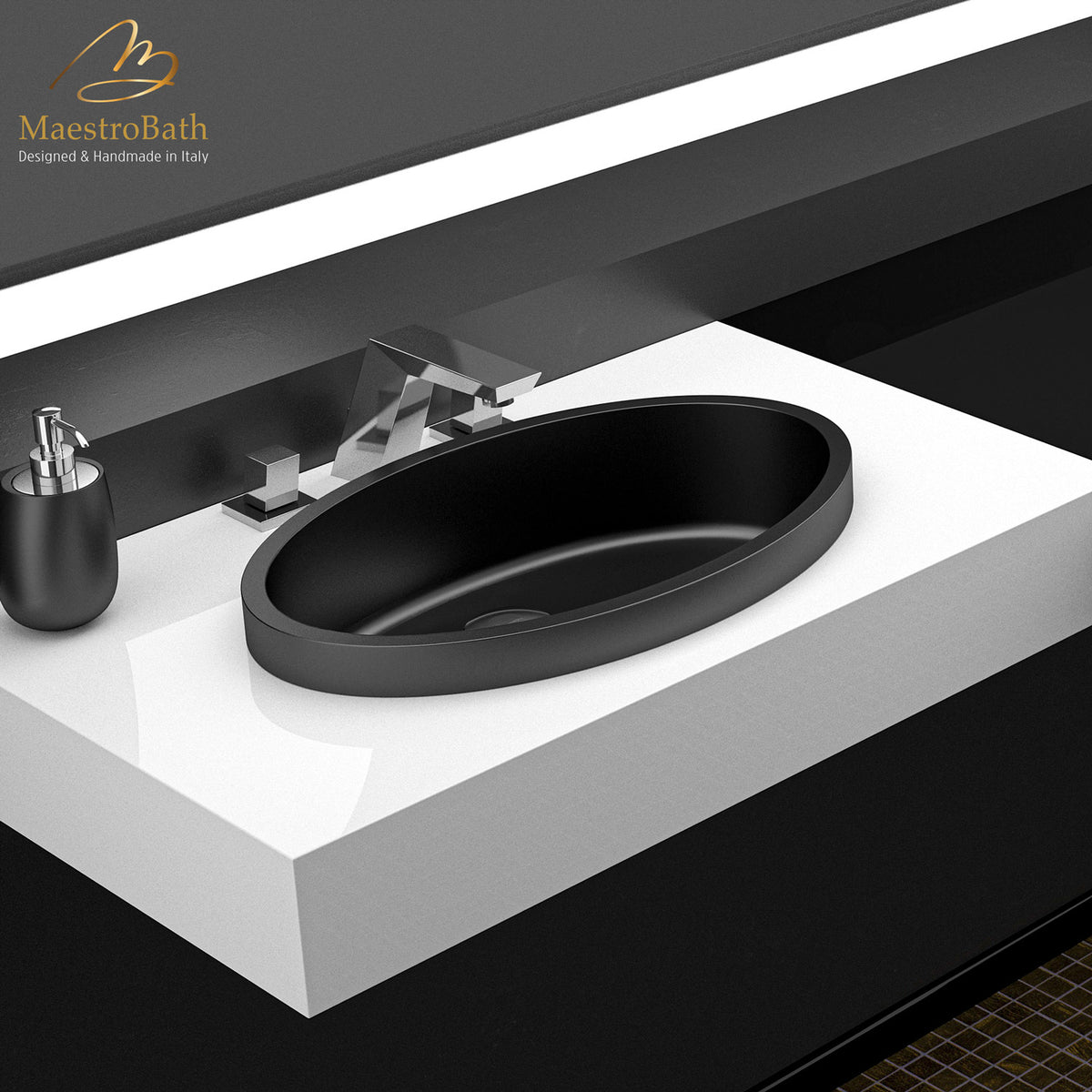
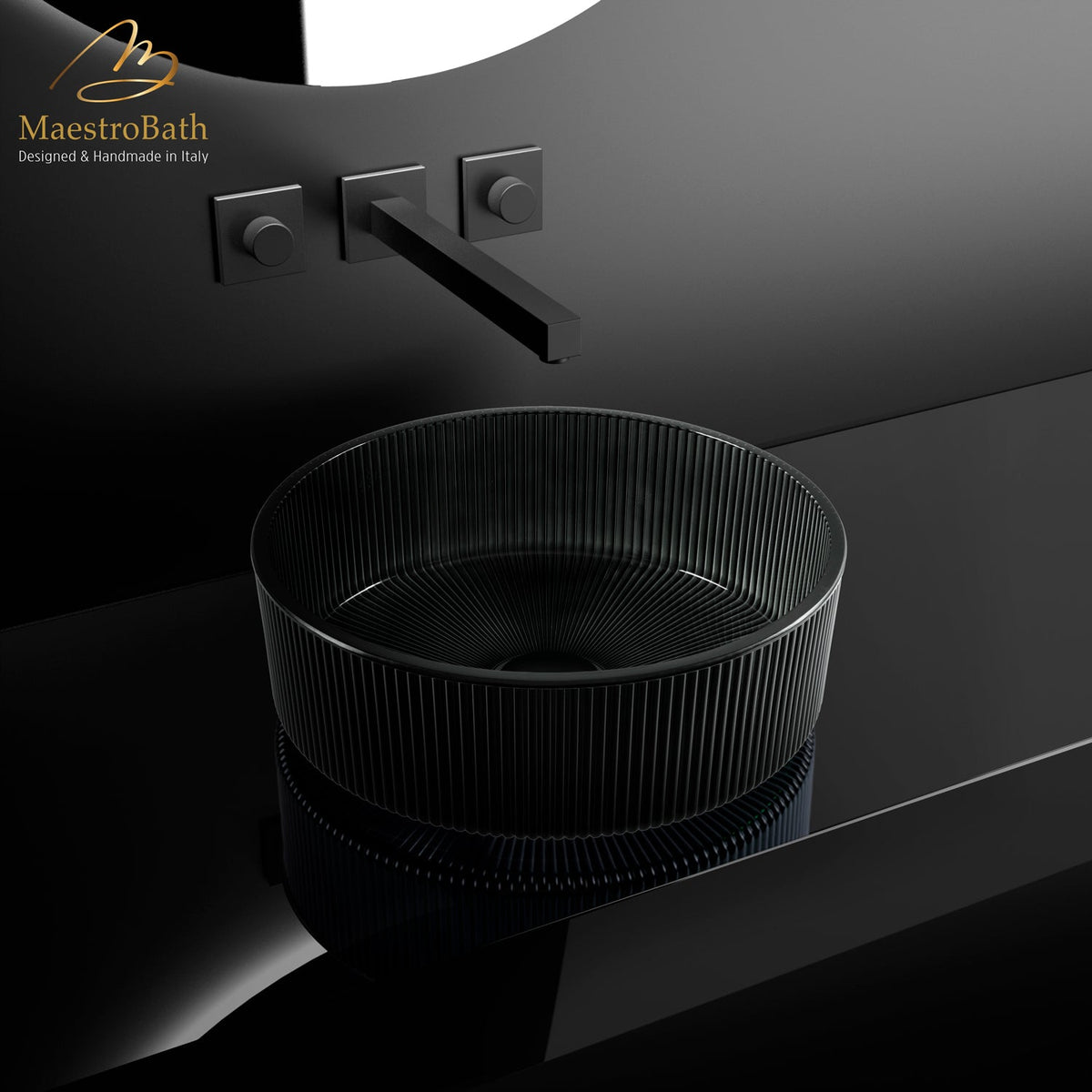
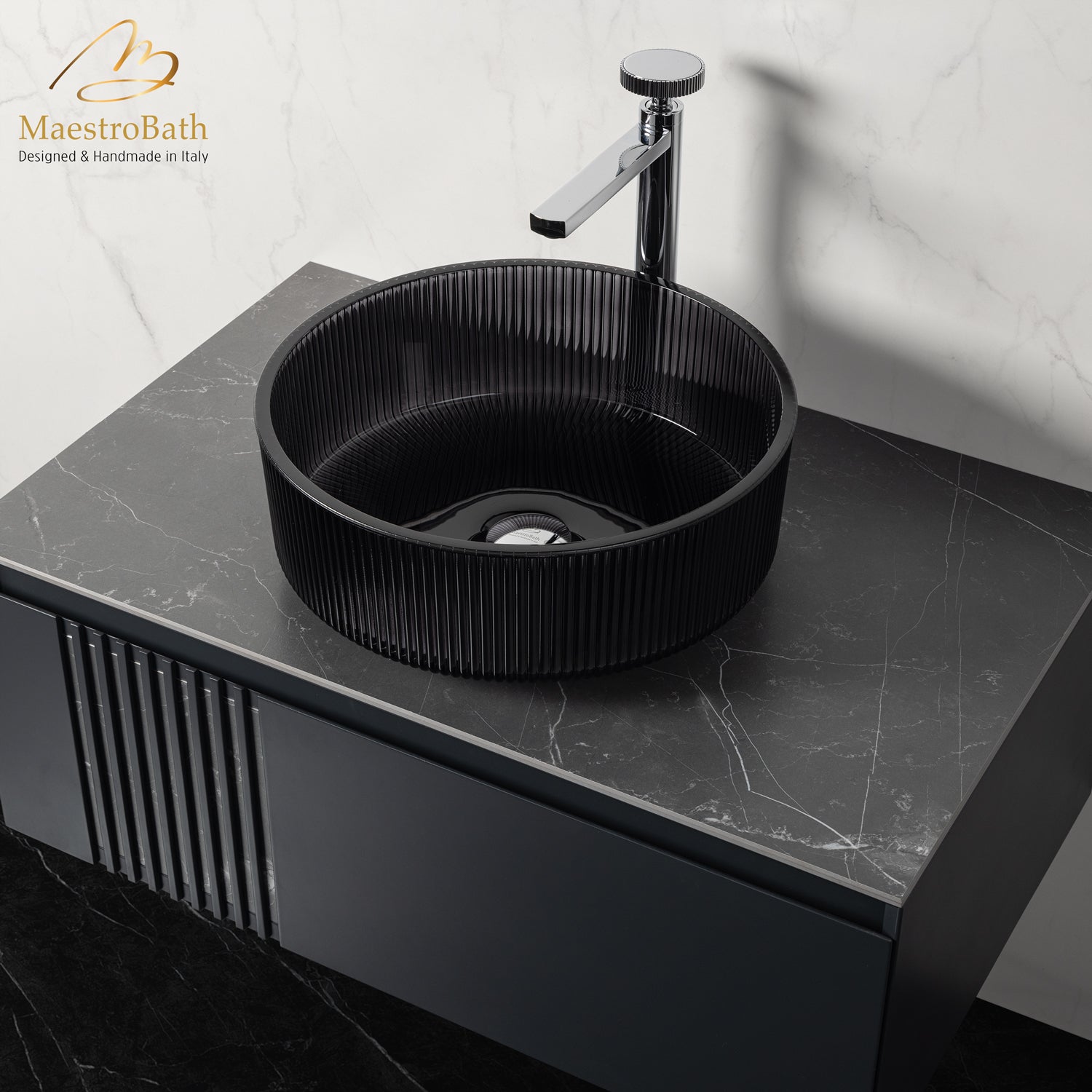
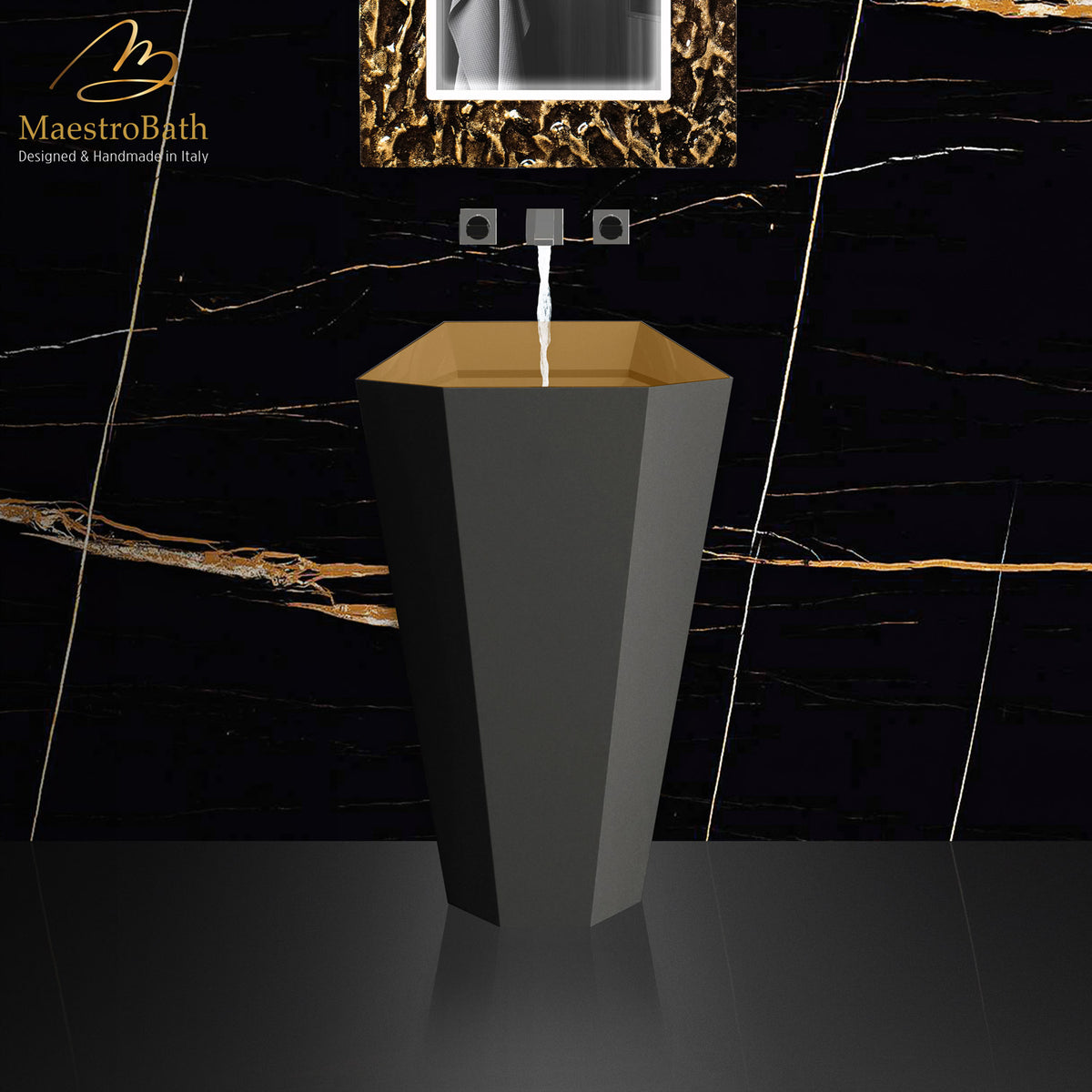
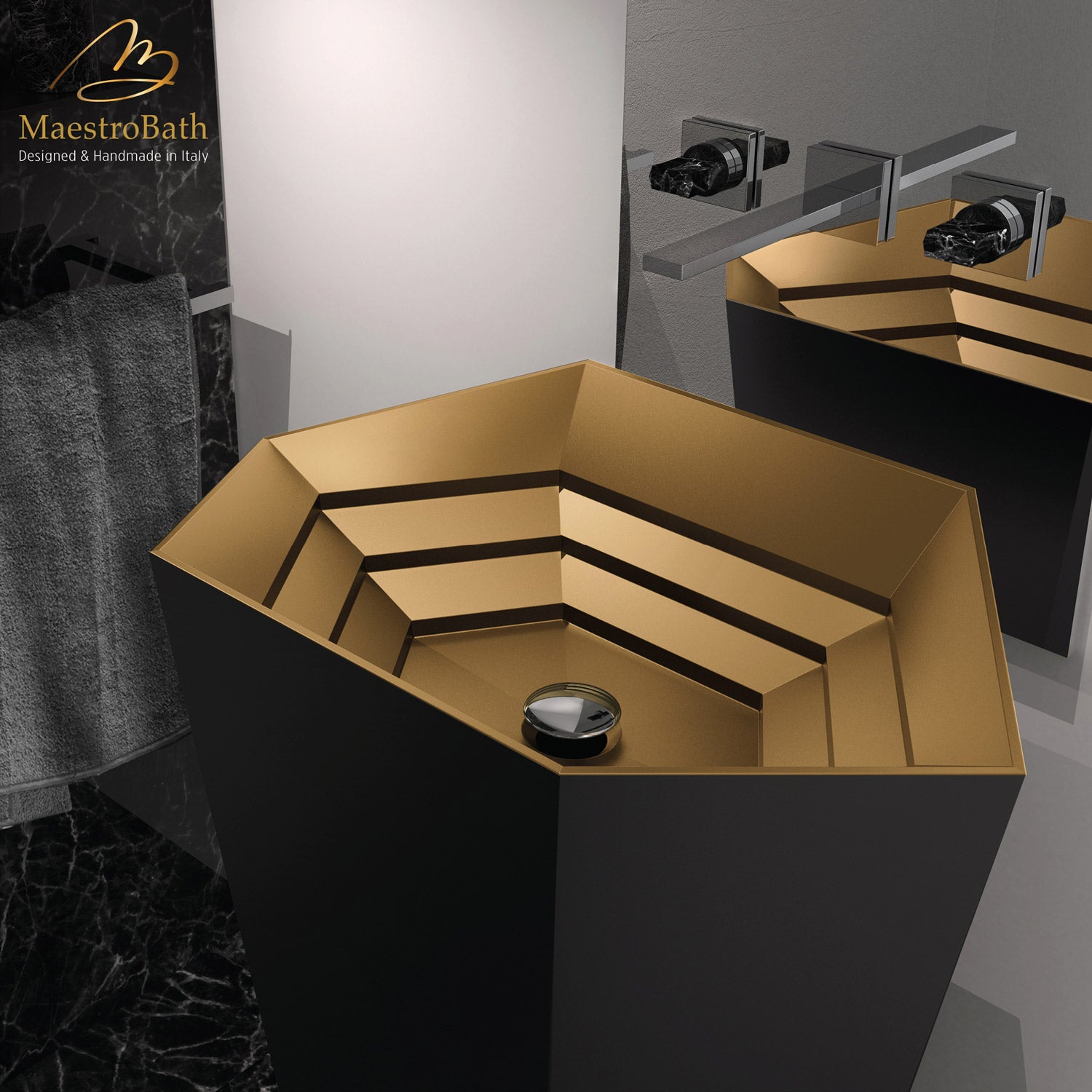
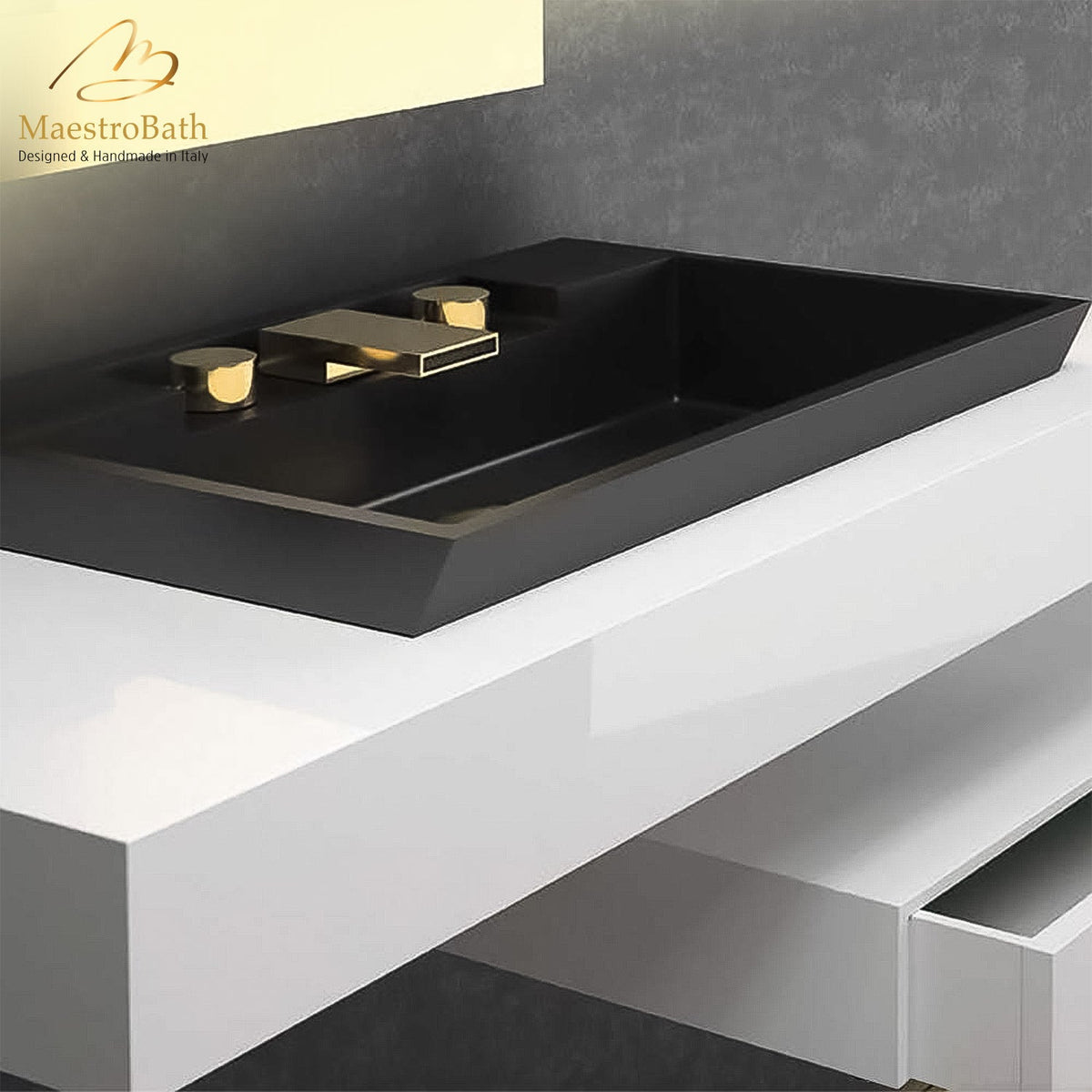
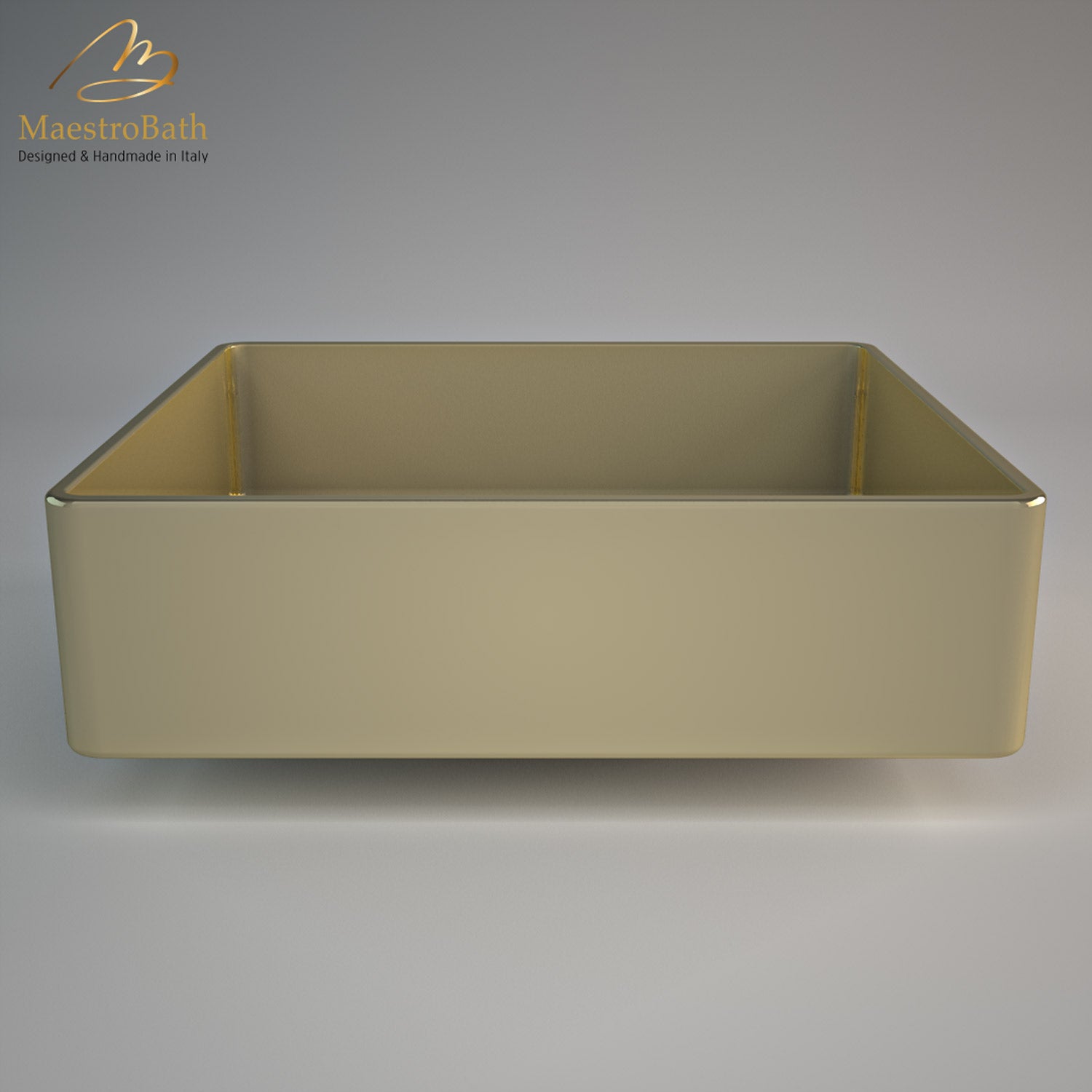
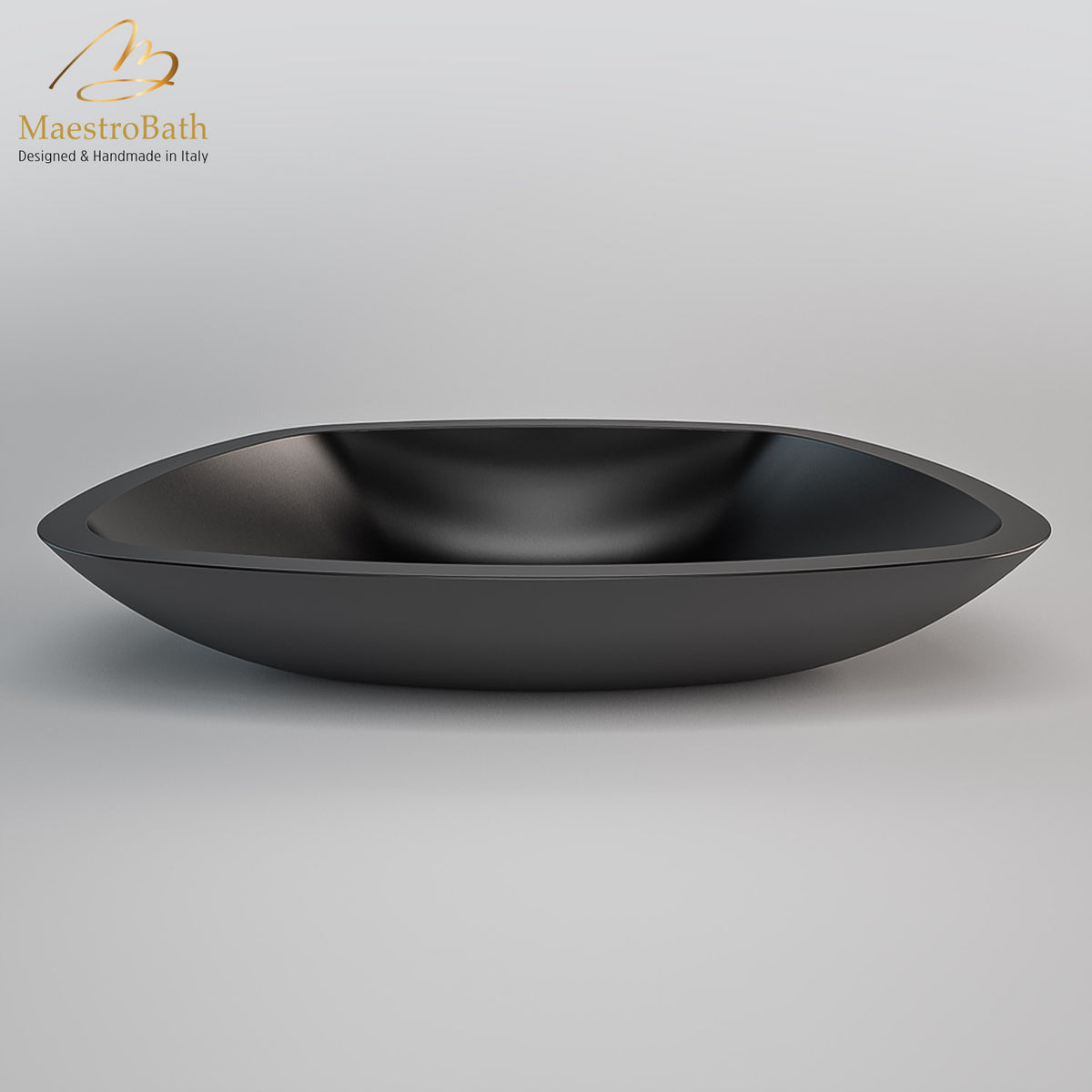
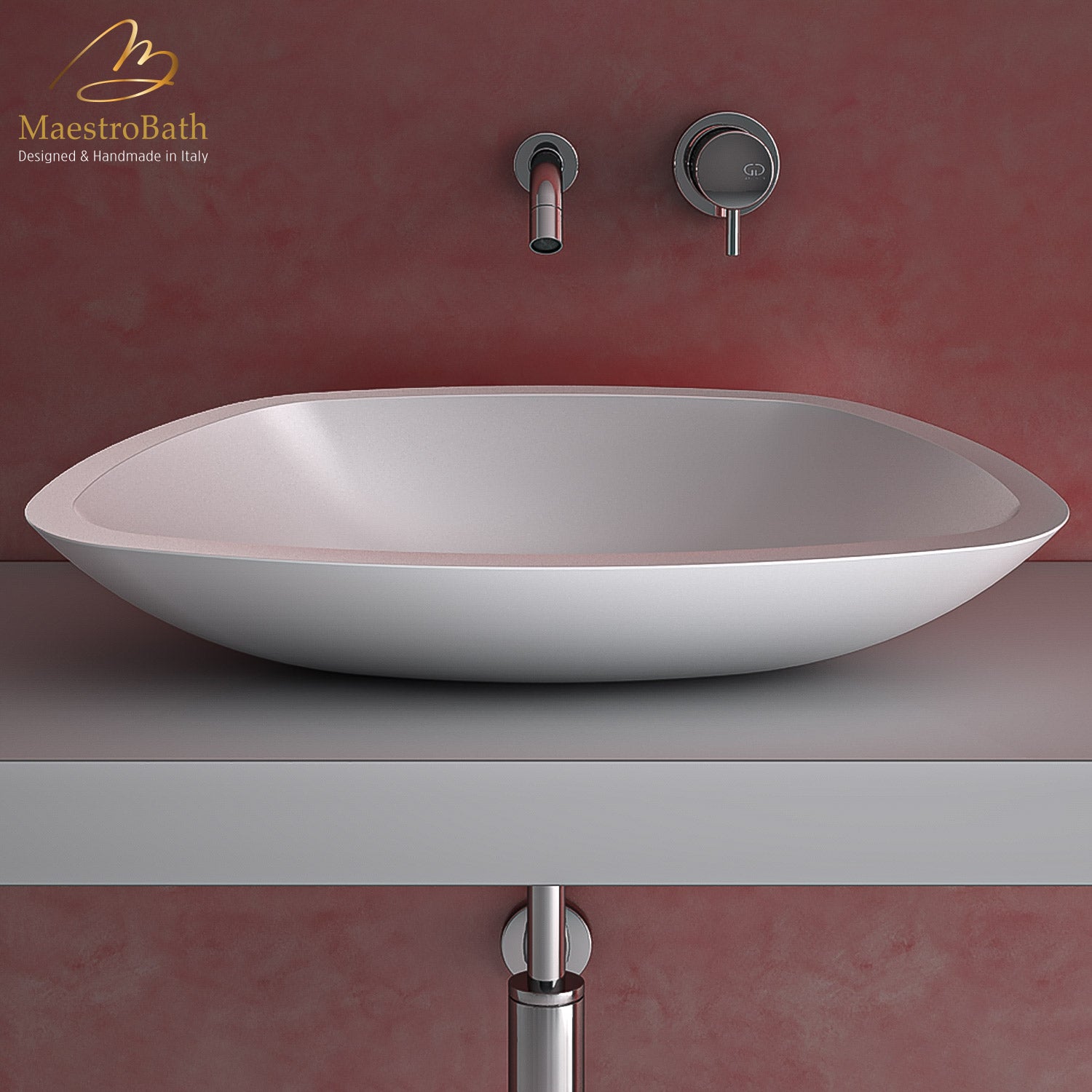
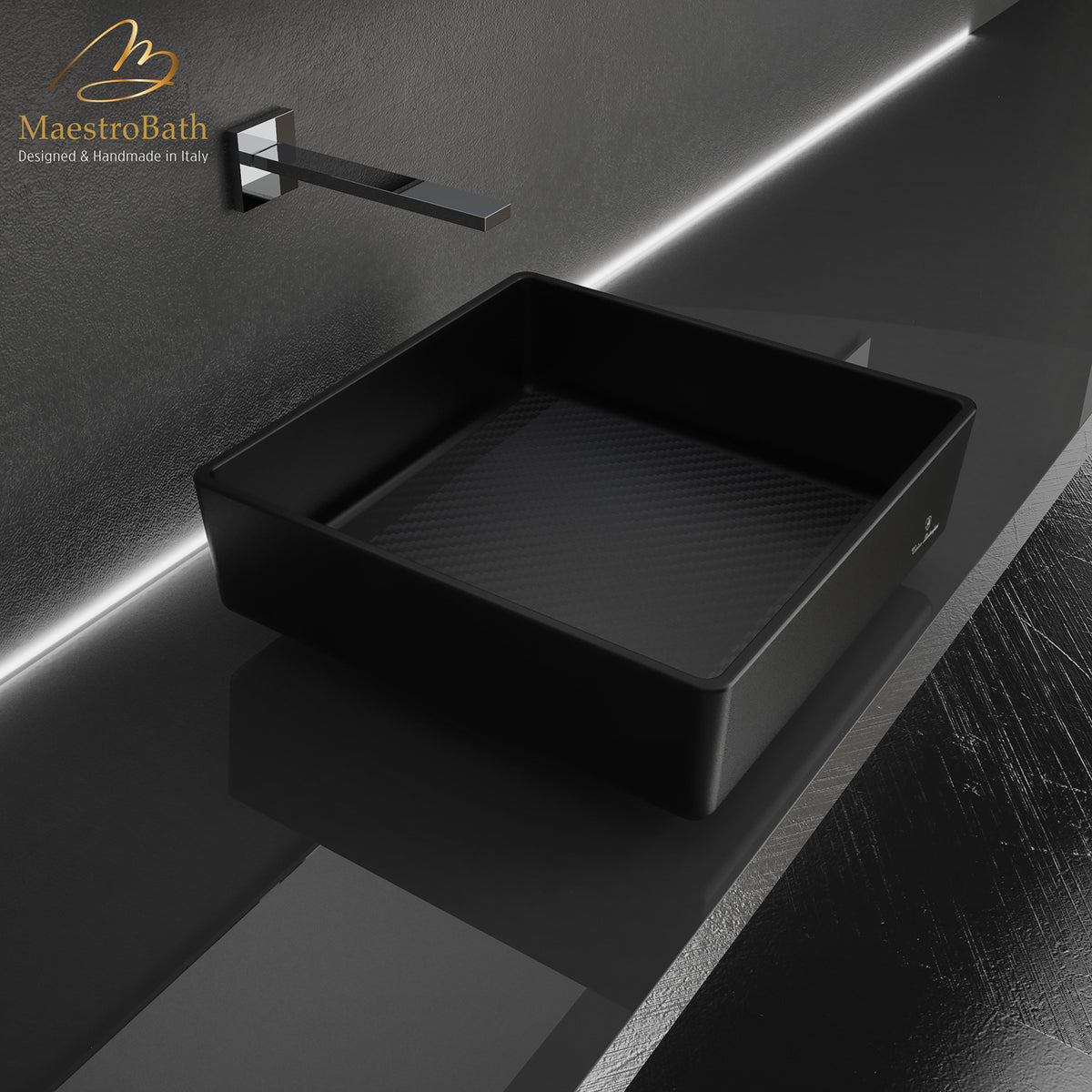
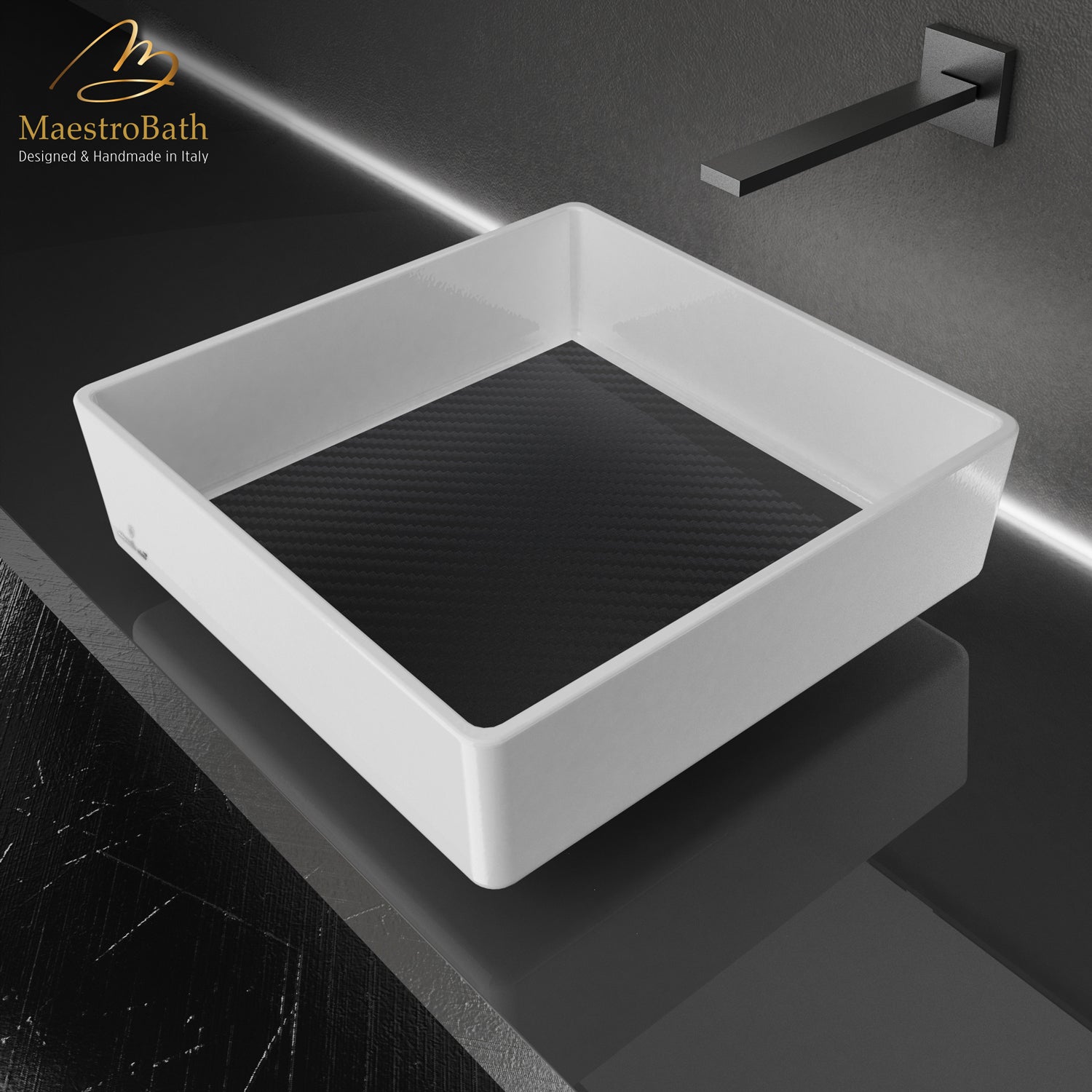
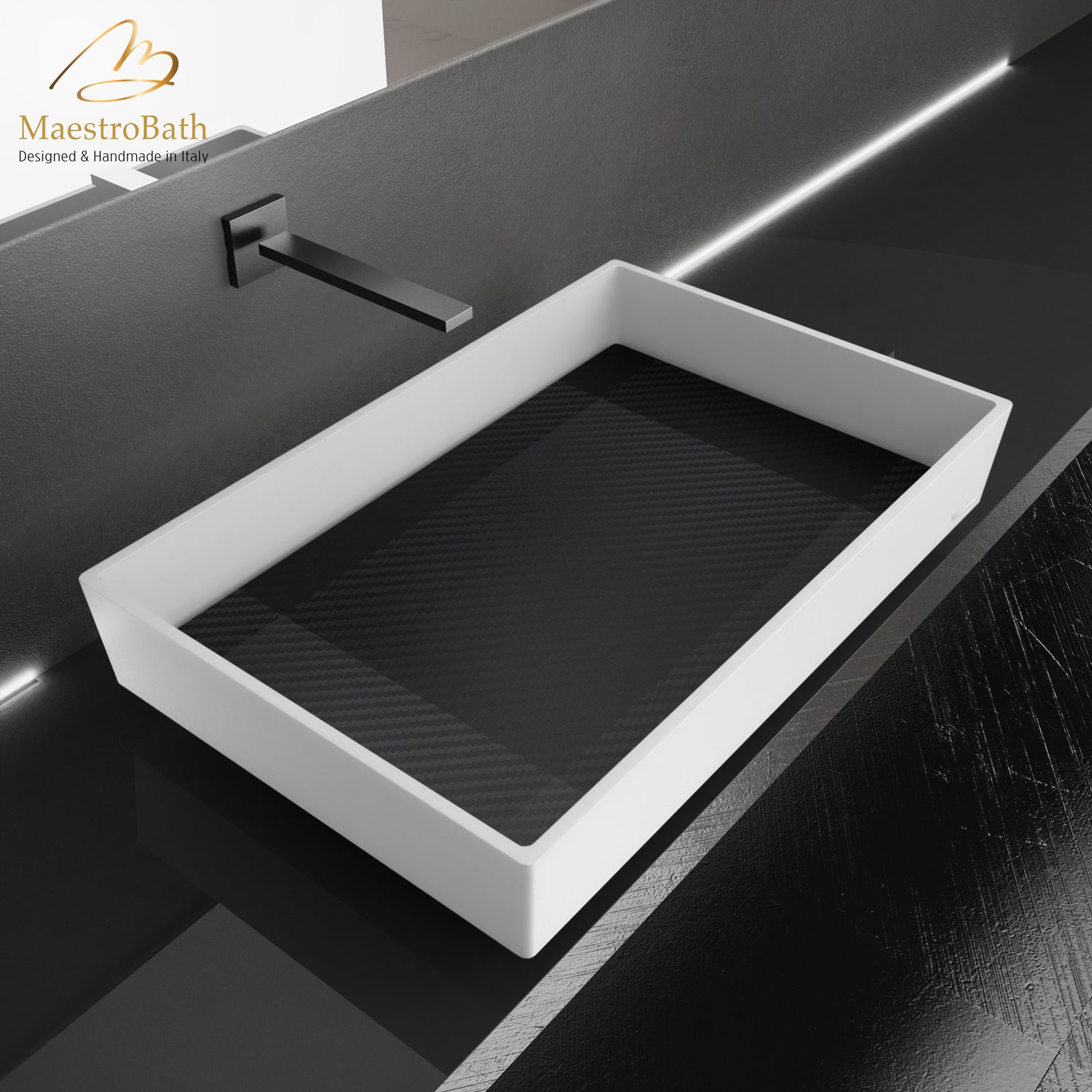
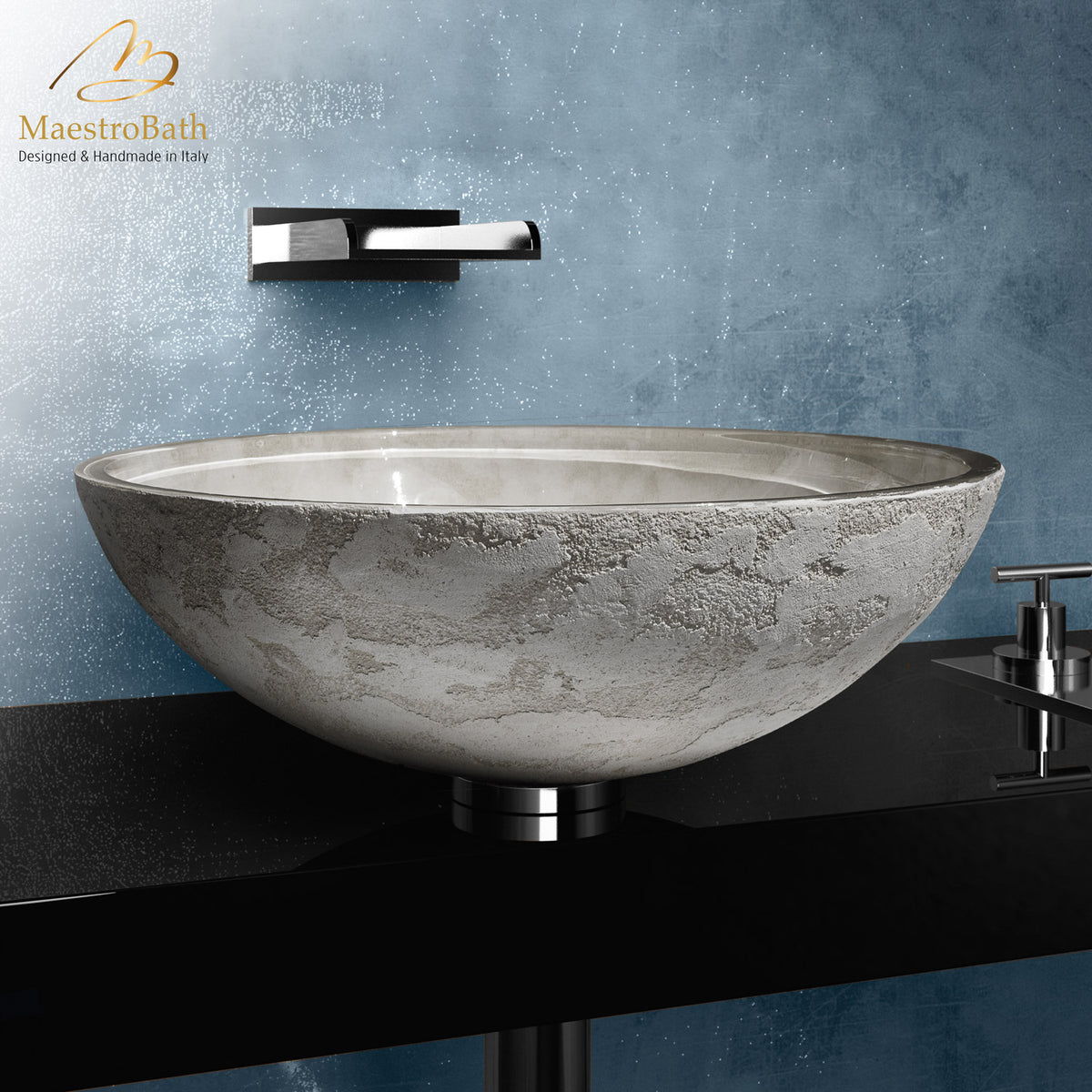
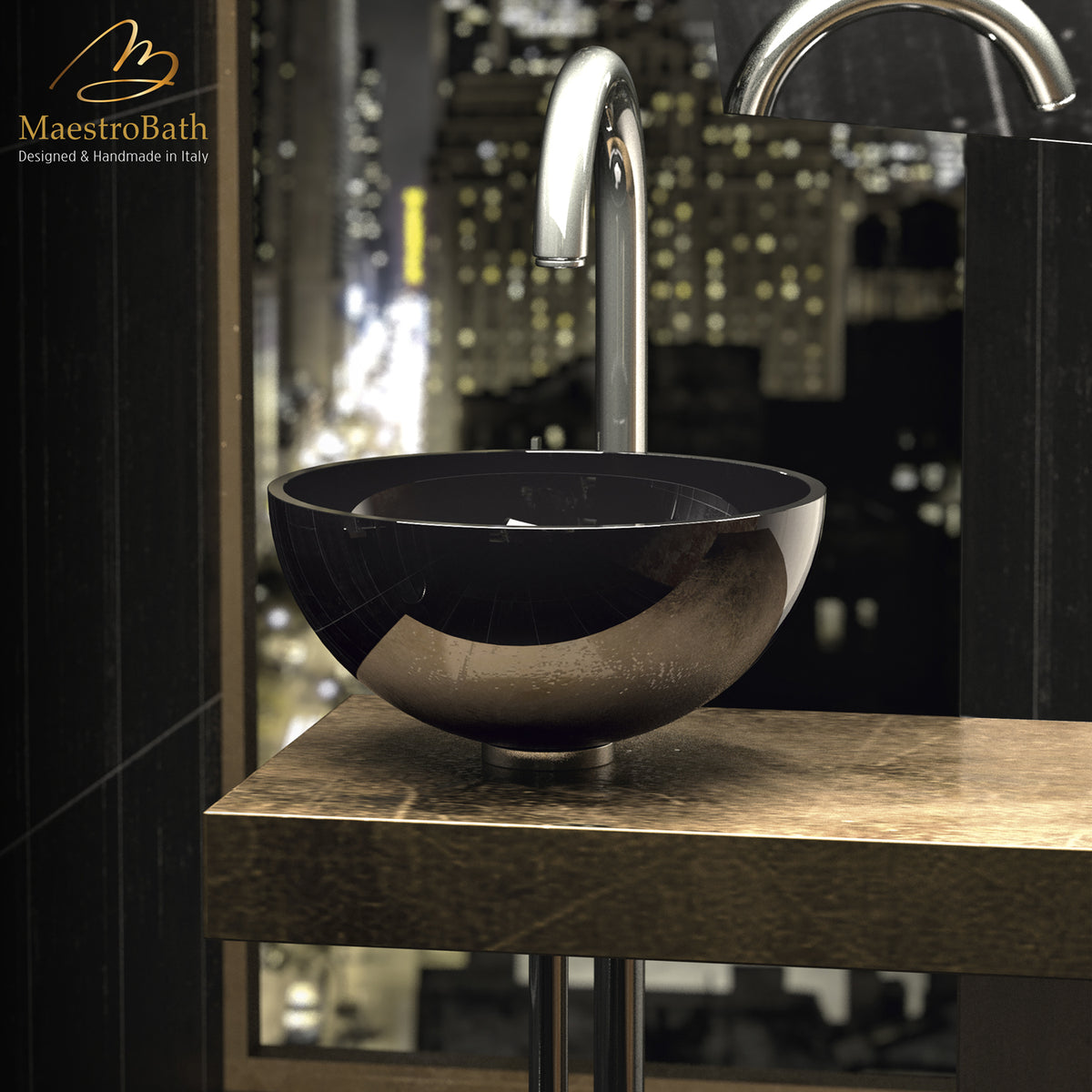
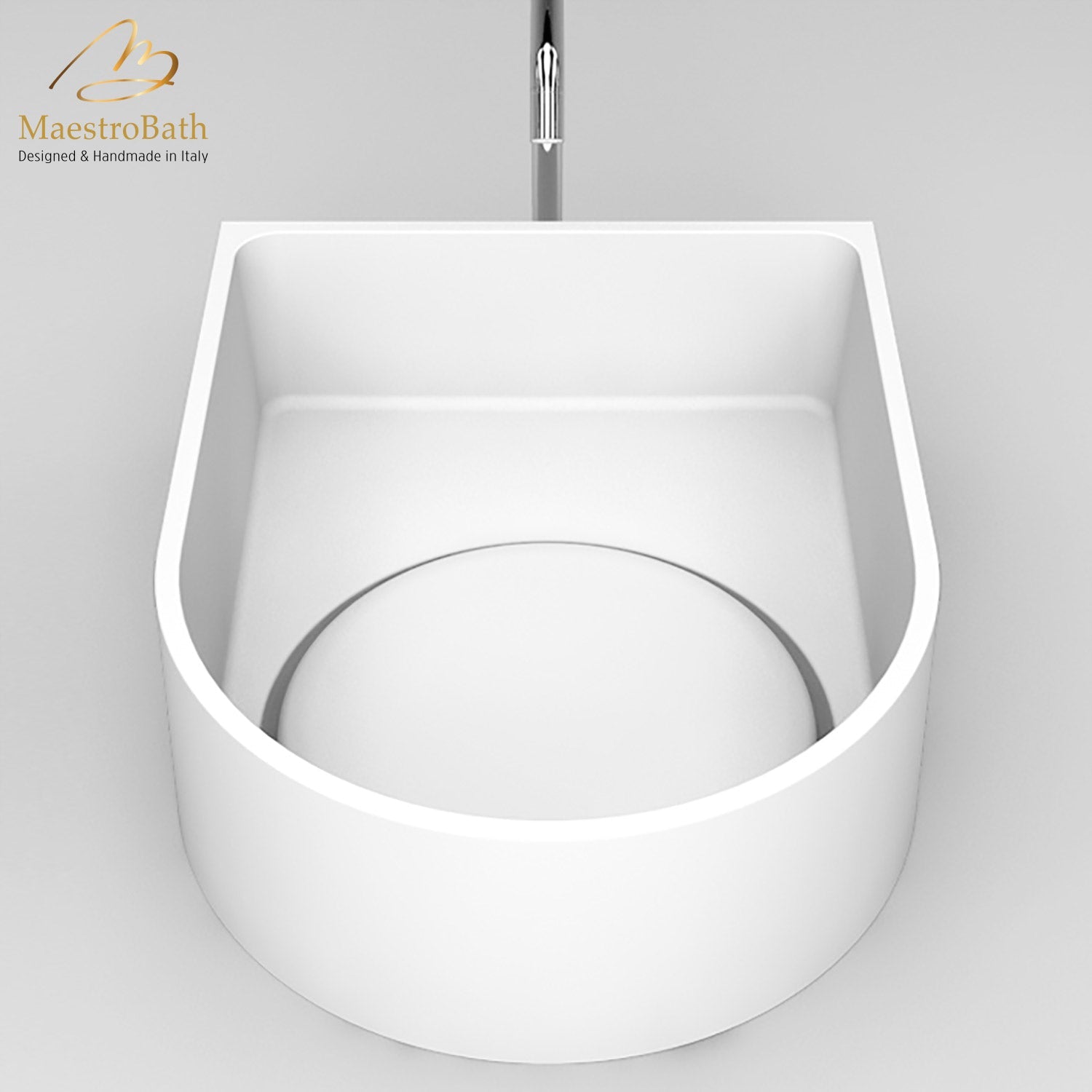
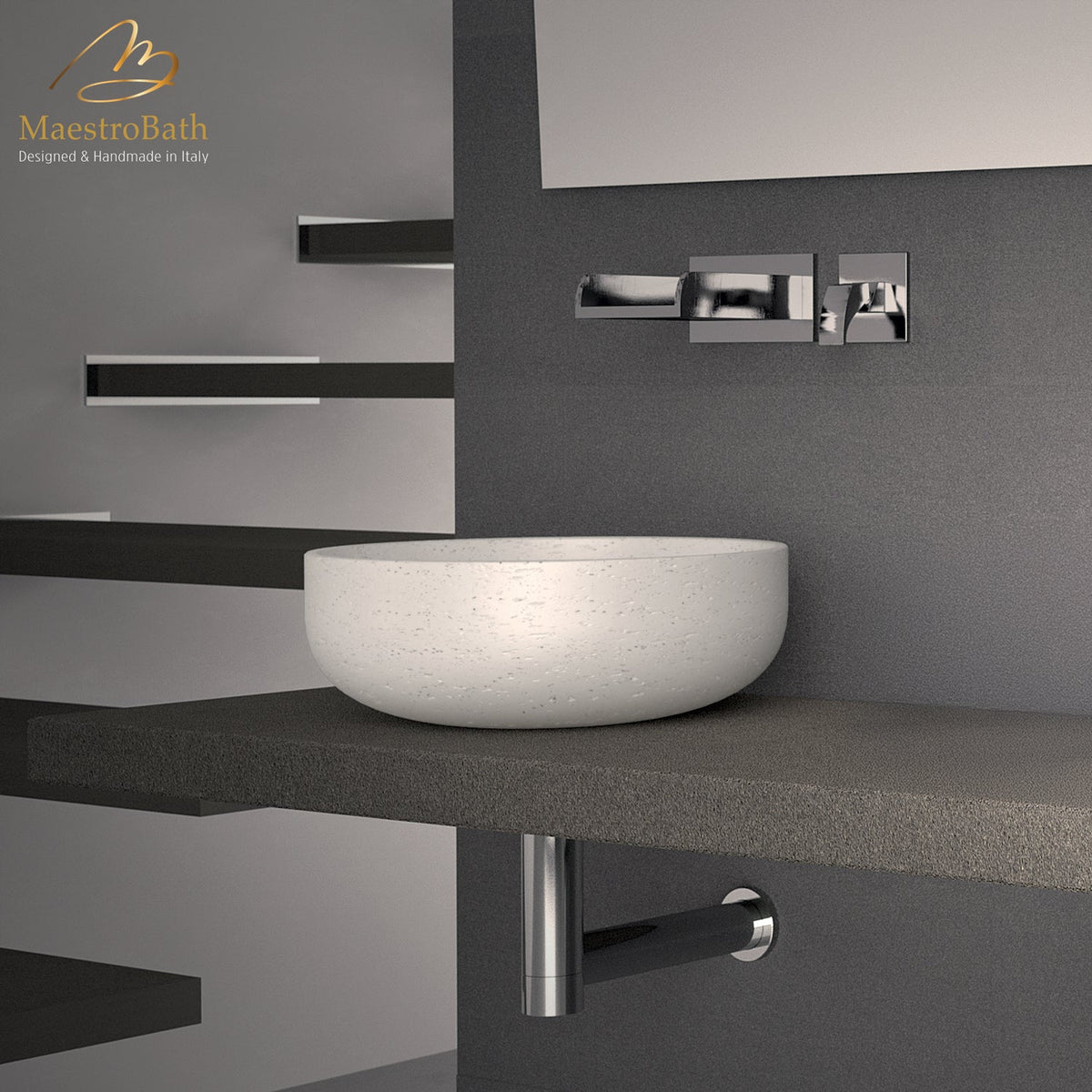
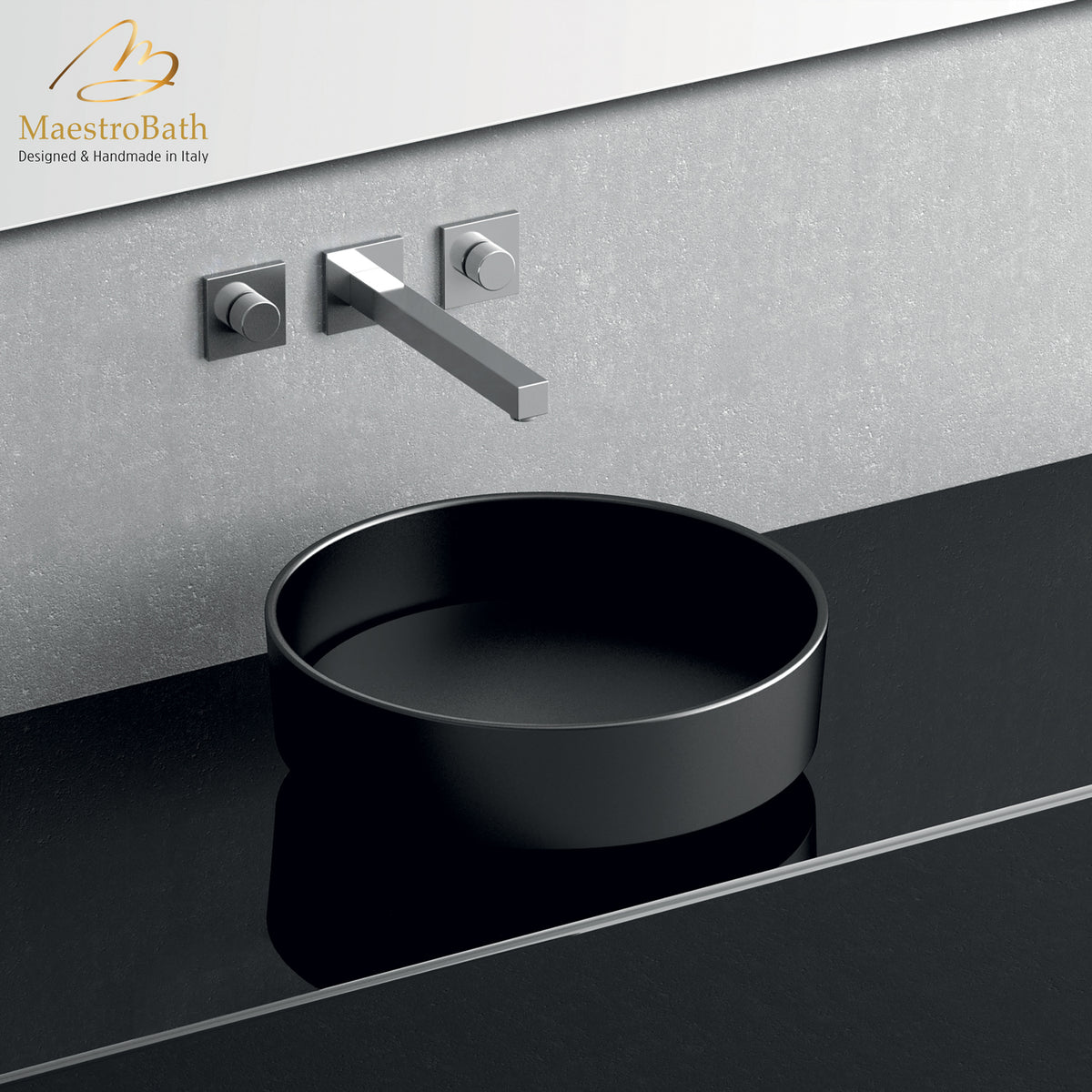
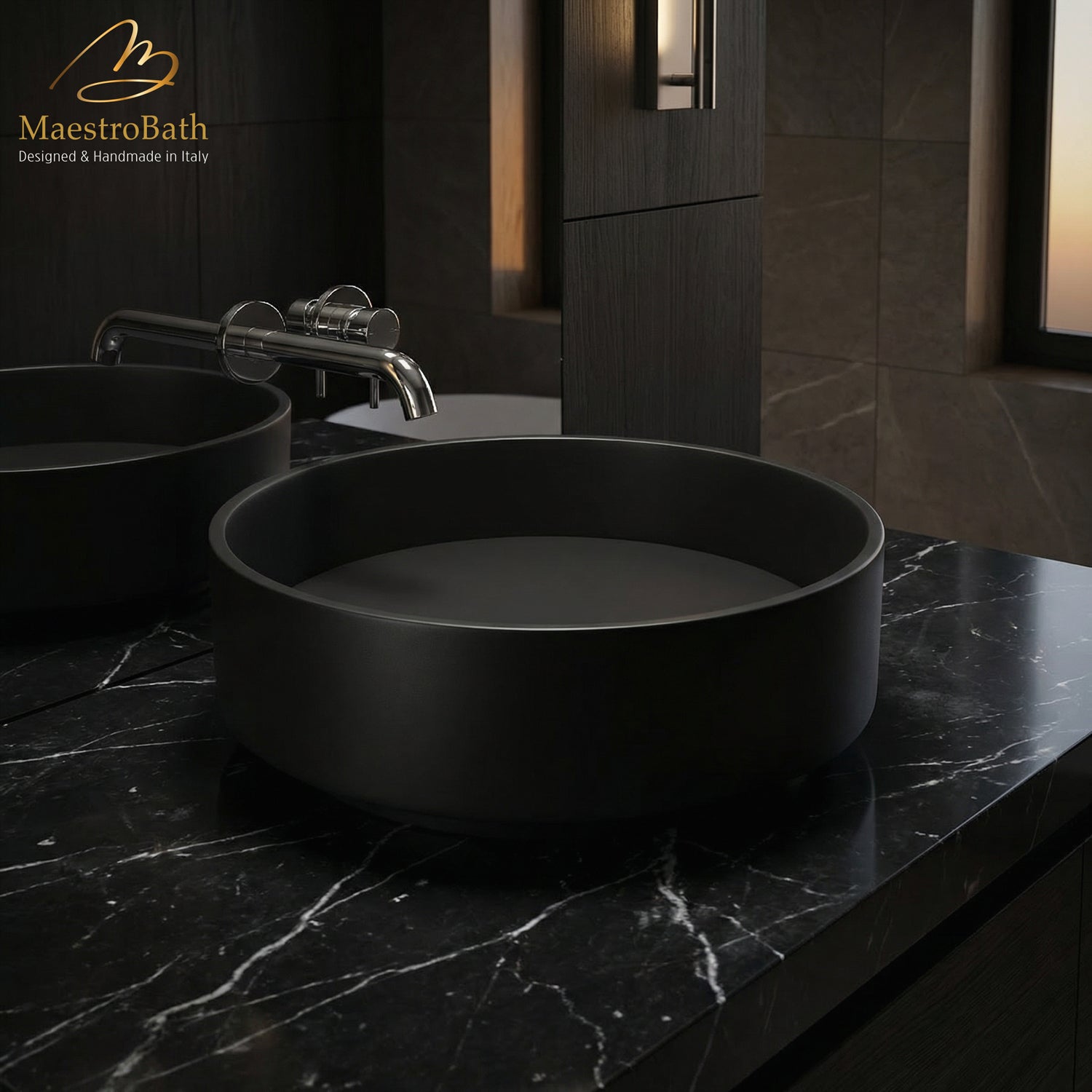
The neutrals first. White basins show the form rather than competing with it. Black basins read as an object on the counter and conceal the staining that shows on white over years. Grey basins are the most forgiving in daily use, and beige and the warm neutrals belong in a room built on travertine and sandstone.
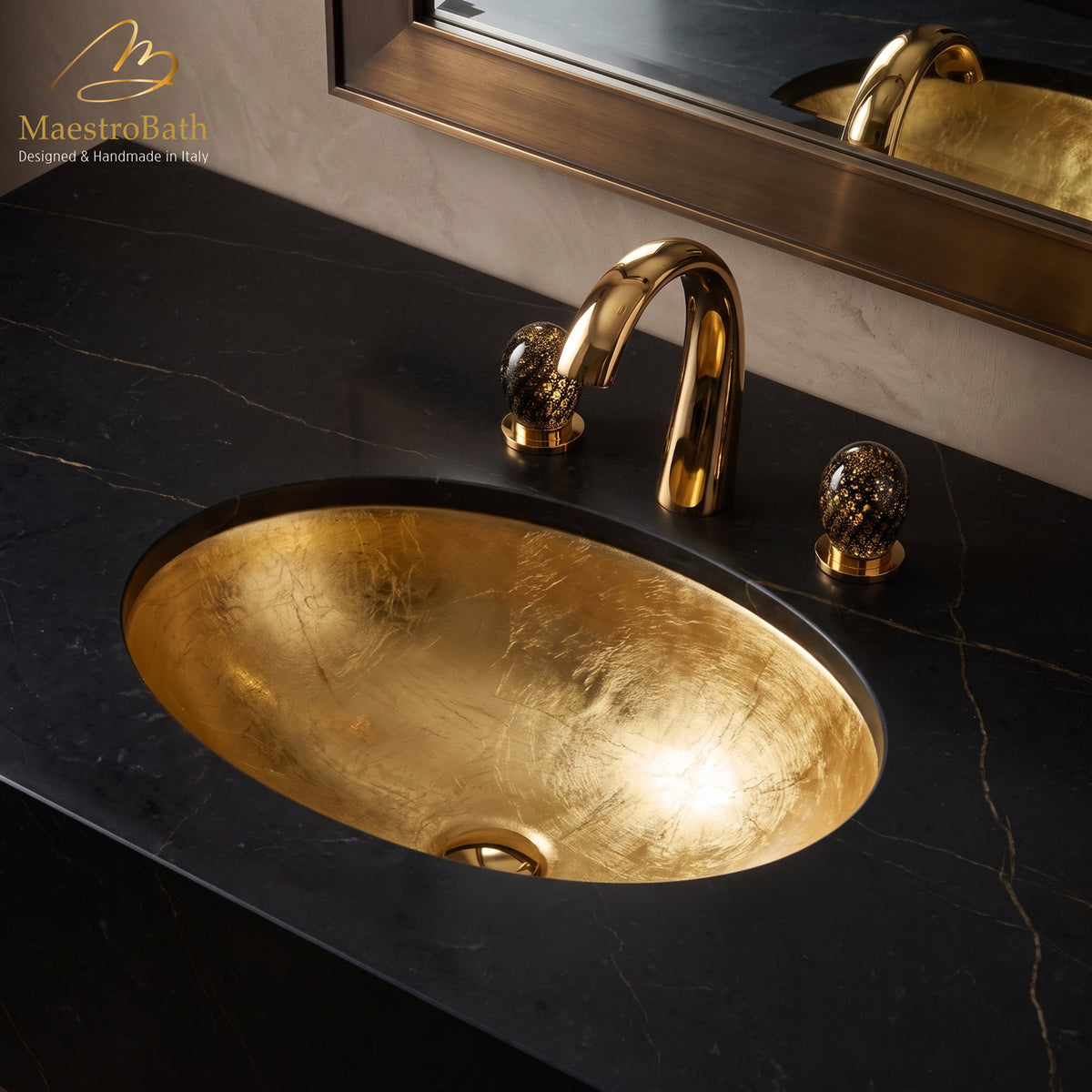
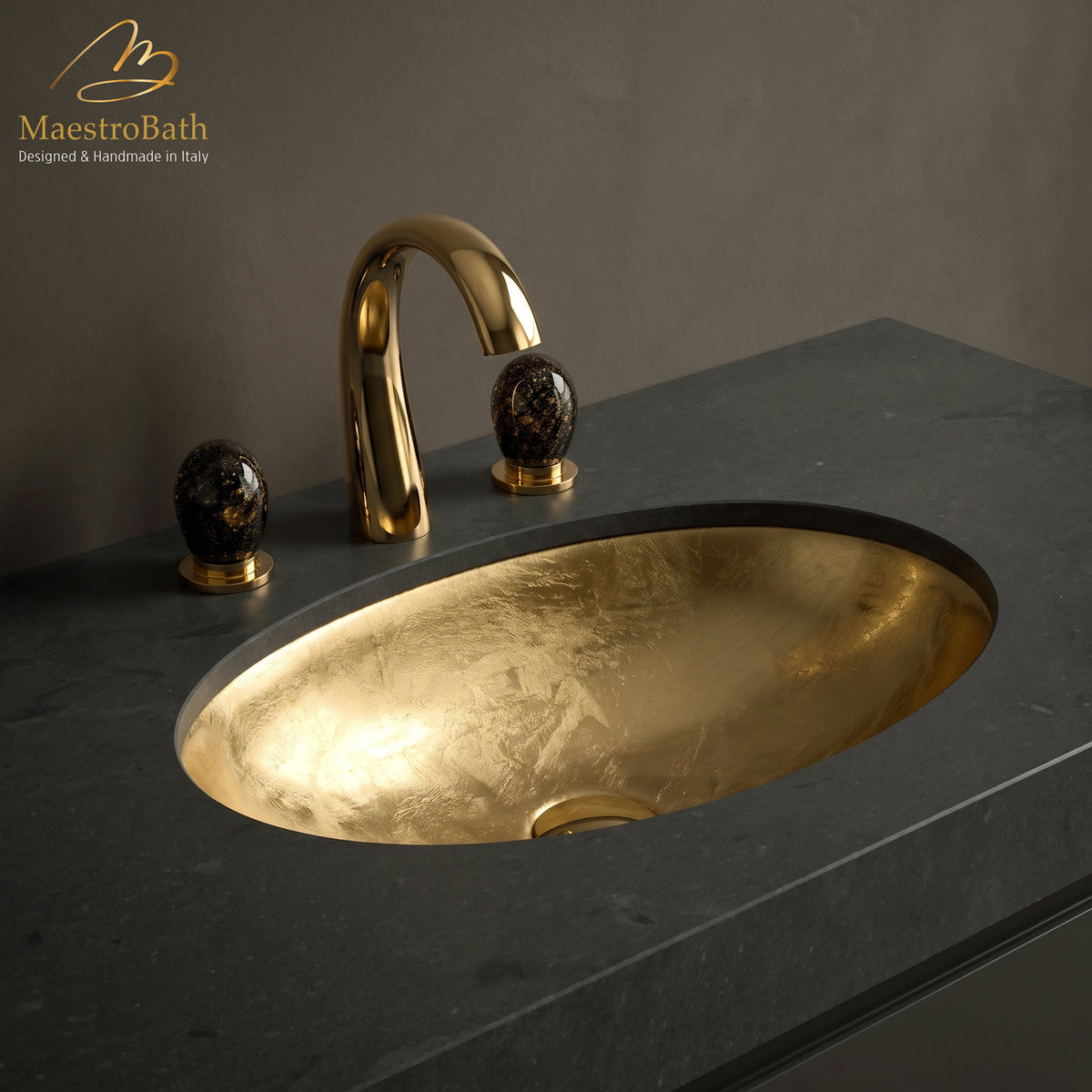
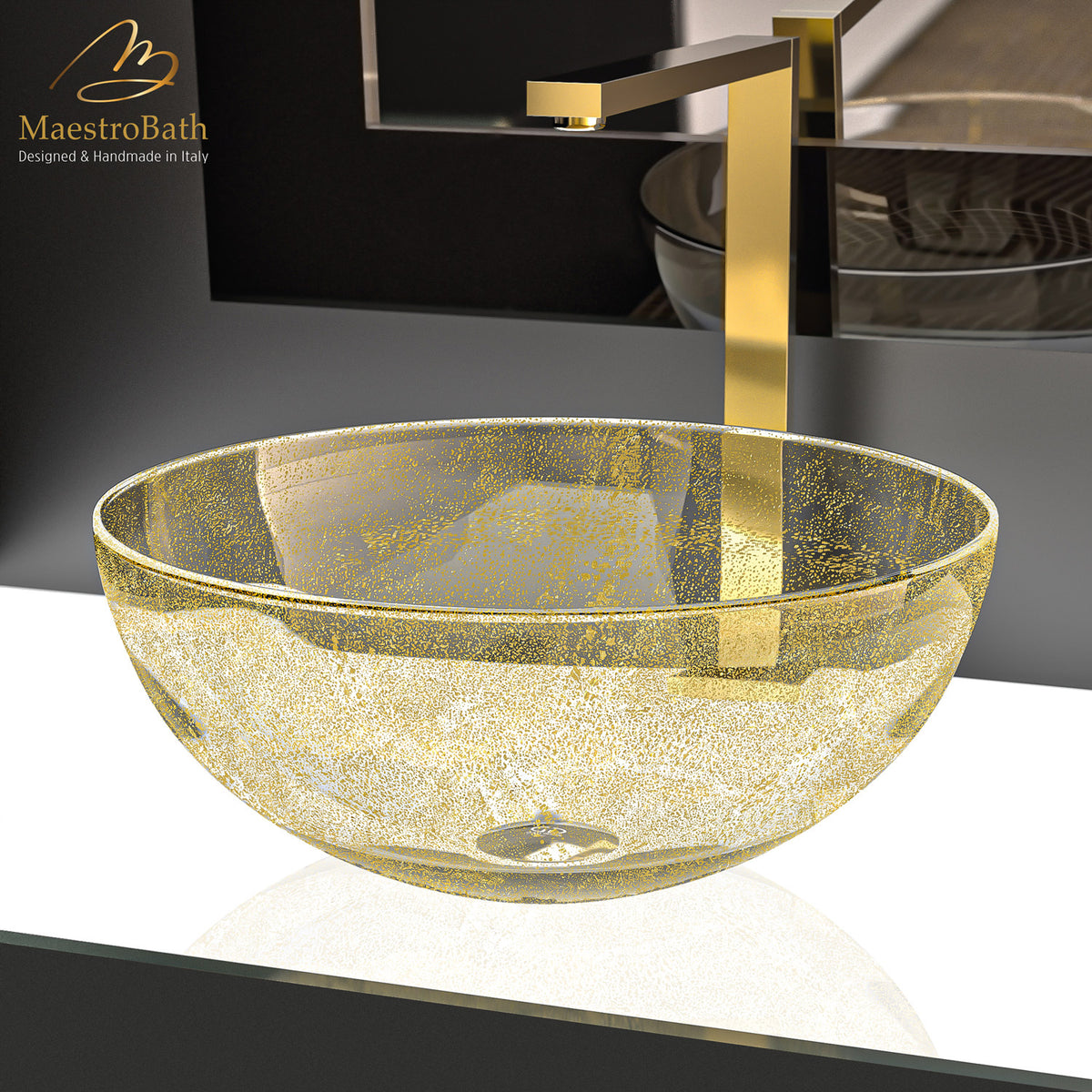
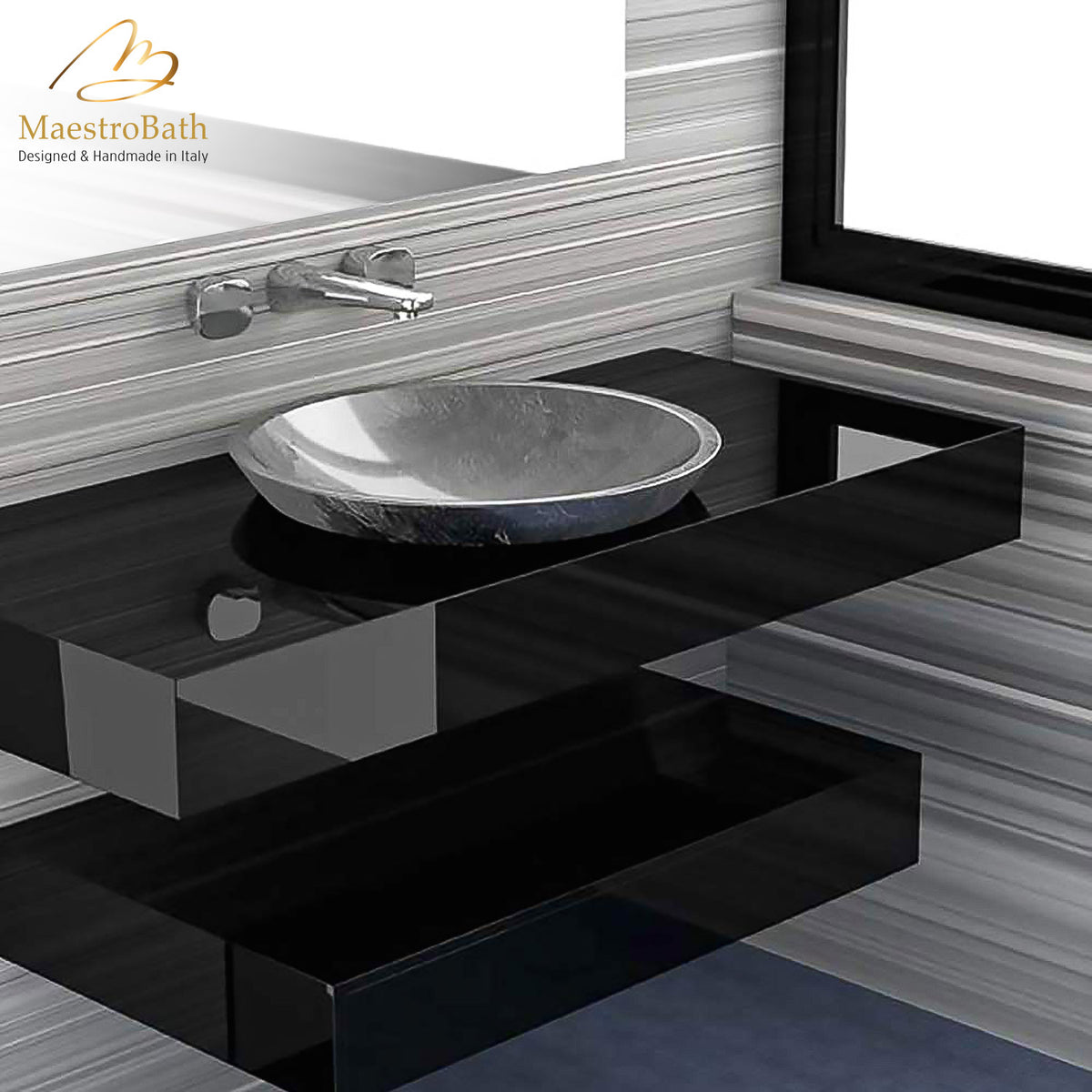
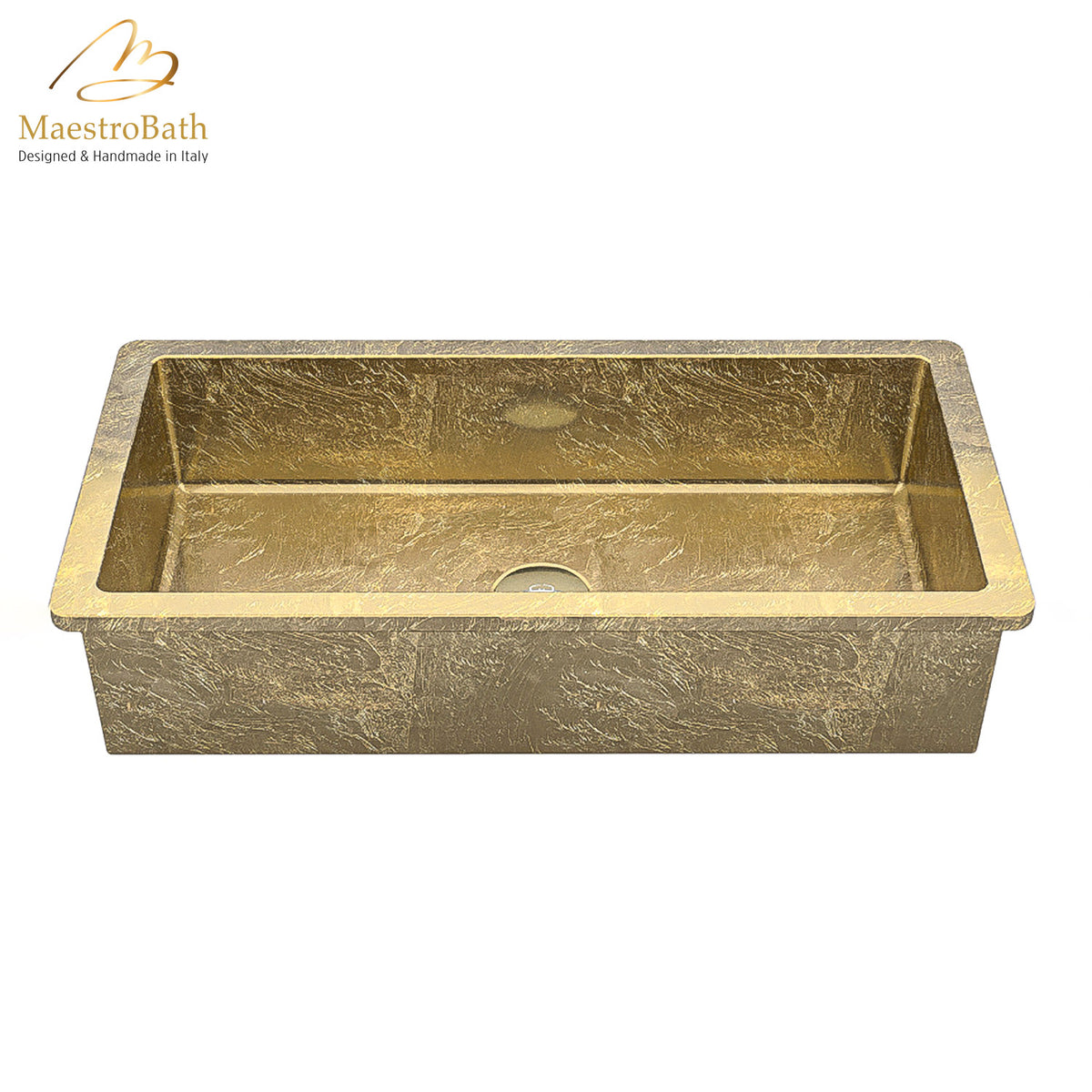
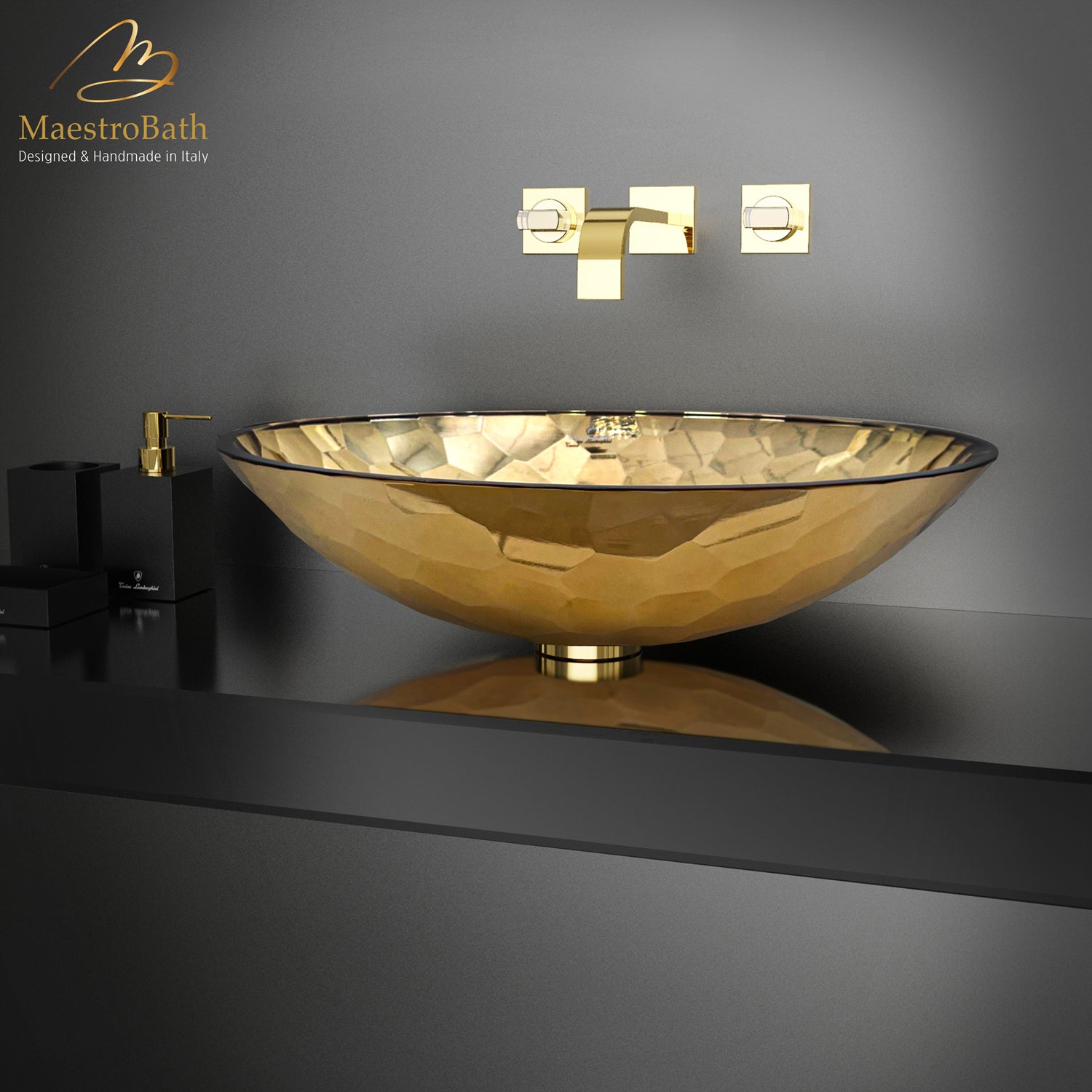
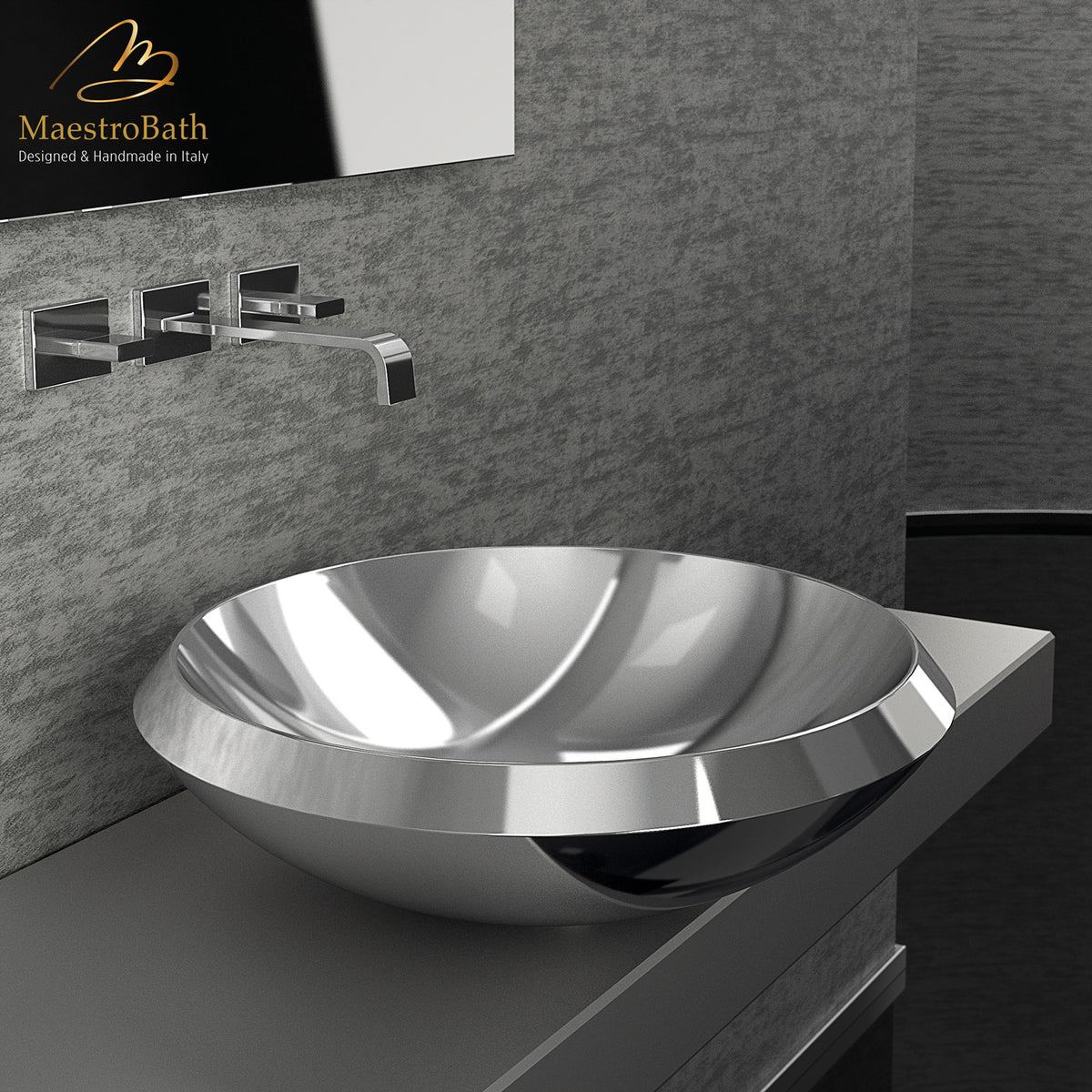
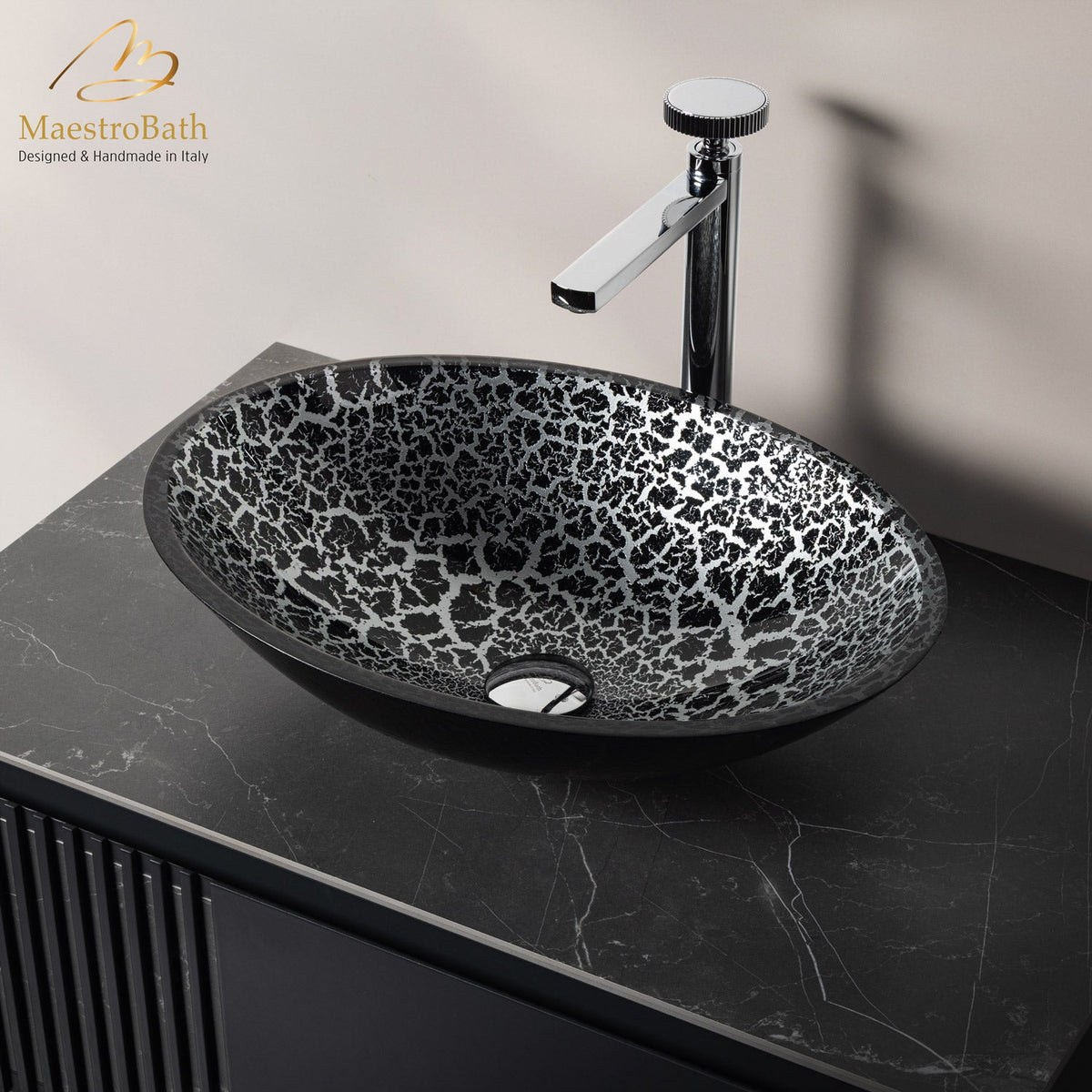
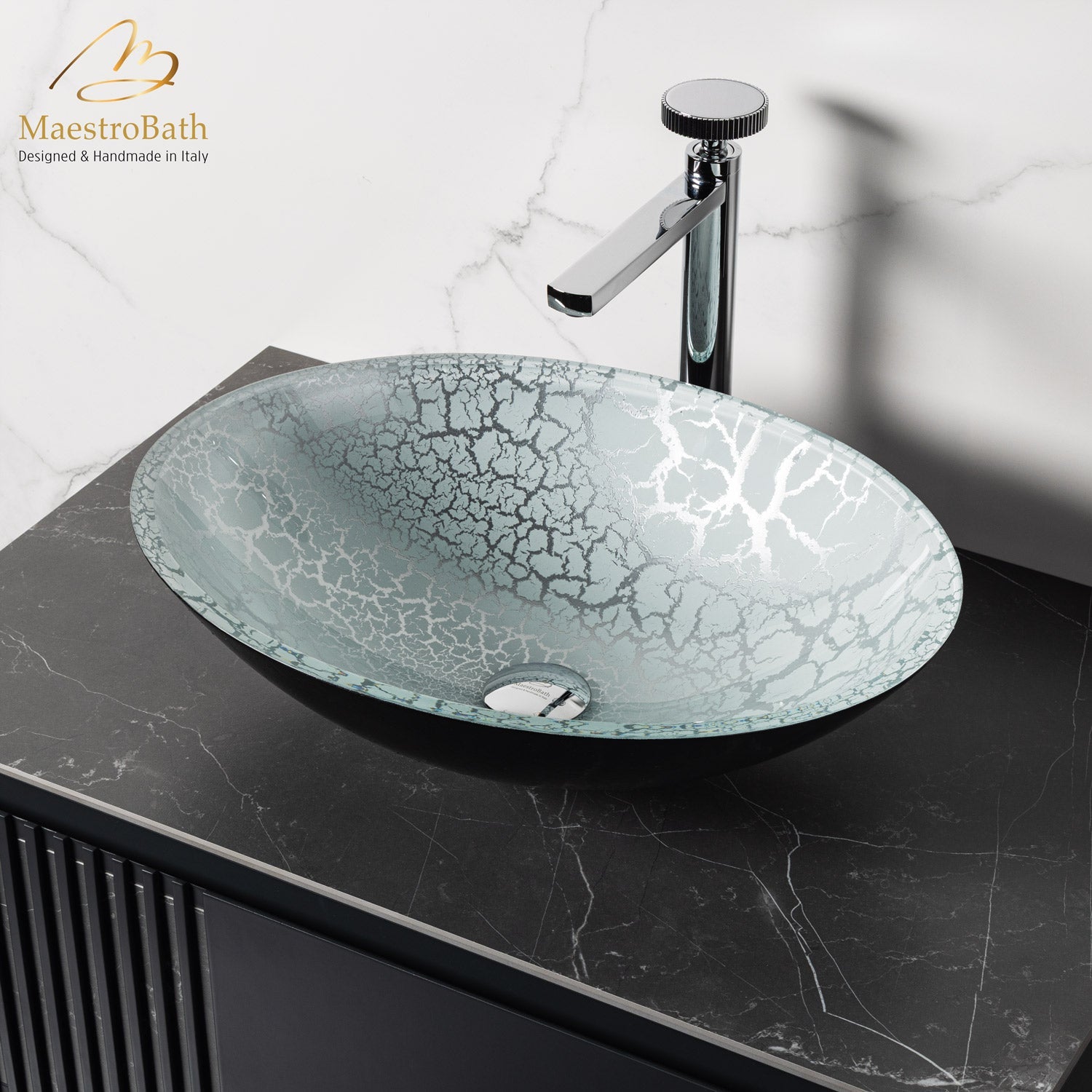
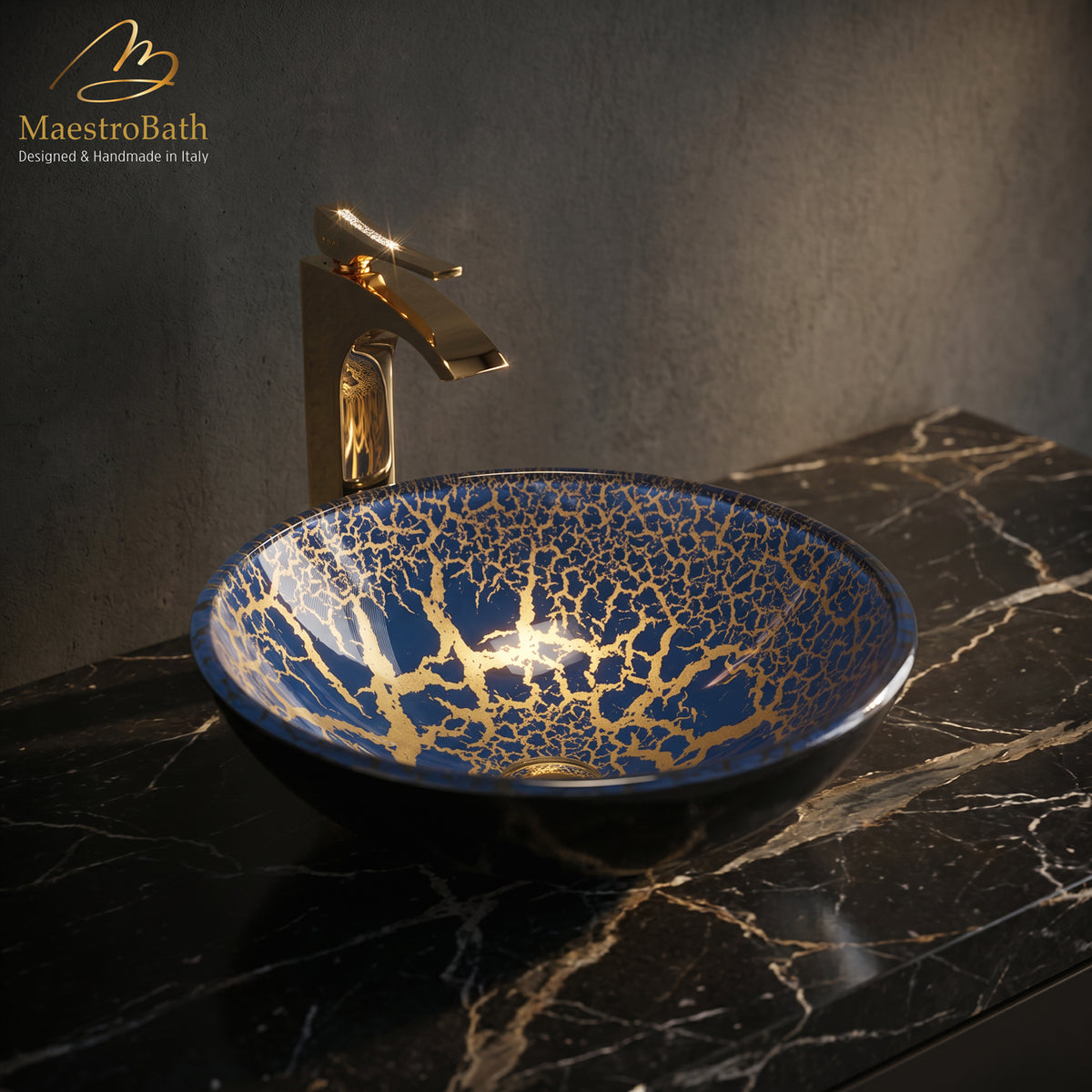
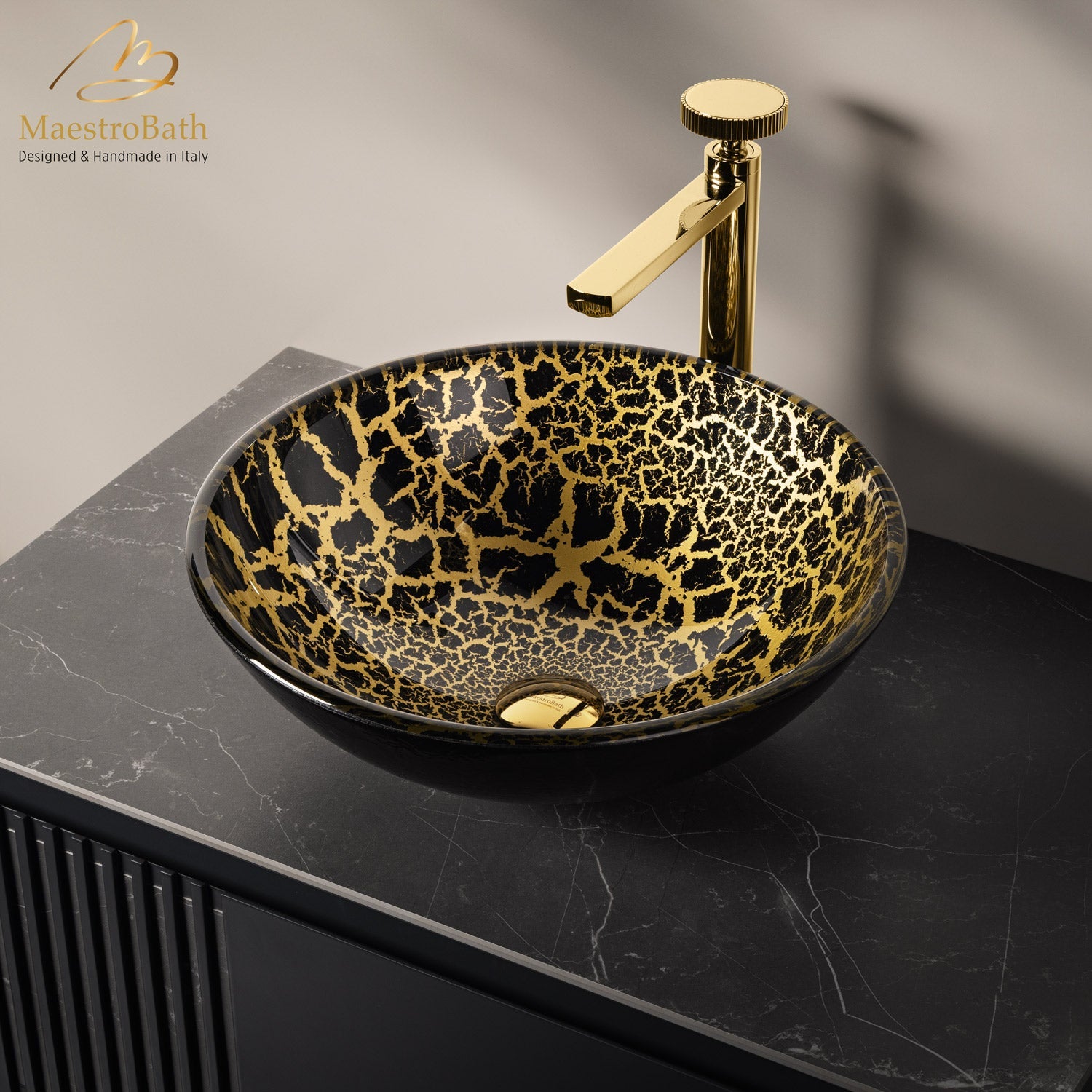
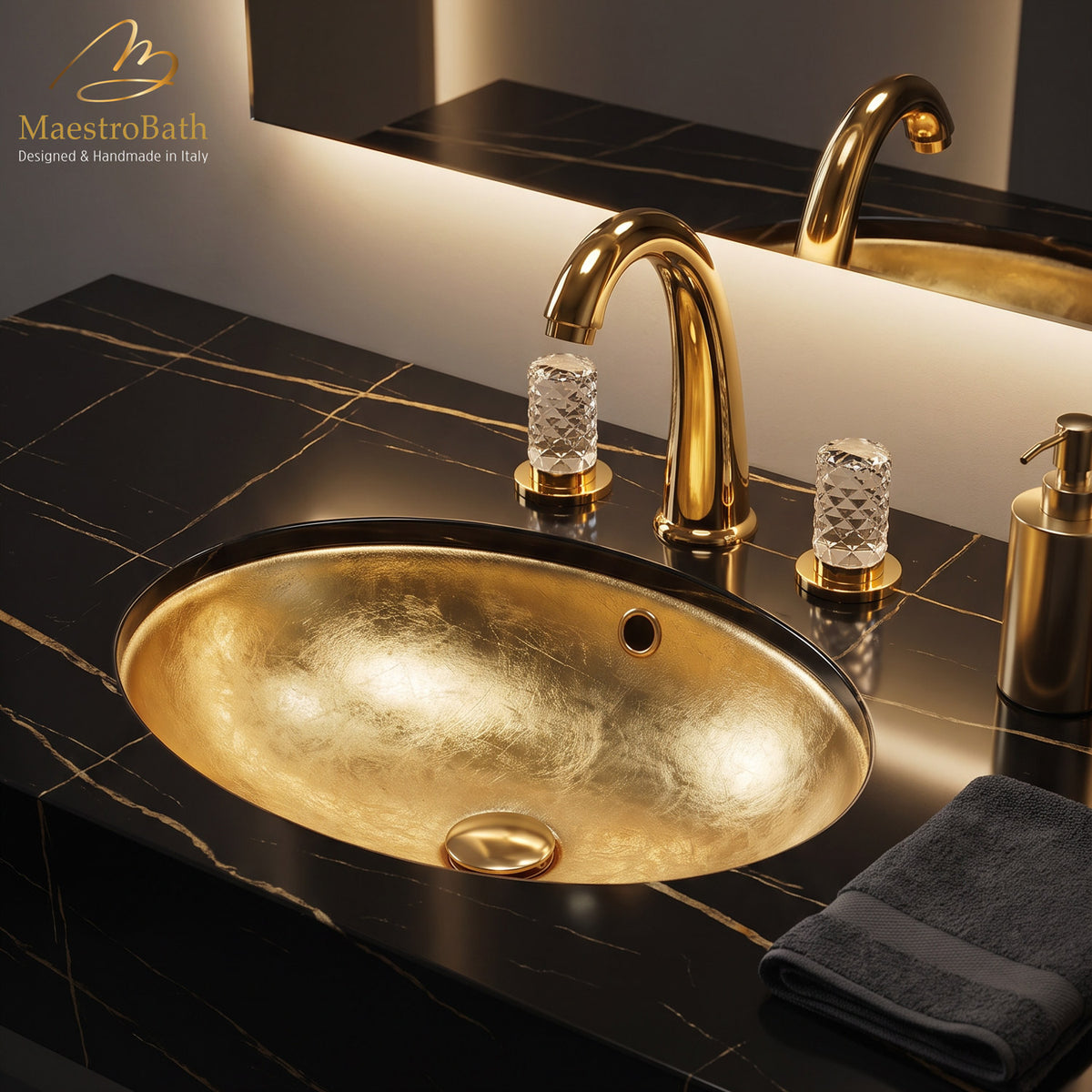
Among the metallics, gold leaf basins are applied by hand sheet by sheet, so the light comes back from below the glass rather than off the top of it. Silver gives the same depth in a cooler key and matches the chrome and nickel a bathroom already has. Bronze is the warm metallic that flatters natural stone.
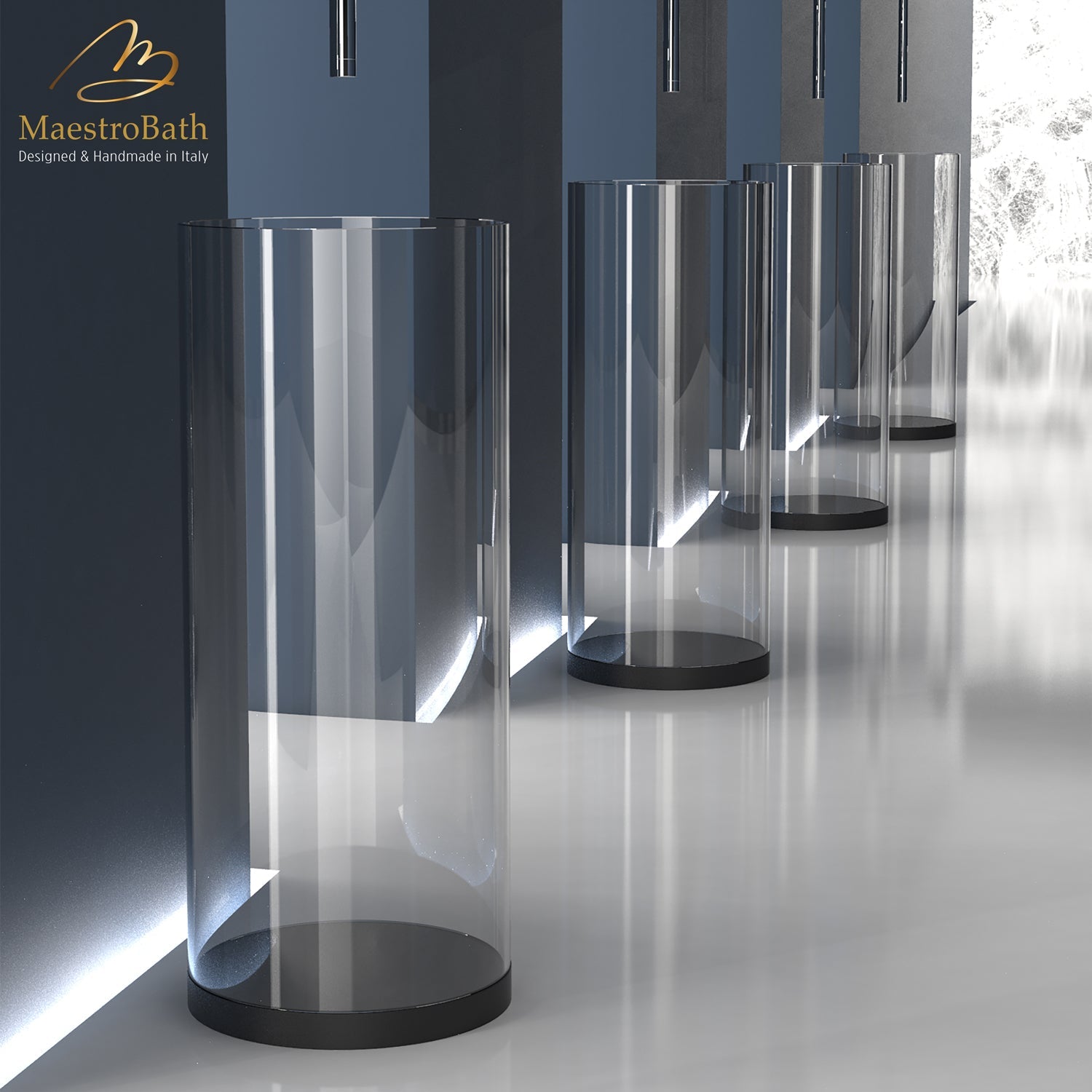
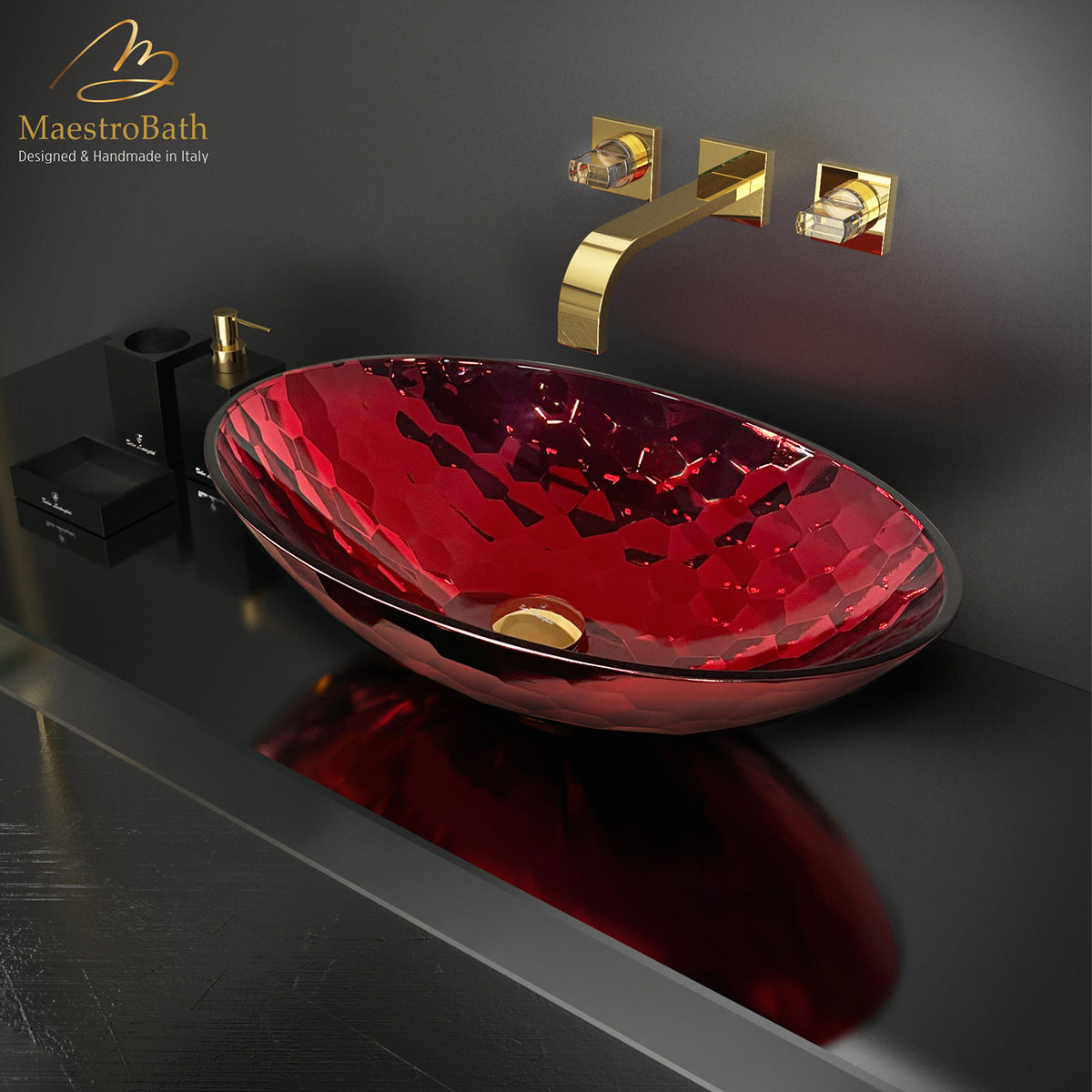
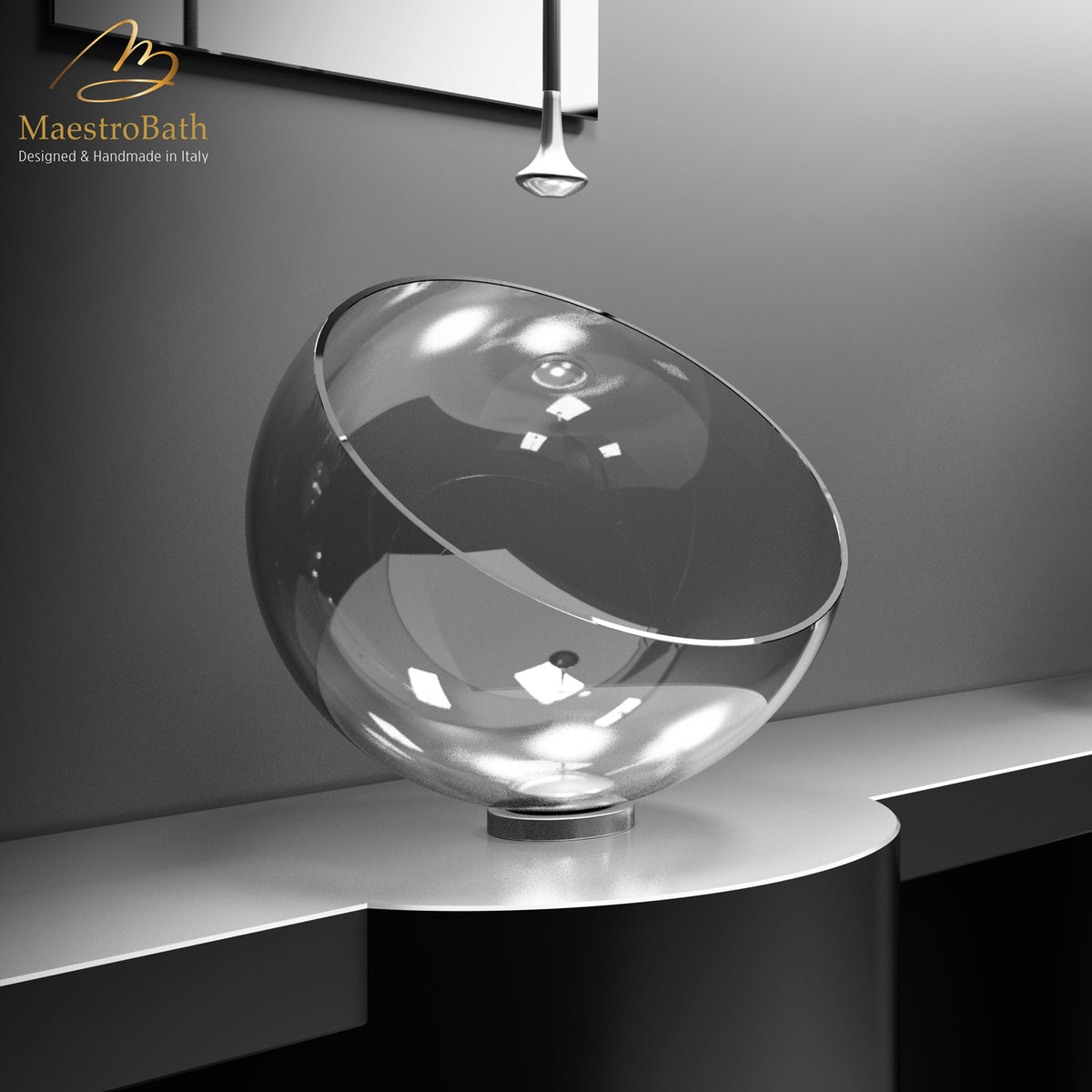
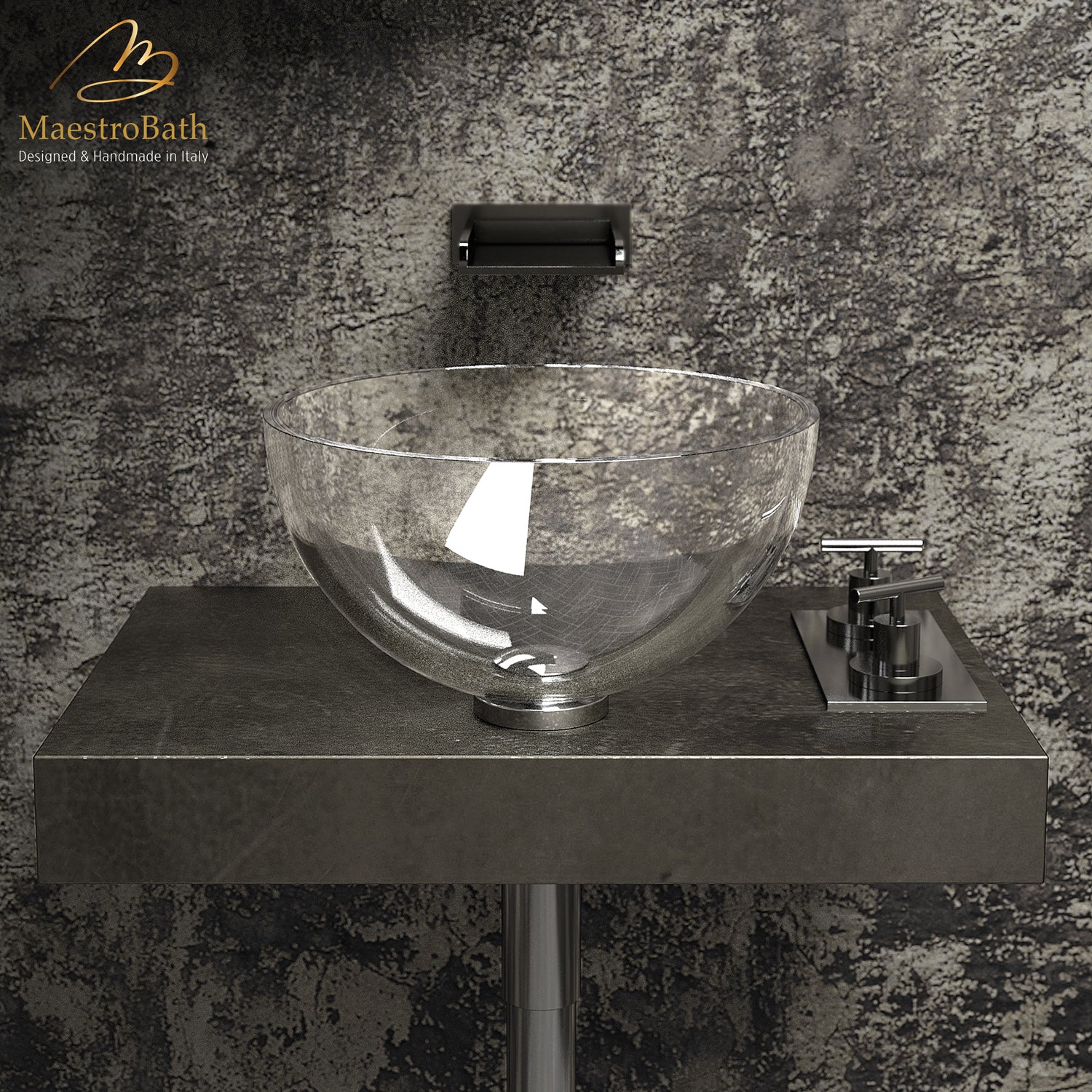
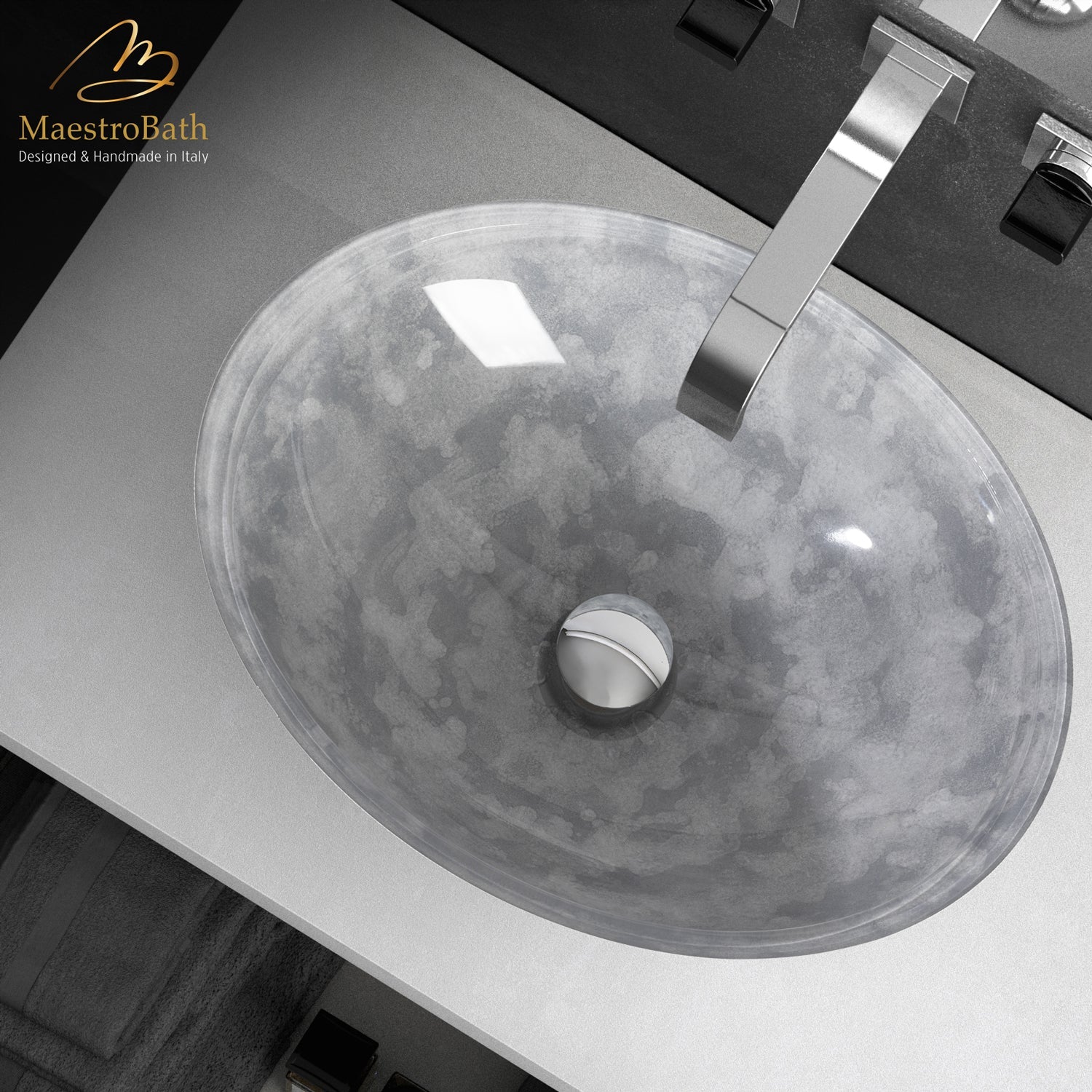
Then the ones that make a decision. Transparent basins take up no visual space at all, which is why they work in a powder room where a solid vessel would crowd the counter. Blue is the one strong color nobody has to justify in a bathroom. Green sits naturally beside timber and stone. Brown holds warmth where black goes flat. Red is the most committed thing we make and belongs in exactly one place, a small powder room with a plain envelope.
The faucet follows the sink
Basin height decides this and it is the mistake people make most often. A vessel sink needs a tall single hole faucet that clears the rim. A standard height faucet behind a vessel pours onto the edge of the bowl rather than into it, and no amount of adjustment fixes it afterwards.
A drilled counter with a drop in or under-mount basin usually takes a three hole faucet with separate handles. And a wall mount faucet removes the height problem entirely by coming out of the wall above the basin, which also leaves the counter completely clear. It has to be planned before the wall closes, because the valve sits inside it. The full range is in bathroom faucets.
The drain is not an afterthought
On a vessel sink the drain is visible every time the basin is empty, and on a transparent basin it is visible always. It is a separate purchase, it comes in the same finishes as the faucets, and matching it to the faucet rather than to the sink is the detail that separates a finished bathroom from a nearly finished one.
What it sits on
Most of these basins are specified alongside a bathroom vanity. If you want a vessel, you want a flat top vanity, since an integrated top already has its basin formed as part of the surface and leaves nowhere to put one.
Shop by style
Glam is crystal, leaf and reflection, and it is the largest group we make. Modern is reduced to the shape. Contemporary sits between the two. Organic and natural is where the material leads and the form follows it.
Common Questions
What is a vessel sink and does it need a special faucet?
A vessel sink sits on top of the counter rather than inside it, so the whole basin is visible. It does need a taller faucet: either a tall single hole model that clears the rim of the bowl, or a wall mount faucet above it. A standard height faucet will pour onto the edge rather than into the basin.
How high should a vessel sink counter be?
Lower than a standard vanity, because the basin adds its own depth on top. Measure the height of the bowl and subtract it from your comfortable washing height, then choose the vanity to suit. This is the single most common thing people get wrong.
What is the difference between a drop in and an under-mount sink?
A drop in sets into a cut opening with its rim resting on the counter, which hides the edge of the cut and is more forgiving to install. An under-mount fixes beneath the surface so the counter runs unbroken to the bowl, which looks cleaner and lets you wipe the counter straight into the basin.
Do bathroom sinks come with a drain?
No. The drain is bought separately and is visible on any vessel or transparent basin, so it is worth choosing deliberately. Match it to the faucet finish rather than to the sink.
How do I clean a glass or crystal basin without damaging it?
Warm water, a soft cloth and a mild non abrasive cleaner. Keep scouring cream and anything chlorine based away from every basin, and from gold leaf and silver leaf in particular, since a leafed surface dulls permanently and cannot be restored.
Where are MaestroBath sinks made?
In Italy. Each basin is handcrafted there, which is why the leafed, crystal and Murano finishes vary between pieces rather than being uniform. On a hand made basin that variation is the product rather than a fault in it.
About MaestroBath Bathroom Sinks
Bathroom sinks are the largest part of what we do, and the vessel basin in particular is what the company is known for. We work directly with the glassworks and stone workshops in Italy rather than through distributors, which is how a range this size carries this many materials.
Our showroom is in Newport Beach, California, where a good number of these can be seen in person, and glass is a material worth seeing in person. If you would like help matching a basin to a vanity or working out the right faucet height, call 800-320-1120 or email info@maestrobath.com and someone who knows the range will answer.